
Trump's Sarcastic War Ending: A Market Wake-Up Call
Generado por agente de IAHarrison Brooks
domingo, 16 de marzo de 2025, 9:06 pm ET2 min de lectura
In the ever-shifting landscape of global politics and economics, President Trump's recent statement about ending the Russia-Ukraine war in 24 hours has sent ripples through the financial markets. Initially, Trump's bold claim was seen as a decisive move to resolve the conflict swiftly, potentially boosting investor confidence and stabilizing geopolitical risks. However, his subsequent clarification that the statement was "a little bit sarcastic" has introduced a new layer of uncertainty, leaving investors and market analysts scrambling to reassess their strategies.
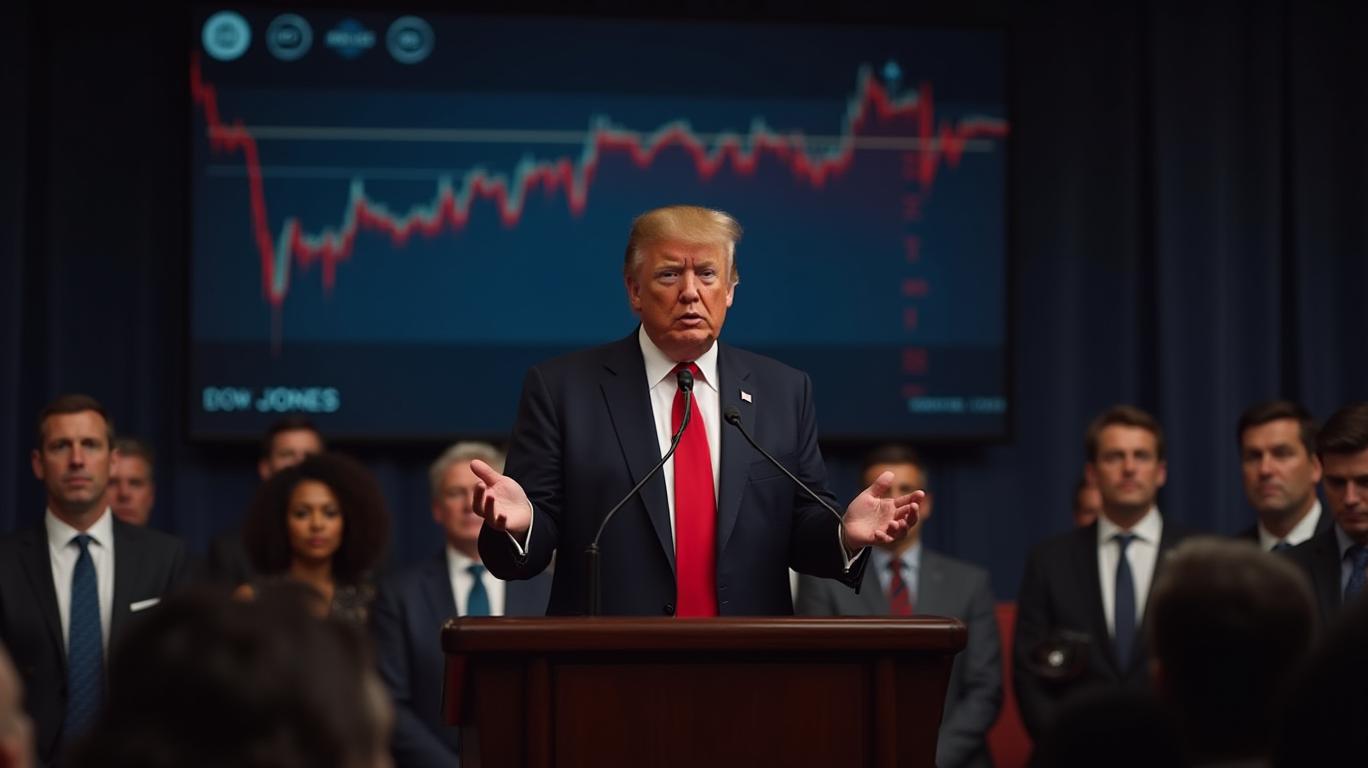
The initial promise of a quick resolution to the conflict was met with optimism, particularly in sectors sensitive to geopolitical risks. The energy sector, for instance, saw substantial gains in the immediate post-election trading session, likely due to anticipated regulatory shifts and the potential for reduced geopolitical tensions. However, Trump's reversal of his statement has led to increased market volatility, as investors grapple with the ambiguity and uncertainty introduced by his shifting stance.
The defense sector, which had been buoyed by the prospect of continued military aid to Ukraine, could face volatility if Trump's new stance on negotiations is seen as a concession to Russia. Defense Secretary Pete Hegseth's comments, ruling out eventual membership in NATO for Ukraine and suggesting that Ukraine's goal of returning to its borders before 2014 is an "unrealistic objective," further complicate the situation. This unilateral approach to peace negotiations, seemingly without much input from NATO and Ukraine, can be seen as a coldCOLD-- reality check for European allies and investors.
The potential economic implications for the U.S. and global markets if Trump's administration successfully negotiates a ceasefire or peace agreement between Russia and Ukraine are significant. A successful peace agreement would likely reduce geopolitical risk, which has been a major factor driving market volatility. As noted in the materials, "The fallout will probably depress the profits of American companies with strong sales abroad." A reduction in geopolitical tensions could lead to increased investor confidence and potentially boost stock markets globally.
However, the defense sector could see a significant shift. With the reduction in conflict, there might be less demand for military equipment and services. As Defense Secretary Pete Hegseth stated, "peace in the country must include security guarantees that 'should not be provided through NATO membership, but must instead be backed by capable European and non-European troopsTROO--.'" This could lead to a reallocation of resources away from defense spending towards other sectors.
The energy sector could also be affected. Trump's administration has been focused on increasing oil and gas production, which could lead to increased supplies and potentially lower prices. As mentioned, "Trump’s orders and ‘drill, baby, drill’ ethos are expected to increase oil supplies and subsequently weigh on prices." A peace agreement could stabilize energy markets further, as the conflict in Ukraine has been a significant factor in global energy prices.
Investors might need to adjust their strategies. For example, sectors that benefit from increased defense spending, such as aerospace and defense, might see reduced demand. Conversely, sectors that benefit from reduced geopolitical risk, such as travel and tourism, could see increased demand. As noted, "The absence of anticipated government shutdowns further supports this view. Additionally, Trump's opportunity to appoint federal judges and U.S. attorneys, who historically lean more corporate-friendly, could be another positive signal for businesses."
A peace agreement could also have implications for global trade. As Trump's administration has been focused on trade policies, a reduction in geopolitical tensions could lead to more stable trade relations. This could benefit sectors that rely on international trade, such as manufacturing and technology.
The potential reduction in geopolitical risk could also impact inflation and interest rates. As noted, "Most economists believe the effects will likely include a stronger dollar, higher inflation and interest rates, a decline in growth for countries that export to the U.S., and retaliation by at least some of them." A peace agreement could lead to more stable economic conditions, potentially reducing inflationary pressures and stabilizing interest rates.
In conclusion, Trump's recent statements about ending the Russia-Ukraine war in 24 hours, now claimed to be "a little bit sarcastic," introduce uncertainty and ambiguity, which can erode investor confidence and market stability. This shift in tone can lead to increased market volatility, particularly in sectors sensitive to geopolitical risks, such as energy, defense, and technology. The potential for increased geopolitical tensions and the lack of clear communication from policymakers can further exacerbate market instability, making it crucial for investors to closely monitor developments and adjust their strategies accordingly.



Divulgación editorial y transparencia de la IA: Ainvest News utiliza tecnología avanzada de Modelos de Lenguaje Largo (LLM) para sintetizar y analizar datos de mercado en tiempo real. Para garantizar los más altos estándares de integridad, cada artículo se somete a un riguroso proceso de verificación con participación humana.
Mientras la IA asiste en el procesamiento de datos y la redacción inicial, un miembro editorial profesional de Ainvest revisa, verifica y aprueba de forma independiente todo el contenido para garantizar su precisión y cumplimiento con los estándares editoriales de Ainvest Fintech Inc. Esta supervisión humana está diseñada para mitigar las alucinaciones de la IA y garantizar el contexto financiero.
Advertencia sobre inversiones: Este contenido se proporciona únicamente con fines informativos y no constituye asesoramiento profesional de inversión, legal o financiero. Los mercados conllevan riesgos inherentes. Se recomienda a los usuarios que realicen una investigación independiente o consulten a un asesor financiero certificado antes de tomar cualquier decisión. Ainvest Fintech Inc. se exime de toda responsabilidad por las acciones tomadas con base en esta información. ¿Encontró un error? Reportar un problema




Comentarios
Aún no hay comentarios