
Trump's Tariff Tide: A 40% Surge on China in 2025
Generado por agente de IAEli Grant
miércoles, 20 de noviembre de 2024, 4:05 am ET2 min de lectura
As the political landscape shifts with the impending election, one issue remains a constant: trade relations with China. A recent Reuters poll suggests that President-elect Donald Trump is set to impose nearly 40% tariffs on Chinese imports in early 2025, a move that could significantly impact both economies and consumer prices.
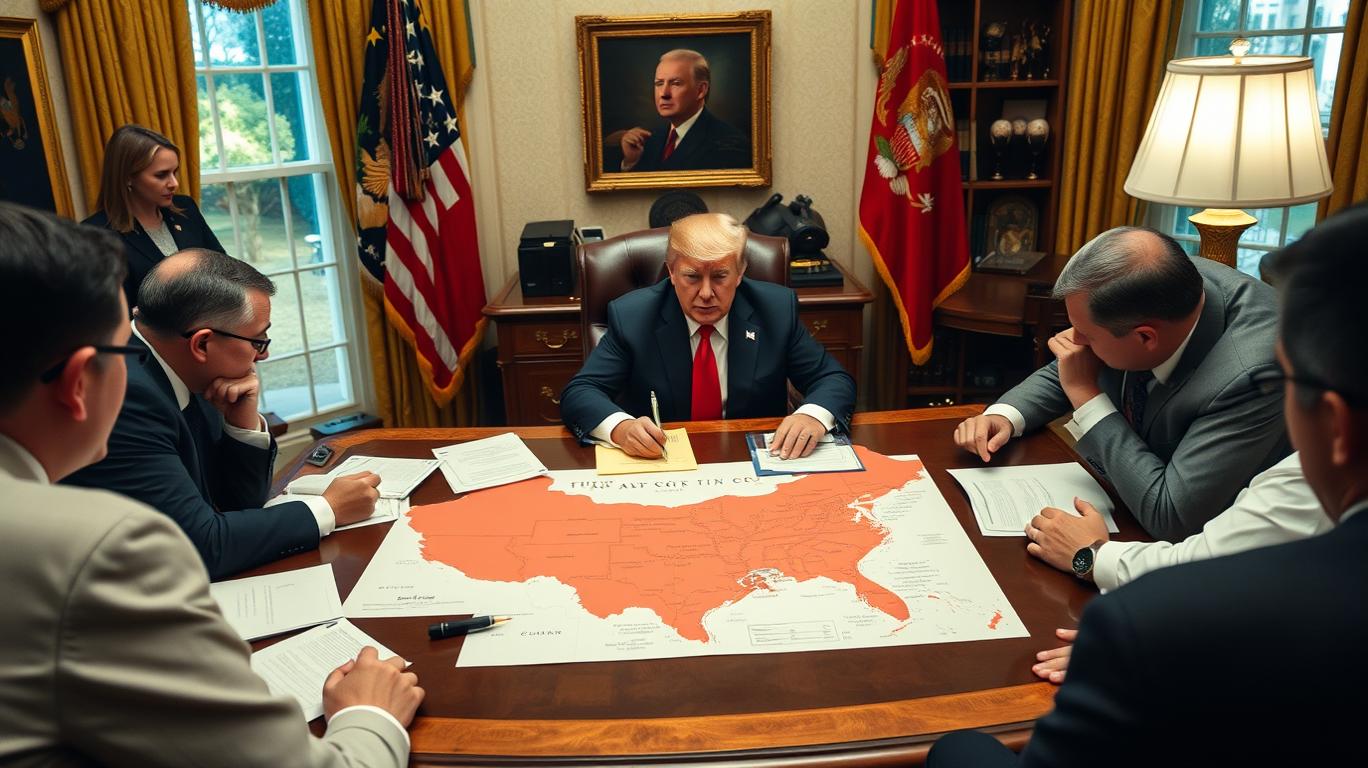
The proposed tariffs, ranging from 15% to 60%, would hit a wide range of goods, including electronics, apparel, and toys. According to a study by the Consumer Technology Association, laptop and tablet prices could rise by up to 46%, while smartphones could increase by 26%. The National Retail Federation predicts a 20% price hike for apparel, with a $50 cotton sweater potentially costing $60 and men's jeans rising from $80 to $96. Toys could see a 55% price increase, amounting to about $14 billion in lost U.S. consumer spending power.
U.S. companies are likely to adjust their supply chains and pricing strategies in response to the increased tariffs. According to a Reuters poll, the U.S. could impose nearly 40% tariffs on imports from China early next year. This will increase production costs for U.S. companies, which may lead to higher prices for consumers. To mitigate these effects, companies may shift their production to other countries or negotiate with suppliers to absorb some of the additional costs. Additionally, companies may invest in automation and technology to reduce their reliance on labor-intensive production processes, further offsetting the impact of tariffs.
The impending tariffs on China could significantly disrupt the global supply chain, with potential benefits for countries like Vietnam, India, and Mexico. A Reuters poll suggests that the U.S. could impose nearly 40% tariffs on Chinese imports in early 2025, which would make Chinese goods less competitive. This could lead to a shift in manufacturing to countries with lower labor costs and fewer trade barriers. For instance, Vietnam, which has already seen a surge in foreign direct investment, could benefit from increased manufacturing activity. India, with its large and growing consumer market, could also attract more investment. Meanwhile, Mexico, with its proximity to the U.S. and existing trade agreements, could see an increase in exports to the U.S. However, countries like Japan and South Korea, which rely heavily on Chinese intermediate goods, may face disruptions in their supply chains.
If Trump imposes 40% tariffs on China, retaliation could increase U.S. consumer prices. A Reuters poll predicts China's 2025 economic growth could slow by 0.5-1.0 percentage point, potentially leading to counter-tariffs. This could raise prices for U.S. consumers, with the Peterson Institute estimating a $2,600 annual household cost. A CNBC article notes that tariffs could increase prices on everyday goods, while a USA Today poll shows 56% of voters support Trump's tariff proposals. However, economists warn of potential trade wars and higher prices for consumers in both countries.
The impending tariffs on China present a complex landscape for investors, with potential impacts on consumer prices, supply chains, and global economic growth. As the political and economic dynamics continue to evolve, investors must remain vigilant and adaptable to capitalize on emerging opportunities and mitigate potential risks.
The proposed tariffs, ranging from 15% to 60%, would hit a wide range of goods, including electronics, apparel, and toys. According to a study by the Consumer Technology Association, laptop and tablet prices could rise by up to 46%, while smartphones could increase by 26%. The National Retail Federation predicts a 20% price hike for apparel, with a $50 cotton sweater potentially costing $60 and men's jeans rising from $80 to $96. Toys could see a 55% price increase, amounting to about $14 billion in lost U.S. consumer spending power.
U.S. companies are likely to adjust their supply chains and pricing strategies in response to the increased tariffs. According to a Reuters poll, the U.S. could impose nearly 40% tariffs on imports from China early next year. This will increase production costs for U.S. companies, which may lead to higher prices for consumers. To mitigate these effects, companies may shift their production to other countries or negotiate with suppliers to absorb some of the additional costs. Additionally, companies may invest in automation and technology to reduce their reliance on labor-intensive production processes, further offsetting the impact of tariffs.
The impending tariffs on China could significantly disrupt the global supply chain, with potential benefits for countries like Vietnam, India, and Mexico. A Reuters poll suggests that the U.S. could impose nearly 40% tariffs on Chinese imports in early 2025, which would make Chinese goods less competitive. This could lead to a shift in manufacturing to countries with lower labor costs and fewer trade barriers. For instance, Vietnam, which has already seen a surge in foreign direct investment, could benefit from increased manufacturing activity. India, with its large and growing consumer market, could also attract more investment. Meanwhile, Mexico, with its proximity to the U.S. and existing trade agreements, could see an increase in exports to the U.S. However, countries like Japan and South Korea, which rely heavily on Chinese intermediate goods, may face disruptions in their supply chains.
If Trump imposes 40% tariffs on China, retaliation could increase U.S. consumer prices. A Reuters poll predicts China's 2025 economic growth could slow by 0.5-1.0 percentage point, potentially leading to counter-tariffs. This could raise prices for U.S. consumers, with the Peterson Institute estimating a $2,600 annual household cost. A CNBC article notes that tariffs could increase prices on everyday goods, while a USA Today poll shows 56% of voters support Trump's tariff proposals. However, economists warn of potential trade wars and higher prices for consumers in both countries.
The impending tariffs on China present a complex landscape for investors, with potential impacts on consumer prices, supply chains, and global economic growth. As the political and economic dynamics continue to evolve, investors must remain vigilant and adaptable to capitalize on emerging opportunities and mitigate potential risks.



Divulgación editorial y transparencia de la IA: Ainvest News utiliza tecnología avanzada de Modelos de Lenguaje Largo (LLM) para sintetizar y analizar datos de mercado en tiempo real. Para garantizar los más altos estándares de integridad, cada artículo se somete a un riguroso proceso de verificación con participación humana.
Mientras la IA asiste en el procesamiento de datos y la redacción inicial, un miembro editorial profesional de Ainvest revisa, verifica y aprueba de forma independiente todo el contenido para garantizar su precisión y cumplimiento con los estándares editoriales de Ainvest Fintech Inc. Esta supervisión humana está diseñada para mitigar las alucinaciones de la IA y garantizar el contexto financiero.
Advertencia sobre inversiones: Este contenido se proporciona únicamente con fines informativos y no constituye asesoramiento profesional de inversión, legal o financiero. Los mercados conllevan riesgos inherentes. Se recomienda a los usuarios que realicen una investigación independiente o consulten a un asesor financiero certificado antes de tomar cualquier decisión. Ainvest Fintech Inc. se exime de toda responsabilidad por las acciones tomadas con base en esta información. ¿Encontró un error? Reportar un problema


SOBRE NOSOTROS
Nuestra historiaAutores de noticiasBase de conocimientosPolítica de privacidadTérmino de usoDescargo de responsabilidad de corretaje de tercerosTérminos de uso de AIMEDivulgaciones de riesgos de AInvest AICarrerasCONTÁCTENOS
Email: support@ainvest.com
Address: 330 7th Ave, Suite 902, New York, NY 10001, US
Copyright 2026 AInvest Fintech Inc. All rights reserved.


Comentarios
Aún no hay comentarios