
Trump's Tariff Threats Stir Uncertainty in Asian Markets
Generado por agente de IAWesley Park
miércoles, 27 de noviembre de 2024, 12:41 am ET1 min de lectura
Asian markets are grappling with uncertainty following President-elect Donald Trump's threat to impose massive tariffs on goods from Mexico, Canada, and China. The potential consequences of these tariffs are far-reaching, affecting not only the targeted countries but also their trading partners and supply chains.
The proposed tariffs, ranging from 10% to 25%, could significantly disrupt trade dynamics in Asia. Japan and South Korea, heavily reliant on exports to the U.S., are particularly vulnerable. Japan's exports to the U.S. amounted to $145 billion in 2023, about 20% of its total, while South Korea's exports totaled $116 billion. Meanwhile, Mexico and Canada face potential disruptions to their exports, valued at $345.5 billion and $323.3 billion respectively in 2023.
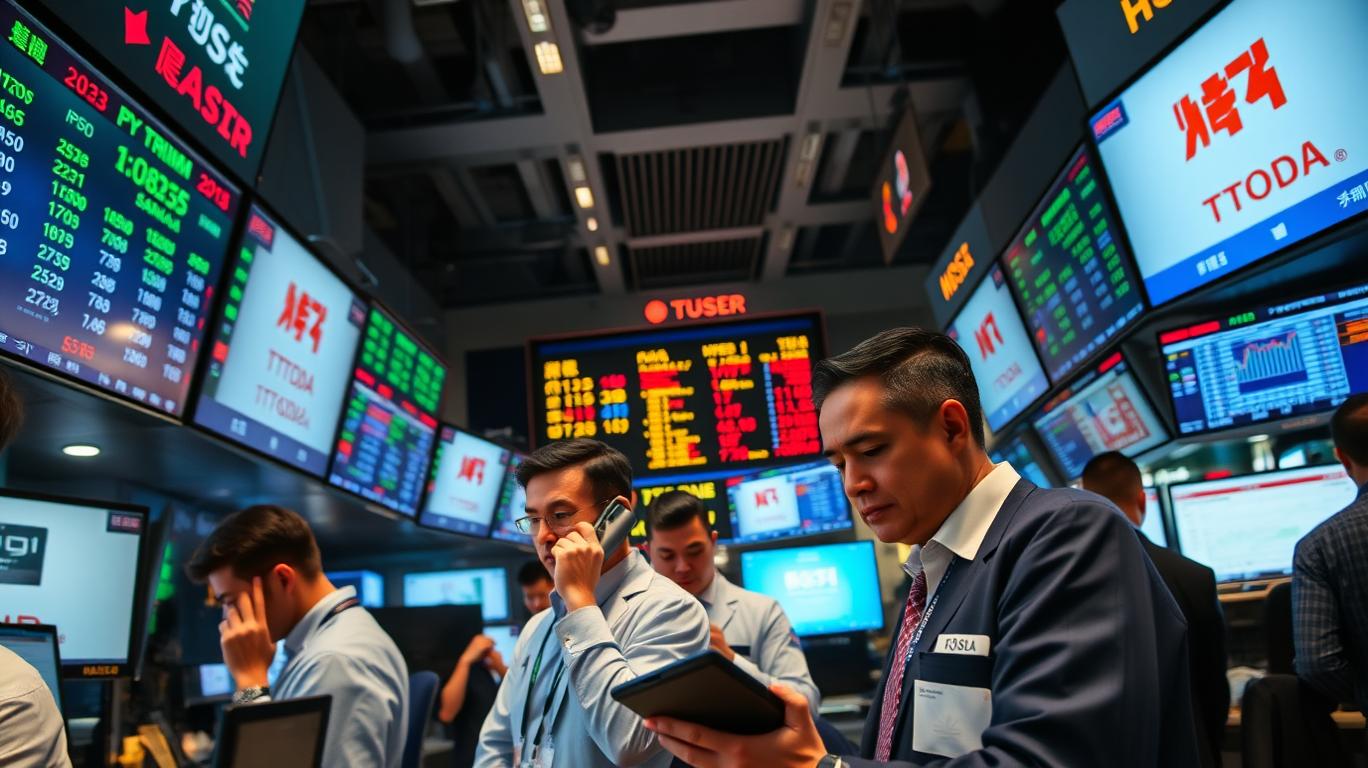
Trump's tariffs could benefit some Asian countries, such as those in Southeast Asia, as factories relocate from China to avoid U.S. tariffs. Steve Madden, a shoe retailer, recently announced it would halve its Chinese production and source from countries like Vietnam, Mexico, and Brazil. However, this shift could also hurt countries like Japan and South Korea, which have significant trade with the U.S.
Asian economies can adopt several strategies to mitigate the potential economic damage from Trump's planned tariffs. Diversifying export markets, investing in infrastructure and technology, engaging in regional trade agreements, and lobbying the U.S. government are all viable options. However, the success of these strategies will depend on the specific circumstances and resilience of each country.
In conclusion, Trump's tariff threats have generated uncertainty in Asian markets, with both potential benefits and challenges for the region. Asian countries must adapt their trade policies and find alternative markets to mitigate the impact of U.S. tariffs. Meanwhile, investors should closely monitor the situation, as the geopolitical landscape and trade dynamics could significantly influence market trends and stock performance.
The proposed tariffs, ranging from 10% to 25%, could significantly disrupt trade dynamics in Asia. Japan and South Korea, heavily reliant on exports to the U.S., are particularly vulnerable. Japan's exports to the U.S. amounted to $145 billion in 2023, about 20% of its total, while South Korea's exports totaled $116 billion. Meanwhile, Mexico and Canada face potential disruptions to their exports, valued at $345.5 billion and $323.3 billion respectively in 2023.
Trump's tariffs could benefit some Asian countries, such as those in Southeast Asia, as factories relocate from China to avoid U.S. tariffs. Steve Madden, a shoe retailer, recently announced it would halve its Chinese production and source from countries like Vietnam, Mexico, and Brazil. However, this shift could also hurt countries like Japan and South Korea, which have significant trade with the U.S.
Asian economies can adopt several strategies to mitigate the potential economic damage from Trump's planned tariffs. Diversifying export markets, investing in infrastructure and technology, engaging in regional trade agreements, and lobbying the U.S. government are all viable options. However, the success of these strategies will depend on the specific circumstances and resilience of each country.
In conclusion, Trump's tariff threats have generated uncertainty in Asian markets, with both potential benefits and challenges for the region. Asian countries must adapt their trade policies and find alternative markets to mitigate the impact of U.S. tariffs. Meanwhile, investors should closely monitor the situation, as the geopolitical landscape and trade dynamics could significantly influence market trends and stock performance.



Divulgación editorial y transparencia de la IA: Ainvest News utiliza tecnología avanzada de Modelos de Lenguaje Largo (LLM) para sintetizar y analizar datos de mercado en tiempo real. Para garantizar los más altos estándares de integridad, cada artículo se somete a un riguroso proceso de verificación con participación humana.
Mientras la IA asiste en el procesamiento de datos y la redacción inicial, un miembro editorial profesional de Ainvest revisa, verifica y aprueba de forma independiente todo el contenido para garantizar su precisión y cumplimiento con los estándares editoriales de Ainvest Fintech Inc. Esta supervisión humana está diseñada para mitigar las alucinaciones de la IA y garantizar el contexto financiero.
Advertencia sobre inversiones: Este contenido se proporciona únicamente con fines informativos y no constituye asesoramiento profesional de inversión, legal o financiero. Los mercados conllevan riesgos inherentes. Se recomienda a los usuarios que realicen una investigación independiente o consulten a un asesor financiero certificado antes de tomar cualquier decisión. Ainvest Fintech Inc. se exime de toda responsabilidad por las acciones tomadas con base en esta información. ¿Encontró un error? Reportar un problema


SOBRE NOSOTROS
Nuestra historiaAutores de noticiasBase de conocimientosPolítica de privacidadTérmino de usoDescargo de responsabilidad de corretaje de tercerosTérminos de uso de AIMEDivulgaciones de riesgos de AInvest AICarrerasCONTÁCTENOS
Email: support@ainvest.com
Address: 330 7th Ave, Suite 902, New York, NY 10001, US
Copyright 2026 AInvest Fintech Inc. All rights reserved.


Comentarios
Aún no hay comentarios