
Trump's Republican Party: A New Home for Union Voters?
Generado por agente de IAEli Grant
sábado, 23 de noviembre de 2024, 4:41 pm ET2 min de lectura
The 2024 presidential election brought a surprising shift in voter demographics, with President-elect Donald Trump's Republican Party making significant inroads among union members, traditionally a Democratic stronghold. This shift was exemplified by Trump's choice of Oregon Rep. Lori Chavez-DeRemer as his labor secretary, a move that highlights the GOP's growing appeal to organized labor.
Trump's populist messaging resonated with union workers, particularly his "America First" stance and tough-on-border-security policies. Exit polls in 2024 showed Trump winning Latino men by a 12-point margin, a 35-point swing from 2020. This shift was evident in Florida, where Trump won Miami-Dade County and the Orlando area by significant margins. Additionally, Trump's strong performance among union members helped him win key states like Pennsylvania, Michigan, and Wisconsin.
Trump's focus on economic issues, such as job creation and trade policies, played a significant role in attracting union voters. In the 2024 election, Trump deepened his support among non-college educated voters, who make up a substantial portion of union members. According to AP VoteCast, a sweeping survey of over 120,000 voters, Trump earned a clear majority of this group, while only about 4 in 10 supported Kamala Harris. This shift can be attributed to Trump's populist appeal and emphasis on economic policies that resonated with working-class voters, such as his 'America First' trade agenda and promises to bring back manufacturing jobs.
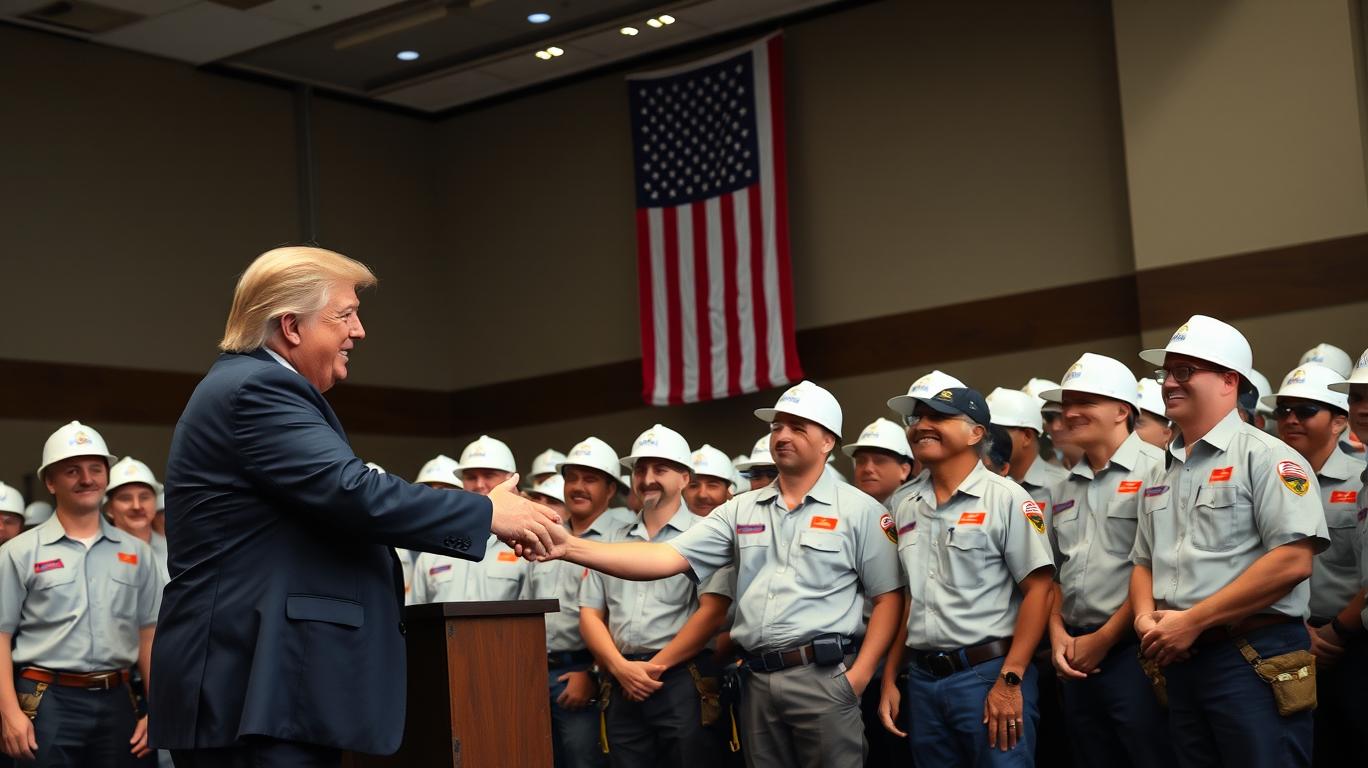
Trump's relationship with organized labor, though often contentious, did influence union voters' decisions. His populist appeal and support for some worker-friendly policies, such as the PRO Act, helped sway union members towards Republicans. Despite his administration's generally pro-business stance, Trump's rhetoric and some policy moves, like expanding overtime eligibility, resonated with workers. This shift was evident in the 2024 election, where Trump's support among union members helped him win key states like Pennsylvania, Michigan, and Wisconsin.
Chavez-DeRemer's pro-labor record could help her navigate potential tensions between worker interests and Trump's pro-business agenda. She has backed legislation like the PRO Act, which aims to strengthen workers' rights, and co-sponsored bills protecting public-sector workers' benefits. Union leaders, such as Teamsters President Sean O'Brien, have endorsed her, acknowledging her support for labor. However, unions remain cautious, citing Trump's past pro-business policies and his criticism of union bosses. Chavez-DeRemer's ability to balance these interests will be crucial in her role as Labor Secretary.
As Trump's labor secretary pick, Lori Chavez-DeRemer faces skepticism from labor leaders concerned about Trump's anti-worker policies and the Heritage Foundation's Project 2025. Despite Chavez-DeRemer's pro-labor record, unions worry about Trump's influence. Her confirmation process could address these concerns, with Senate hearings providing an opportunity to clarify her stance on workers' rights, overtime rules, and workplace safety regulations. Chavez-DeRemer could reassure labor leaders by committing to stand up for workers, not blind loyalty to the Project 2025 agenda.
In conclusion, the 2024 election marked a significant shift in the political landscape, with Trump's Republican Party increasingly winning union voters. This trend, exemplified by Trump's choice of Chavez-DeRemer as labor secretary, highlights the GOP's growing appeal to organized labor. As the party navigates potential tensions between worker interests and pro-business policies, the future of union voters' allegiance remains uncertain.
Trump's populist messaging resonated with union workers, particularly his "America First" stance and tough-on-border-security policies. Exit polls in 2024 showed Trump winning Latino men by a 12-point margin, a 35-point swing from 2020. This shift was evident in Florida, where Trump won Miami-Dade County and the Orlando area by significant margins. Additionally, Trump's strong performance among union members helped him win key states like Pennsylvania, Michigan, and Wisconsin.
Trump's focus on economic issues, such as job creation and trade policies, played a significant role in attracting union voters. In the 2024 election, Trump deepened his support among non-college educated voters, who make up a substantial portion of union members. According to AP VoteCast, a sweeping survey of over 120,000 voters, Trump earned a clear majority of this group, while only about 4 in 10 supported Kamala Harris. This shift can be attributed to Trump's populist appeal and emphasis on economic policies that resonated with working-class voters, such as his 'America First' trade agenda and promises to bring back manufacturing jobs.
Trump's relationship with organized labor, though often contentious, did influence union voters' decisions. His populist appeal and support for some worker-friendly policies, such as the PRO Act, helped sway union members towards Republicans. Despite his administration's generally pro-business stance, Trump's rhetoric and some policy moves, like expanding overtime eligibility, resonated with workers. This shift was evident in the 2024 election, where Trump's support among union members helped him win key states like Pennsylvania, Michigan, and Wisconsin.
Chavez-DeRemer's pro-labor record could help her navigate potential tensions between worker interests and Trump's pro-business agenda. She has backed legislation like the PRO Act, which aims to strengthen workers' rights, and co-sponsored bills protecting public-sector workers' benefits. Union leaders, such as Teamsters President Sean O'Brien, have endorsed her, acknowledging her support for labor. However, unions remain cautious, citing Trump's past pro-business policies and his criticism of union bosses. Chavez-DeRemer's ability to balance these interests will be crucial in her role as Labor Secretary.
As Trump's labor secretary pick, Lori Chavez-DeRemer faces skepticism from labor leaders concerned about Trump's anti-worker policies and the Heritage Foundation's Project 2025. Despite Chavez-DeRemer's pro-labor record, unions worry about Trump's influence. Her confirmation process could address these concerns, with Senate hearings providing an opportunity to clarify her stance on workers' rights, overtime rules, and workplace safety regulations. Chavez-DeRemer could reassure labor leaders by committing to stand up for workers, not blind loyalty to the Project 2025 agenda.
In conclusion, the 2024 election marked a significant shift in the political landscape, with Trump's Republican Party increasingly winning union voters. This trend, exemplified by Trump's choice of Chavez-DeRemer as labor secretary, highlights the GOP's growing appeal to organized labor. As the party navigates potential tensions between worker interests and pro-business policies, the future of union voters' allegiance remains uncertain.



Divulgación editorial y transparencia de la IA: Ainvest News utiliza tecnología avanzada de Modelos de Lenguaje Largo (LLM) para sintetizar y analizar datos de mercado en tiempo real. Para garantizar los más altos estándares de integridad, cada artículo se somete a un riguroso proceso de verificación con participación humana.
Mientras la IA asiste en el procesamiento de datos y la redacción inicial, un miembro editorial profesional de Ainvest revisa, verifica y aprueba de forma independiente todo el contenido para garantizar su precisión y cumplimiento con los estándares editoriales de Ainvest Fintech Inc. Esta supervisión humana está diseñada para mitigar las alucinaciones de la IA y garantizar el contexto financiero.
Advertencia sobre inversiones: Este contenido se proporciona únicamente con fines informativos y no constituye asesoramiento profesional de inversión, legal o financiero. Los mercados conllevan riesgos inherentes. Se recomienda a los usuarios que realicen una investigación independiente o consulten a un asesor financiero certificado antes de tomar cualquier decisión. Ainvest Fintech Inc. se exime de toda responsabilidad por las acciones tomadas con base en esta información. ¿Encontró un error? Reportar un problema


SOBRE NOSOTROS
Nuestra historiaAutores de noticiasBase de conocimientosPolítica de privacidadTérmino de usoDescargo de responsabilidad de corretaje de tercerosTérminos de uso de AIMEDivulgaciones de riesgos de AInvest AICarrerasCONTÁCTENOS
Email: support@ainvest.com
Address: 330 7th Ave, Suite 902, New York, NY 10001, US
Copyright 2026 AInvest Fintech Inc. All rights reserved.


Comentarios
Aún no hay comentarios