
Trump Rules Out U.S. Ground Troops in Ukraine but Eyes Air Support for Deterrence
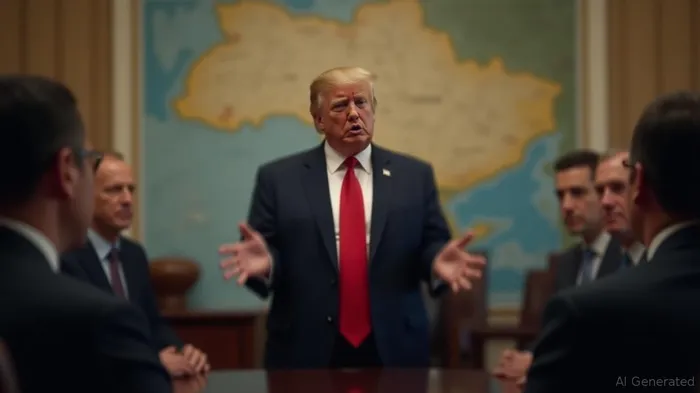
President Donald Trump has reaffirmed that U.S. ground forces will not be deployed to Ukraine, despite ongoing tensions with Russia and the prospect of a potential peace deal. During a recent meeting with Ukrainian President Volodymyr Zelensky, Trump emphasized that any U.S. security commitment would exclude direct troop involvement on Ukrainian soil, a stance consistent across multiple public statements. This decision aims to avoid escalating the conflict into a direct confrontation with Russia, which could risk broader military involvement and geopolitical instability [1][3][5].
In contrast to the rejection of ground troopsTROO--, Trump has indicated that the U.S. might provide air support as part of a broader coalition effort. This support could include reconnaissance missions, logistical assistance, or other airborne capabilities unique to the U.S. military. While the exact nature of this support remains undefined, it is seen as a strategic way to deter Russian aggression without exposing American soldiers to direct combat [2][4][6]. According to officials, this approach is being considered as a key component of any future peace deal, with Trump leaving the door open for involvement from other nations.
The potential shift in U.S. strategy toward air support marks a departure from traditional military engagement. Trump has suggested the U.S. could support peacekeeping efforts from a distance, though no concrete details have been provided on how this would operate in practice. This approach aligns with his broader foreign policy of limiting U.S. military presence in foreign conflicts. The administration has not outlined long-term plans for air support, leaving room for further diplomatic developments [7][8].
The implications of Trump’s position extend beyond military considerations. Analysts note that such a move could influence diplomatic relations with European allies, who may consider deploying their own ground forces if the U.S. does not. At the same time, the market has shown limited immediate response to these developments. Similar to the 2019 Syria withdrawal, the non-deployment of U.S. troops has not triggered significant shifts in major asset classes, including cryptocurrencies [9]. This suggests a growing trend of market resilience in the face of geopolitical uncertainty, with investors seemingly factoring in the likelihood of strategic caution from the U.S. administration.
Trump’s current stance mirrors his past decisions on military engagement, particularly the 2019 decision to withdraw U.S. forces from Syria. Historical data indicates that such announcements tend to influence short-term risk sentiment but rarely result in sustained market movements. Kanalcoin experts have noted that this pattern may reinforce short-term stability in cryptocurrency markets, a trend observed in previous geopolitical events [9].
Sources:
[1] https://www.nbcnews.com/politics/trump-administration/live-blog/trump-zelenskyy-putin-israel-gaza-hamas-dc-national-guard-live-updates-rcna225400
[2] https://time.com/7310588/trump-troops-ukraine-security-deal/
[3] https://www.reuters.com/world/europe/us-nato-planners-start-craft-ukraine-security-guarantee-options-2025-08-19/
[4] https://news.sky.com/story/trump-i-wont-send-us-troops-to-ukraine-but-might-help-by-air-13414934
[5] https://www.bbc.com/news/live/cz93ve1p952t
[6] https://www.semafor.com/article/08/19/2025/trump-rules-out-us-troops-in-ukraine
[7] https://www.twz.com/air/no-u-s-peacekeeping-forces-on-the-ground-in-ukraine-air-support-possible-trump
[8] https://thehill.com/policy/international/5459890-trump-air-support-ukraine/
[9] https://www.abc.net.au/news/2025-08-20/donald-trump-ukraine-peace-deal-security-guarantees/105674070







Comentarios
Aún no hay comentarios