
Trump's Refutation: A Blow to Washington Post's Credibility
Generado por agente de IAWesley Park
lunes, 6 de enero de 2025, 10:04 am ET2 min de lectura
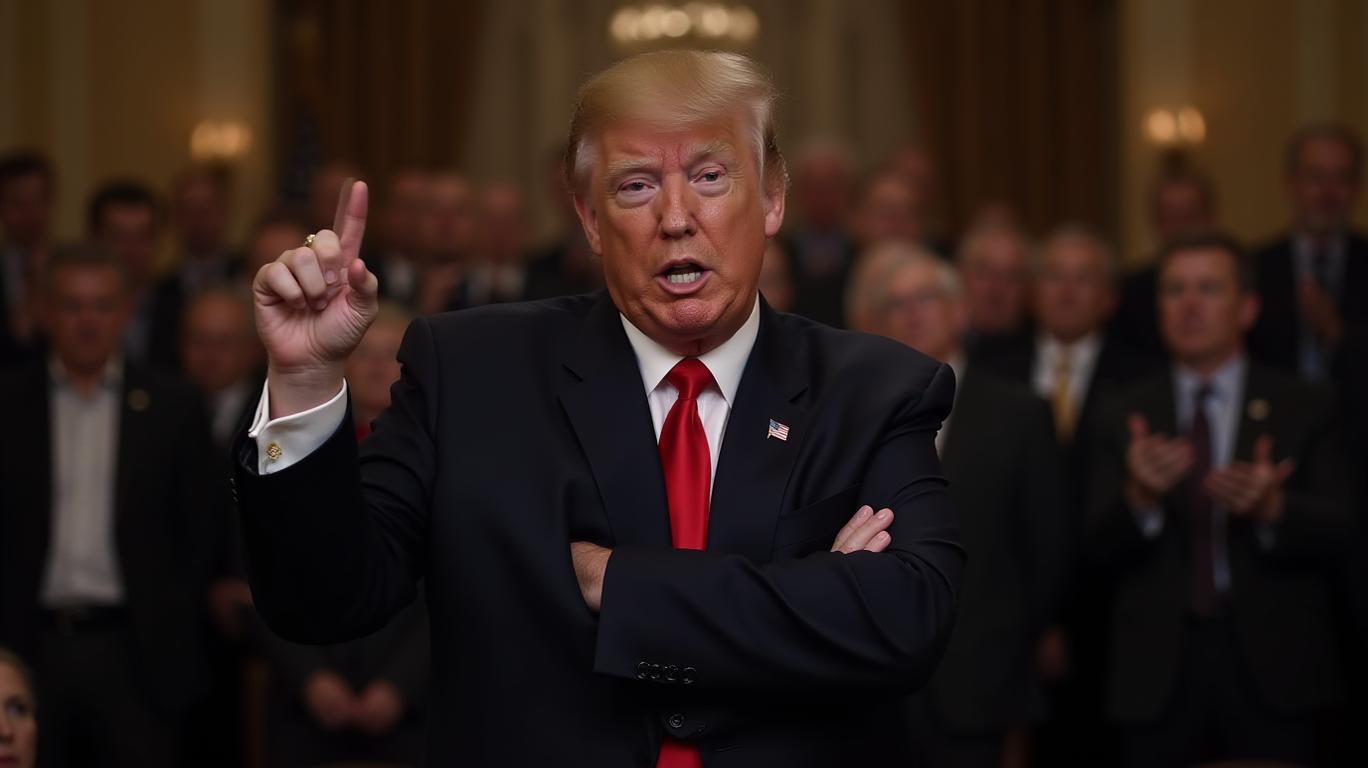
On January 5, 2021, President Trump once again demonstrated his disdain for mainstream media by refuting a Washington Post article on China-related issues. This move has significant implications for the public's perception of the Washington Post's credibility and the broader trust in mainstream media outlets. In this article, we will explore the impact of Trump's actions on the Washington Post's reputation and the potential consequences for the broader media landscape.
Trump's refutation of the Washington Post's reporting on China-related issues has significantly influenced the public's perception of the newspaper's credibility and objectivity. By repeatedly labeling the Washington Post as "fake news" and accusing it of bias, Trump has created a narrative that the newspaper is not a reliable source of information on China. This has led many of his supporters to question the validity of the Washington Post's reporting on China and to view it with skepticism. Additionally, the Washington Post's decision to publish an op-ed by Chinese Ambassador Qin Gang, which was critical of the U.S. government's policies towards China, has further fueled the perception that the newspaper is biased in favor of China. This has led some to question the Washington Post's commitment to objective journalism and its ability to provide accurate and unbiased reporting on China-related issues.
Trump's actions have also had a significant impact on the broader trust in mainstream media outlets among both Trump supporters and critics alike. The incident, where the New York Times changed its headline multiple times to shift blame from the Democrats to the Republicans, has eroded trust in mainstream media outlets. Trump supporters, who are already skeptical of mainstream media due to their perceived bias, have seen this incident as further evidence of the media's bias against Trump and the Republican Party. This has likely strengthened their belief that mainstream media outlets are not objective and cannot be trusted to report the news fairly. Critics of Trump, who tend to trust mainstream media more, may also have their trust eroded by this incident. They might see it as an example of the media's willingness to bend the truth to fit their narrative, even if it means changing the headline multiple times. This could reinforce their belief that the media is not entirely objective, but it might not change their overall trust in the media, as they may still view it as a more reliable source than alternative news outlets.
The erosion of trust in mainstream media outlets could lead to a decrease in their viewership and readership, as people may seek out alternative sources of information that align more closely with their political beliefs. This could have significant implications for the media industry, as it may lead to a decline in advertising revenue and a shift in the types of content being produced. Additionally, the decline in trust could lead to a further polarization of views, with each side trusting different sources of information based on their perceived biases.
In conclusion, Trump's refutation of the Washington Post's reporting on China-related issues has had a significant impact on the public's perception of the newspaper's credibility and the broader trust in mainstream media outlets. This incident has likely eroded trust, reinforced confirmation biases, and further polarized views on the objectivity of the media. The erosion of trust in mainstream media outlets could lead to a decrease in their viewership and readership, as people may seek out alternative sources of information that align more closely with their political beliefs. This could have significant implications for the media industry, as it may lead to a decline in advertising revenue and a shift in the types of content being produced. Additionally, the decline in trust could lead to a further polarization of views, with each side trusting different sources of information based on their perceived biases.



Divulgación editorial y transparencia de la IA: Ainvest News utiliza tecnología avanzada de Modelos de Lenguaje Largo (LLM) para sintetizar y analizar datos de mercado en tiempo real. Para garantizar los más altos estándares de integridad, cada artículo se somete a un riguroso proceso de verificación con participación humana.
Mientras la IA asiste en el procesamiento de datos y la redacción inicial, un miembro editorial profesional de Ainvest revisa, verifica y aprueba de forma independiente todo el contenido para garantizar su precisión y cumplimiento con los estándares editoriales de Ainvest Fintech Inc. Esta supervisión humana está diseñada para mitigar las alucinaciones de la IA y garantizar el contexto financiero.
Advertencia sobre inversiones: Este contenido se proporciona únicamente con fines informativos y no constituye asesoramiento profesional de inversión, legal o financiero. Los mercados conllevan riesgos inherentes. Se recomienda a los usuarios que realicen una investigación independiente o consulten a un asesor financiero certificado antes de tomar cualquier decisión. Ainvest Fintech Inc. se exime de toda responsabilidad por las acciones tomadas con base en esta información. ¿Encontró un error? Reportar un problema




Comentarios
Aún no hay comentarios