
Trump's Rare Earths Demand: A Geopolitical and Economic Gamble
Generado por agente de IATheodore Quinn
martes, 4 de febrero de 2025, 3:42 am ET2 min de lectura
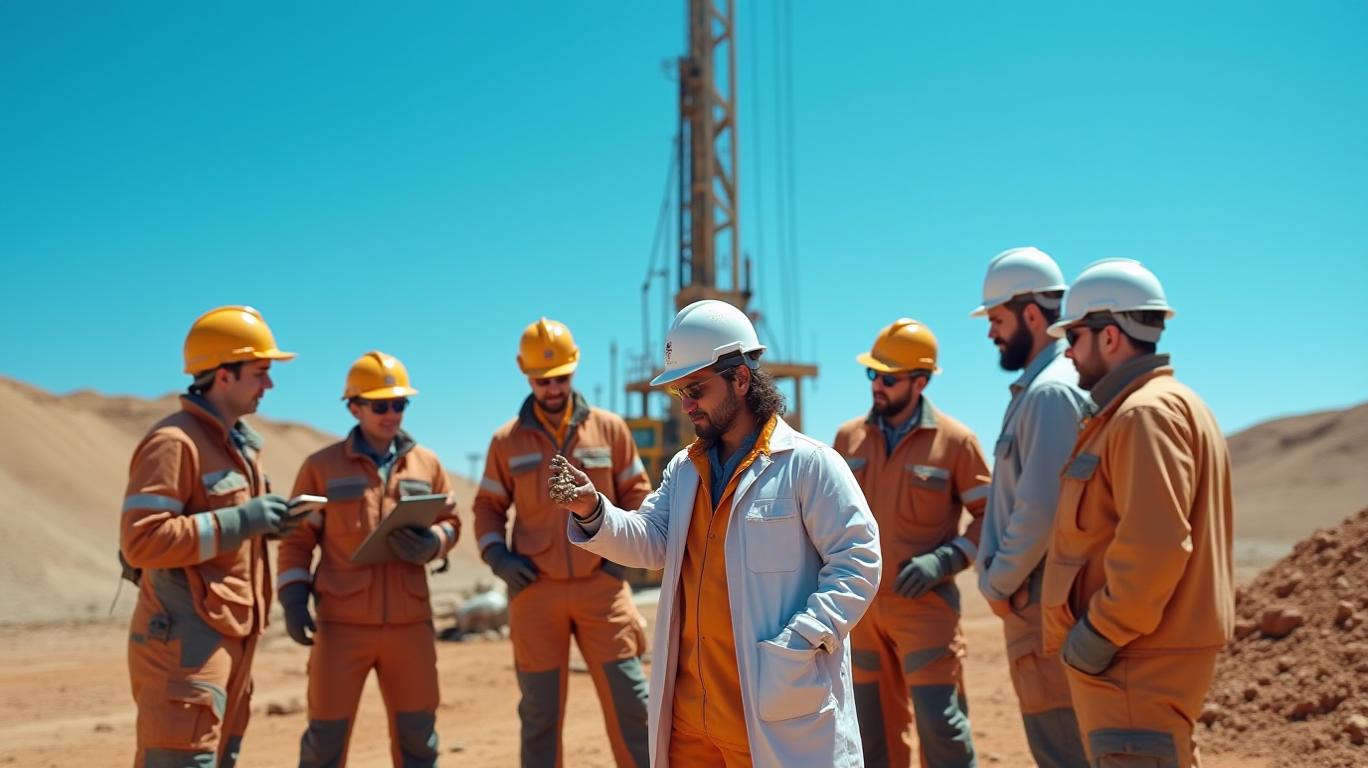
In a move that has raised eyebrows and sparked debate, U.S. President Donald Trump has indicated that he wants to reach an agreement with Ukraine to gain access to the country’s rare earth materials as a condition for continuing U.S. support for its war against Russia. Speaking to reporters in the Oval Office, Trump complained that the U.S. had sent more in military and economic assistance to Ukraine than its European partners, adding, “We’re looking to do a deal with Ukraine where they’re going to secure what we’re giving them with their rare earth and other things.”
Rare earth elements (REEs) are a group of 17 minerals critical to the defense industry’s manufacturing of missiles and munitions, hypersonic weapons, and radiation-hardened electronics, as well as consumer electronics like cellphones. The U.S. imports 80 percent of these elements directly from China, with portions of the remainder indirectly sourced from China through other countries. Trump’s proposal to secure access to Ukraine’s rare earth metals could have significant geopolitical and economic implications.
Geopolitically, Trump’s demand for access to Ukraine’s rare earth metals could be seen as a strategic move to reduce dependence on China, which has been using its dominance in the rare earth market as a political tool. In 2010, China temporarily halted exports of rare earth metals to Japan, highlighting the potential risks associated with relying on a single supplier. By securing access to Ukraine’s rare earth metals, the U.S. could mitigate these risks and strengthen its position in the global market.
However, Trump’s proposal has also raised concerns about the potential for market disruption and geopolitical tensions. If the U.S. successfully secures access to Ukraine’s rare earth metals, it could lead to increased competition among other countries seeking to secure their own supplies, potentially driving up prices and creating market volatility. Additionally, Trump’s demand could strain relations with China or other countries that rely on Chinese supply, potentially leading to further geopolitical tensions.
Economically, Trump’s proposal could have significant implications for both the U.S. and Ukraine. For the U.S., securing access to Ukraine’s rare earth metals could help reduce dependence on Chinese supply, potentially leading to cost savings and improved supply chain resilience. However, the U.S. would also need to invest in the development and expansion of mining operations and processing facilities in Ukraine, which could require significant capital expenditure and pose operational risks.
For Ukraine, Trump’s proposal presents an opportunity to leverage its abundant resources and strengthen its relationship with the U.S. By securing access to its rare earth metals, Ukraine could potentially attract investment in its mining and processing industries, creating jobs and stimulating economic growth. However, Ukraine would also need to navigate the potential risks associated with increased dependence on the U.S. and the possibility of market disruption.
In conclusion, Trump’s demand for access to Ukraine’s rare earth metals as a condition for continuing U.S. support for its war against Russia has significant geopolitical and economic implications. While the proposal could help reduce dependence on Chinese supply and strengthen the U.S.-Ukraine relationship, it also poses risks for market disruption and geopolitical tensions. As the situation unfolds, investors should closely monitor the developments and assess the potential opportunities and challenges that arise from this strategic gamble.



Divulgación editorial y transparencia de la IA: Ainvest News utiliza tecnología avanzada de Modelos de Lenguaje Largo (LLM) para sintetizar y analizar datos de mercado en tiempo real. Para garantizar los más altos estándares de integridad, cada artículo se somete a un riguroso proceso de verificación con participación humana.
Mientras la IA asiste en el procesamiento de datos y la redacción inicial, un miembro editorial profesional de Ainvest revisa, verifica y aprueba de forma independiente todo el contenido para garantizar su precisión y cumplimiento con los estándares editoriales de Ainvest Fintech Inc. Esta supervisión humana está diseñada para mitigar las alucinaciones de la IA y garantizar el contexto financiero.
Advertencia sobre inversiones: Este contenido se proporciona únicamente con fines informativos y no constituye asesoramiento profesional de inversión, legal o financiero. Los mercados conllevan riesgos inherentes. Se recomienda a los usuarios que realicen una investigación independiente o consulten a un asesor financiero certificado antes de tomar cualquier decisión. Ainvest Fintech Inc. se exime de toda responsabilidad por las acciones tomadas con base en esta información. ¿Encontró un error? Reportar un problema


SOBRE NOSOTROS
Nuestra historiaAutores de noticiasBase de conocimientosPolítica de privacidadTérmino de usoDescargo de responsabilidad de corretaje de tercerosTérminos de uso de AIMEDivulgaciones de riesgos de AInvest AICarrerasCONTÁCTENOS
Email: support@ainvest.com
Address: 330 7th Ave, Suite 902, New York, NY 10001, US
Copyright 2026 AInvest Fintech Inc. All rights reserved.


Comentarios
Aún no hay comentarios