
Trump's Policy Shifts and Their Impact on Energy and Financial Markets
The 2025 resurgence of Trump's policy agenda has reshaped the U.S. energy and financial landscapes, creating a complex interplay of short-term volatility and long-term sector positioning. By prioritizing fossil fuels, deregulation, and tax cuts, the administration has triggered both immediate market turbulence and structural shifts in energy, real estate, and financial sectors. This analysis examines these dynamics, drawing on recent data and policy developments.
Energy Sector: Fossil Fuel Revival and Renewable Uncertainty
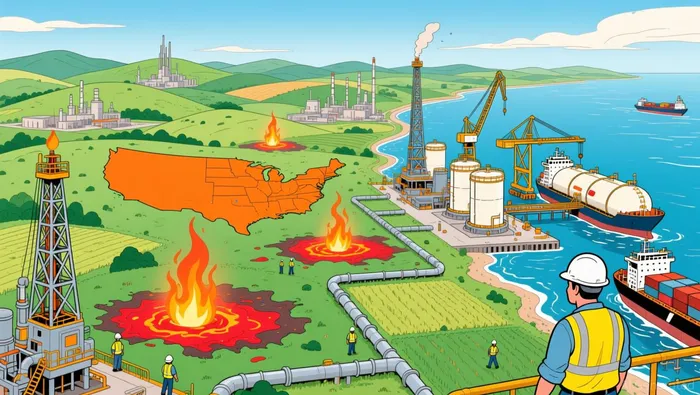
The Trump administration's 2025 energy policy has prioritized domestic fossil fuel production and LNG exports, leading to record U.S. natural gas output of 110 million metric tons in 2025. This surge has driven up domestic gas prices, with the Henry Hub spot price falling to $3.89/MMBtu in late December 2025 due to warmer-than-expected weather reducing heating demand. Meanwhile, oil markets have faced downward pressure, with WTI crude trading at $55.53 per barrel in mid-December-a 7.24% monthly decline-despite OPEC+ supply cuts.
 Renewable energy sectors, however, face headwinds. Trump's revocation of Biden-era clean energy initiatives has stymied low-carbon investment growth, while lower fossil fuel prices reduce the economic viability of renewables. For instance, India's solar sector grapples with overcapacity, and Europe's rapid renewable transition has strained industrial competitiveness. These policy-driven uncertainties have created a fragmented energy transition landscape.
Real Estate and Financial Sectors: Deregulation and Fiscal Risks
The "One Big Beautiful Bill Act" has permanently extended tax cuts from the 2017 Tax Cuts and Jobs Act, including 100% bonus depreciation and expanded manufacturing tax credits. These measures have lowered corporate tax burdens to historic lows (as low as 12%) but come with a $3.8 trillion fiscal cost over 10 years, pushing the deficit-to-GDP ratio to over 7% by 2026.
Deregulation has also reshaped the financial sector. Executive Order 14,192, mandating the repeal of ten regulations for every new one, has boosted financial sector earnings by 12.89% in 2025. Banks have benefited from relaxed capital requirements under Dodd-Frank and Basel III, enhancing credit availability and returns on capital. However, critics warn that reduced oversight increases systemic risks, particularly in climate-related and global economic volatility contexts.
Real estate faces a dual challenge. Deregulation in housing development has streamlined permitting and reduced construction costs, but tariffs on steel and aluminum have raised material prices, potentially slowing development. Additionally, the privatization of Fannie Mae and Freddie Mac could introduce mortgage rate volatility, affecting housing affordability.
Long-Term Financial Sector Positioning: Profitability vs. Stability
The financial sector's long-term positioning under Trump's policies reflects a tension between profitability and stability. Deregulation has spurred M&A activity and capital formation, with AI-driven investments in data centers and GPUs contributing to GDP growth. However, the removal of stress testing and transparency requirements has obscured systemic risks, echoing pre-2008 vulnerabilities.
Globally, U.S. deregulation aligns with similar trends in the EU and UK, boosting market liquidity and capital formation. Yet, interconnected financial systems mean U.S. instability could ripple into developing economies. The Trump administration's tariffs and sovereign wealth fund initiatives have further complicated this landscape, incentivizing domestic investment in key industries while raising inflationary pressures.
Investor Confidence and Market Trends
Investor sentiment in U.S. financial markets has surged post-2025 deregulation, with equities reaching a one-year high. Eased capital requirements and AI-driven growth have fueled optimism, supported by expectations of Federal Reserve rate cuts and fiscal stimulus. However, risks persist: elevated inflation expectations and tariff-driven price pressures could erode long-term gains.
Capital formation trends highlight the dual impact of AI investment. While real business fixed investment grew at a 7.3% annualized rate in Q2 2025, projections suggest a moderation to 4% by 2026. This trajectory underscores the fragility of AI-driven growth, particularly if overinvestment leads to a correction in 2027.
Conclusion
Trump's 2025 policies have catalyzed short-term volatility in energy and financial markets while reshaping long-term sector dynamics. The energy sector faces a fossil fuel revival at the expense of renewables, real estate grapples with deregulatory gains and tariff-driven costs, and financials benefit from reduced compliance burdens but face systemic risks. Investors must navigate these shifts with a nuanced understanding of policy-driven opportunities and vulnerabilities, balancing immediate gains with the potential for future instability.







Comentarios
Aún no hay comentarios