
Trump's Policies: A Mixed Bag for Inflation, Economists Say
Generado por agente de IATheodore Quinn
lunes, 6 de enero de 2025, 6:17 am ET2 min de lectura
MASS--
As the 2024 presidential race heats up, former President Donald Trump has been making bold promises about his economic agenda, including a vow to eliminate inflation if voters return him to the White House. However, many mainstream economists remain skeptical of Trump's proposals, warning that his policies could actually exacerbate inflationary pressures rather than alleviate them.
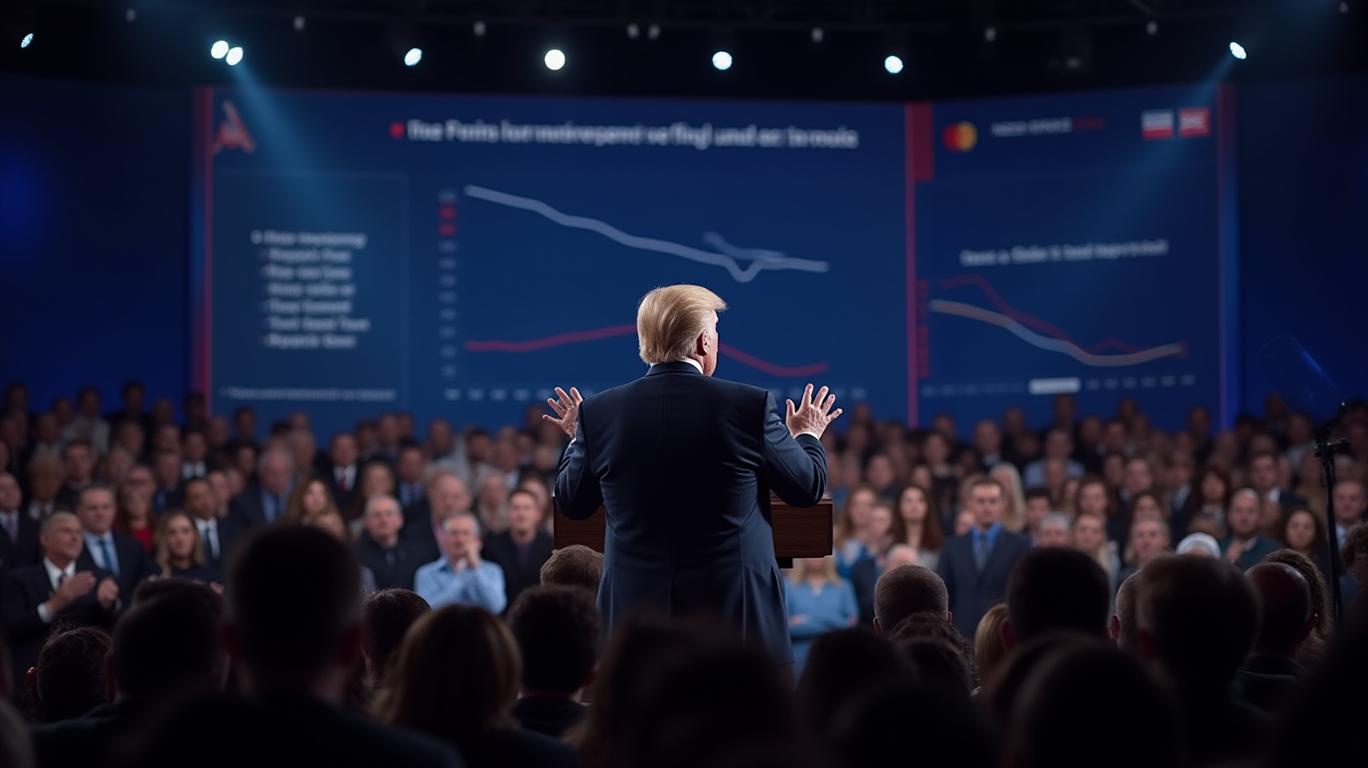
Trump's plan to impose massive tariffs on imported goods, deport millions of migrant workers, and demand a voice in the Federal Reserve's interest rate policies has drawn criticism from economists, who argue that these measures would likely send prices surging. A group of 16 Nobel Prize-winning economists signed a letter in June expressing concern that Trump's proposals would "reignite" inflation, which has been steadily declining since peaking at 9.1% in 2022.
The Peterson Institute for International Economics (PIIE) has also weighed in on the matter, predicting that if Trump's policies were enacted, inflation, which would otherwise register 1.9% in 2026, would instead jump to between 6% and 9.3%. The PIIE's analysis concluded that Trump's deportations, import taxes, and efforts to erode the Fed's independence would drive consumer prices sharply higher two years into his second term.
However, not all economists are convinced that Trump's policies would have such a dramatic impact on inflation. Mark Zandi, chief economist at Moody's Analytics, and two colleagues have estimated that Harris' policies would leave the inflation outlook virtually unchanged, even if she enjoyed a Democratic majority in both chambers of Congress. An unfettered Trump, by contrast, would leave prices higher by 1.1 percentage points in 2025 and 0.8 percentage points in 2026, they concluded.
One area where economists do agree is that Trump's proposed tariffs on imported goods would likely lead to higher prices for U.S. consumers. While Trump has claimed that the cost of taxing imported goods is absorbed by the foreign countries that produce those goods, the truth is that U.S. importers pay the tariff and then typically pass along that cost to consumers in the form of higher prices. This is how Americans themselves end up bearing the cost of tariffs.

Moreover, as tariffs raise the cost of imports, the weakened competition from foreign products makes it easier for U.S. producers to raise their own prices, further contributing to inflation. Kent Smetters of the University of Pennsylvania's Penn Wharton Budget Model confirms that "tariffs are inflationary," although the exact magnitude of their impact can be debated among economists.
Trump's immigration policies, including mass deportations, could also contribute to inflationary pressures, according to some economists. A smaller labor supply would lead to increased competition among workers for available jobs, driving up wages. Higher wages, in turn, would increase production costs for businesses, which they would pass on to consumers through higher prices. However, the overall impact on inflation would depend on various factors, such as the extent of deportations, the sectors most affected, and the response of businesses and consumers to these changes.
Finally, Trump's plans to demand a voice in the Federal Reserve's interest rate policies have raised concerns among economists. While maintaining the Fed's independence is crucial for controlling inflation and promoting economic stability, Trump's influence could lead to politically motivated decisions that may not be in the best interest of the economy. This could potentially lead to higher inflation or other economic issues.
In conclusion, while Trump's proposed policies may have some short-term benefits, such as increased investment and consumer spending, they could also create long-term challenges that could offset these positive effects. The overall impact of Trump's proposed policies on inflation would depend on a variety of factors, including the extent to which the policies stimulate economic growth, the impact of supply-side constraints on inflation, and the long-term fiscal sustainability of the U.S. economy. As the 2024 presidential race continues to unfold, voters should carefully consider the potential consequences of Trump's economic agenda on inflation and the broader economy.
MCO--
OAKM--
PENN--
As the 2024 presidential race heats up, former President Donald Trump has been making bold promises about his economic agenda, including a vow to eliminate inflation if voters return him to the White House. However, many mainstream economists remain skeptical of Trump's proposals, warning that his policies could actually exacerbate inflationary pressures rather than alleviate them.
Trump's plan to impose massive tariffs on imported goods, deport millions of migrant workers, and demand a voice in the Federal Reserve's interest rate policies has drawn criticism from economists, who argue that these measures would likely send prices surging. A group of 16 Nobel Prize-winning economists signed a letter in June expressing concern that Trump's proposals would "reignite" inflation, which has been steadily declining since peaking at 9.1% in 2022.
The Peterson Institute for International Economics (PIIE) has also weighed in on the matter, predicting that if Trump's policies were enacted, inflation, which would otherwise register 1.9% in 2026, would instead jump to between 6% and 9.3%. The PIIE's analysis concluded that Trump's deportations, import taxes, and efforts to erode the Fed's independence would drive consumer prices sharply higher two years into his second term.
However, not all economists are convinced that Trump's policies would have such a dramatic impact on inflation. Mark Zandi, chief economist at Moody's Analytics, and two colleagues have estimated that Harris' policies would leave the inflation outlook virtually unchanged, even if she enjoyed a Democratic majority in both chambers of Congress. An unfettered Trump, by contrast, would leave prices higher by 1.1 percentage points in 2025 and 0.8 percentage points in 2026, they concluded.
One area where economists do agree is that Trump's proposed tariffs on imported goods would likely lead to higher prices for U.S. consumers. While Trump has claimed that the cost of taxing imported goods is absorbed by the foreign countries that produce those goods, the truth is that U.S. importers pay the tariff and then typically pass along that cost to consumers in the form of higher prices. This is how Americans themselves end up bearing the cost of tariffs.
Moreover, as tariffs raise the cost of imports, the weakened competition from foreign products makes it easier for U.S. producers to raise their own prices, further contributing to inflation. Kent Smetters of the University of Pennsylvania's Penn Wharton Budget Model confirms that "tariffs are inflationary," although the exact magnitude of their impact can be debated among economists.
Trump's immigration policies, including mass deportations, could also contribute to inflationary pressures, according to some economists. A smaller labor supply would lead to increased competition among workers for available jobs, driving up wages. Higher wages, in turn, would increase production costs for businesses, which they would pass on to consumers through higher prices. However, the overall impact on inflation would depend on various factors, such as the extent of deportations, the sectors most affected, and the response of businesses and consumers to these changes.
Finally, Trump's plans to demand a voice in the Federal Reserve's interest rate policies have raised concerns among economists. While maintaining the Fed's independence is crucial for controlling inflation and promoting economic stability, Trump's influence could lead to politically motivated decisions that may not be in the best interest of the economy. This could potentially lead to higher inflation or other economic issues.
In conclusion, while Trump's proposed policies may have some short-term benefits, such as increased investment and consumer spending, they could also create long-term challenges that could offset these positive effects. The overall impact of Trump's proposed policies on inflation would depend on a variety of factors, including the extent to which the policies stimulate economic growth, the impact of supply-side constraints on inflation, and the long-term fiscal sustainability of the U.S. economy. As the 2024 presidential race continues to unfold, voters should carefully consider the potential consequences of Trump's economic agenda on inflation and the broader economy.

Divulgación editorial y transparencia de la IA: Ainvest News utiliza tecnología avanzada de Modelos de Lenguaje Largo (LLM) para sintetizar y analizar datos de mercado en tiempo real. Para garantizar los más altos estándares de integridad, cada artículo se somete a un riguroso proceso de verificación con participación humana.
Mientras la IA asiste en el procesamiento de datos y la redacción inicial, un miembro editorial profesional de Ainvest revisa, verifica y aprueba de forma independiente todo el contenido para garantizar su precisión y cumplimiento con los estándares editoriales de Ainvest Fintech Inc. Esta supervisión humana está diseñada para mitigar las alucinaciones de la IA y garantizar el contexto financiero.
Advertencia sobre inversiones: Este contenido se proporciona únicamente con fines informativos y no constituye asesoramiento profesional de inversión, legal o financiero. Los mercados conllevan riesgos inherentes. Se recomienda a los usuarios que realicen una investigación independiente o consulten a un asesor financiero certificado antes de tomar cualquier decisión. Ainvest Fintech Inc. se exime de toda responsabilidad por las acciones tomadas con base en esta información. ¿Encontró un error? Reportar un problema


SOBRE NOSOTROS
Nuestra historiaAutores de noticiasBase de conocimientosPolítica de privacidadTérmino de usoDescargo de responsabilidad de corretaje de tercerosTérminos de uso de AIMEDivulgaciones de riesgos de AInvest AICarrerasCONTÁCTENOS
Email: support@ainvest.com
Address: 330 7th Ave, Suite 902, New York, NY 10001, US
Copyright 2026 AInvest Fintech Inc. All rights reserved.


Comentarios
Aún no hay comentarios