
Trump's Paris Agreement Withdrawal: A Blow to Global Climate Cooperation and U.S. Energy Sector
Generado por agente de IACyrus Cole
lunes, 20 de enero de 2025, 8:39 pm ET2 min de lectura
FOSL--
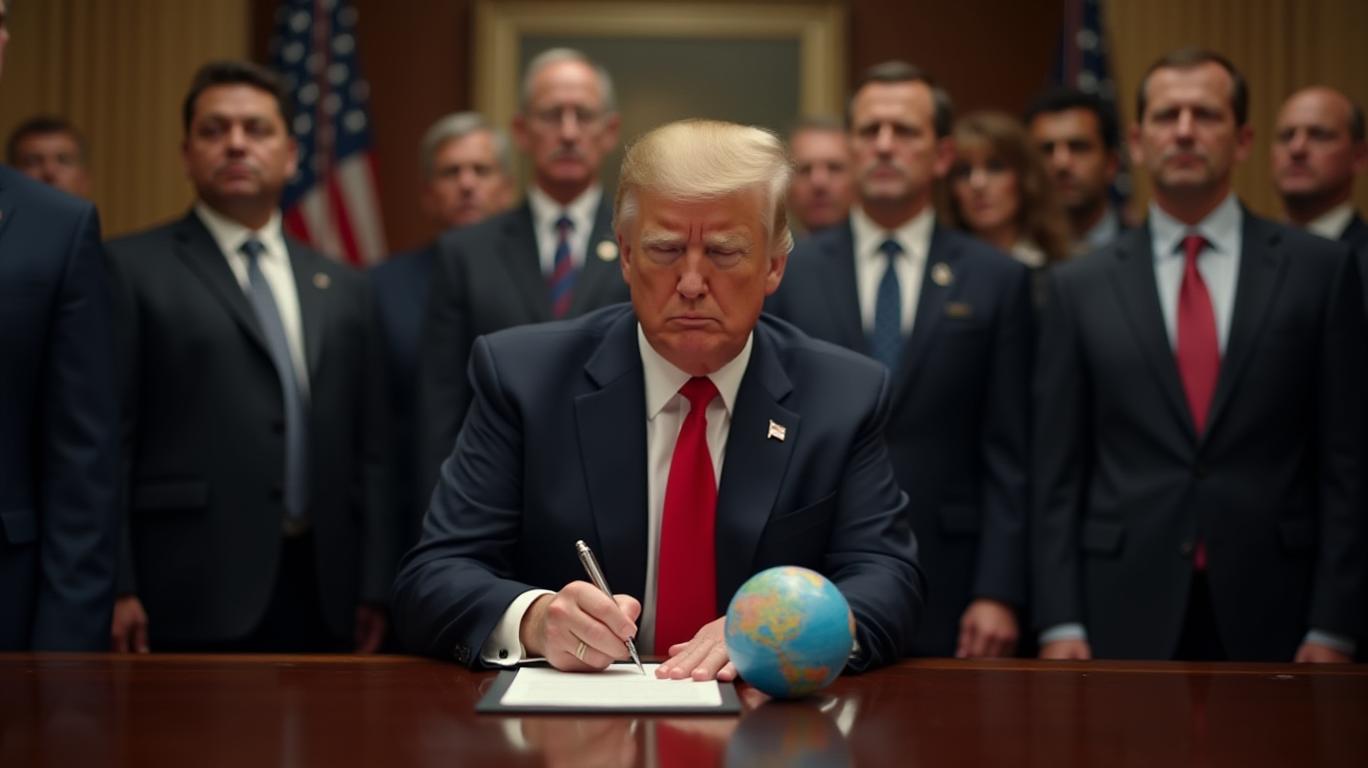
President Donald Trump has once again signed executive orders to withdraw the United States from the landmark Paris climate agreement, calling the deal "one-sided" and unfair. This decision, hours after his inauguration for a second term, has significant implications for global climate cooperation and the U.S. energy sector. Here, we analyze the potential economic and environmental consequences of this withdrawal, focusing on the fossil fuel and renewable energy industries.
Global Climate Cooperation and the Paris Agreement
The U.S. withdrawal from the Paris Agreement will have far-reaching consequences for global climate cooperation and the Agreement's compliance prospects. The withdrawal undermines the universality of the Paris Agreement and impairs states' confidence in climate cooperation, as noted by Laurence Tubiana, a key architect of the Paris accord. The withdrawal also aggravates the leadership deficit in addressing global climate issues and sets a bad precedent for international climate cooperation (Zhang et al., 2024).
Moreover, the U.S. withdrawal reduces other countries' emission space and raises their emission costs, making it more difficult for developing countries to mitigate and adapt to climate change. Refusal to contribute to climate aid further compounds this challenge, while cutting climate research funding could compromise the quality of future IPCC reports and undermine the scientific authority of future climate negotiations (Zhang et al., 2024).
Economic and Environmental Consequences for the U.S. and Global Community
The U.S. withdrawal from the Paris Agreement has potential economic and environmental consequences for both the U.S. and the global community. For the U.S., the withdrawal could lead to job losses in the clean energy sector, hinder innovation, and increase energy prices, while exacerbating climate change impacts and increasing health and environmental costs. Globally, the withdrawal could lead to reduced global cooperation, increased emission costs, and compromised climate research, as well as a loss of U.S. influence in the global clean energy market.
Influence on the Energy Sector: Fossil Fuel and Renewable Energy Industries
The U.S. withdrawal from the Paris Agreement could have significant impacts on the energy sector, particularly the fossil fuel and renewable energy industries. The withdrawal could lead to increased investment and market uncertainty in the fossil fuel industry, as investors may be less likely to invest in companies that are not aligned with global climate goals. However, the withdrawal could also pave the way for more favorable policies for the fossil fuel industry, such as reduced regulations and subsidies.
In contrast, the renewable energy industry could see increased demand and investment, as states, cities, and businesses step up their climate commitments. The withdrawal could also accelerate technological advancements and cost reductions in renewable energy, as companies and investors seek to capitalize on the growing demand for clean energy. Additionally, the withdrawal could lead to increased policy support and incentives for renewable energy, as states and cities seek to fill the void left by the federal government.

In conclusion, President Trump's decision to withdraw the United States from the Paris Agreement has significant potential economic and environmental consequences for both the U.S. and the global community. The withdrawal could undermine global climate cooperation, impact the U.S. energy sector, and influence the fossil fuel and renewable energy industries. As the U.S. reassesses its role in global climate governance, other countries must step up to fill the leadership void and maintain momentum towards a low-carbon future.
LARK--
President Donald Trump has once again signed executive orders to withdraw the United States from the landmark Paris climate agreement, calling the deal "one-sided" and unfair. This decision, hours after his inauguration for a second term, has significant implications for global climate cooperation and the U.S. energy sector. Here, we analyze the potential economic and environmental consequences of this withdrawal, focusing on the fossil fuel and renewable energy industries.
Global Climate Cooperation and the Paris Agreement
The U.S. withdrawal from the Paris Agreement will have far-reaching consequences for global climate cooperation and the Agreement's compliance prospects. The withdrawal undermines the universality of the Paris Agreement and impairs states' confidence in climate cooperation, as noted by Laurence Tubiana, a key architect of the Paris accord. The withdrawal also aggravates the leadership deficit in addressing global climate issues and sets a bad precedent for international climate cooperation (Zhang et al., 2024).
Moreover, the U.S. withdrawal reduces other countries' emission space and raises their emission costs, making it more difficult for developing countries to mitigate and adapt to climate change. Refusal to contribute to climate aid further compounds this challenge, while cutting climate research funding could compromise the quality of future IPCC reports and undermine the scientific authority of future climate negotiations (Zhang et al., 2024).
Economic and Environmental Consequences for the U.S. and Global Community
The U.S. withdrawal from the Paris Agreement has potential economic and environmental consequences for both the U.S. and the global community. For the U.S., the withdrawal could lead to job losses in the clean energy sector, hinder innovation, and increase energy prices, while exacerbating climate change impacts and increasing health and environmental costs. Globally, the withdrawal could lead to reduced global cooperation, increased emission costs, and compromised climate research, as well as a loss of U.S. influence in the global clean energy market.
Influence on the Energy Sector: Fossil Fuel and Renewable Energy Industries
The U.S. withdrawal from the Paris Agreement could have significant impacts on the energy sector, particularly the fossil fuel and renewable energy industries. The withdrawal could lead to increased investment and market uncertainty in the fossil fuel industry, as investors may be less likely to invest in companies that are not aligned with global climate goals. However, the withdrawal could also pave the way for more favorable policies for the fossil fuel industry, such as reduced regulations and subsidies.
In contrast, the renewable energy industry could see increased demand and investment, as states, cities, and businesses step up their climate commitments. The withdrawal could also accelerate technological advancements and cost reductions in renewable energy, as companies and investors seek to capitalize on the growing demand for clean energy. Additionally, the withdrawal could lead to increased policy support and incentives for renewable energy, as states and cities seek to fill the void left by the federal government.
In conclusion, President Trump's decision to withdraw the United States from the Paris Agreement has significant potential economic and environmental consequences for both the U.S. and the global community. The withdrawal could undermine global climate cooperation, impact the U.S. energy sector, and influence the fossil fuel and renewable energy industries. As the U.S. reassesses its role in global climate governance, other countries must step up to fill the leadership void and maintain momentum towards a low-carbon future.

Divulgación editorial y transparencia de la IA: Ainvest News utiliza tecnología avanzada de Modelos de Lenguaje Largo (LLM) para sintetizar y analizar datos de mercado en tiempo real. Para garantizar los más altos estándares de integridad, cada artículo se somete a un riguroso proceso de verificación con participación humana.
Mientras la IA asiste en el procesamiento de datos y la redacción inicial, un miembro editorial profesional de Ainvest revisa, verifica y aprueba de forma independiente todo el contenido para garantizar su precisión y cumplimiento con los estándares editoriales de Ainvest Fintech Inc. Esta supervisión humana está diseñada para mitigar las alucinaciones de la IA y garantizar el contexto financiero.
Advertencia sobre inversiones: Este contenido se proporciona únicamente con fines informativos y no constituye asesoramiento profesional de inversión, legal o financiero. Los mercados conllevan riesgos inherentes. Se recomienda a los usuarios que realicen una investigación independiente o consulten a un asesor financiero certificado antes de tomar cualquier decisión. Ainvest Fintech Inc. se exime de toda responsabilidad por las acciones tomadas con base en esta información. ¿Encontró un error? Reportar un problema


SOBRE NOSOTROS
Nuestra historiaAutores de noticiasBase de conocimientosPolítica de privacidadTérmino de usoDescargo de responsabilidad de corretaje de tercerosTérminos de uso de AIMEDivulgaciones de riesgos de AInvest AICarrerasCONTÁCTENOS
Email: support@ainvest.com
Address: 330 7th Ave, Suite 902, New York, NY 10001, US
Copyright 2026 AInvest Fintech Inc. All rights reserved.


Comentarios
Aún no hay comentarios