
Trump Organization Collects Licensing Fees, Avoids Risk in Romania’s Landfill-Adjacent Cluj Project
This is a classic licensing play, pure and simple. The Trump Organization's role here is strictly to grant permission to use its name. The actual work, the risk, and the capital are all on the shoulders of local developer SDC Properties. The family collects fees while walking away from the dirt, the delays, and the toxic stench. That's the deal: easy money for minimal skin in the game.
The project's location underscores the asymmetry. The site sits alongside one of Transylvania's largest landfills and a former medical waste dump, with a nearby Roma settlement known as Pata Rat. This proximity to environmental hazards and social tension adds a layer of reputational and operational risk that the Trump brand is carefully avoiding. The developer, not the licensees, will have to navigate these minefields.
History also casts a long shadow. The Times reports this would revive a 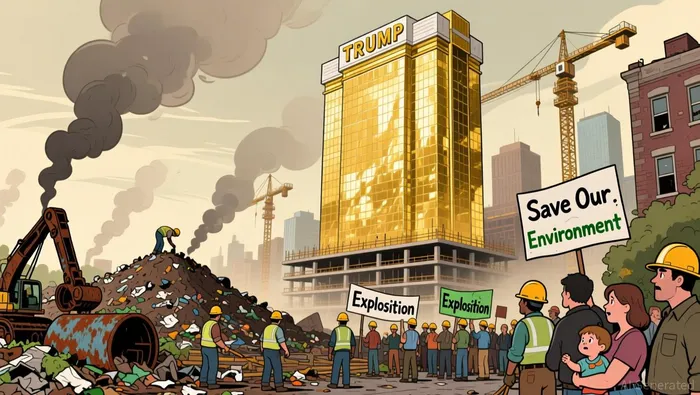 previously stalled development tied to past government corruption issues. That track record raises a clear question about alignment of interest. Why would the Trump Organization, with its global brand at stake, put its name on a project with such a troubled legacy? The answer is likely that they aren't putting their own capital on the line. The licensing fee is the transaction; the risk is outsourced.
For retail investors, this setup is a trap. They are being asked to bet on a high-risk venture in a politically sensitive area, while the smart money-the Trump family-is collecting cash with no direct financial exposure. The project's fate hinges on local execution and regulatory approval, not on the family's balance sheet. The Trump Organization's expansion is a brand-building exercise, not a capital commitment.
The Smart Money Signal: What Insiders Are Actually Doing
The real story isn't in the press release about luxury apartments and golf courses. It's in the financial filings that show what the Trump family is actually doing with its own money. The pattern is clear: they are aggressively collecting easy, high-margin income while avoiding the risky capital commitments that come with building anything.
The numbers tell the tale. In 2024 alone, the Trump Organization's international licensing deals generated tens of millions of dollars. That's the core business model-brand for cash, no construction, no liability. This revenue stream is a major part of a much larger picture. Donald Trump's 2025 financial disclosure shows he reported at least $630 million in business income for the prior year. While his U.S. golf and hotel operations are the primary engine, the licensing deals are a key contributor to that massive windfall.
This setup creates a powerful incentive to keep the brand active overseas, even in risky ventures like the Cluj project. The family collects fees while the local developer, SDC Properties, bears the brunt of the environmental and political headaches. It's a classic case of minimal skin in the game for the smart money.
The behavior extends beyond the main brand into related investments. A recent case study highlights this dynamic. In early 2024, top insiders at Dominari Holdings Inc., including Donald Trump Jr. and Eric Trump, acquired 1 million shares through a private placement and bonuses just before the company announced the Trumps were joining its advisory board. The news sent the stock soaring to a 52-week high. While the timing may not have broken insider trading laws, it raises serious questions about alignment of interest. They bought shares cheaply, just before a major price pop driven by their own association.
The bottom line is that the Trump family's financial playbook is consistent. They are building a portfolio of low-risk, high-margin income streams-licensing, token sales, royalties-while engaging in insider-friendly deals that can boost their personal holdings. For a project like Trump Tower Cluj, the smart money signal is a shrug. The family is in the business of collecting licensing fees, not financing landfill-side developments. Their actions show a clear preference for easy money over skin in the game.
Catalysts and Risks: What Could Make or Break This
The project's next major step is a formal announcement and securing financing. That's the primary catalyst. The developer, SDC Properties, has already won a key zoning approval, showing the local plan is moving forward. But the real test is what happens next. The project's location is a tinderbox. It sits alongside a large landfill and a former medical waste site, with a nearby Roma settlement. This setup invites intense scrutiny from both environmental watchdogs and local activists. Any delay or pushback on these fronts could stall the venture before it truly starts.
The bigger risk is strategic. For Donald Trump, foreign business is a major income stream, with his 2025 disclosure showing at least $630 million in business income. Concentrating a high-profile, politically sensitive project like this in a single, troubled location creates a massive conflict of interest. The president's office is now a direct profit center for his brands. This isn't just a real estate deal; it's a potential flashpoint where foreign policy, local politics, and environmental justice collide. The smart money would see this as a liability, not an asset.
Watch for signals in the family's other holdings. If insiders at Trump MediaDJT-- (DJT) or related entities start selling, it could be a warning sign. It would suggest a shift in capital away from risky real estate ventures and toward more liquid, less controversial assets. The pattern of insider trading in these companies is a known indicator of where the family's true bets lie. A sudden flurry of sales could precede a retreat from projects like this one.
The bottom line is that Trump Tower Cluj is a venture built on catalysts that are easy to spot but hard to control. The zoning win is a minor victory. The real hurdles-environmental, political, reputational-are the ones that could derail the whole plan. For the smart money, the alignment of interest is clear: they profit from the brand, not the brick and mortar. When the risks become too visible, they'll be the first to exit.





Comentarios
Aún no hay comentarios