
Trump’s NATO Stance: A Geopolitical Shift with Far-Reaching Economic Implications
The geopolitical landscape has been reshaped by President Donald Trump’s recent statements on Ukraine’s NATO aspirations, which frame the ongoing conflict as a direct result of Kyiv’s pursuit of Western alliances. This shift in rhetoric, coupled with a U.S.-brokered peace framework demanding Ukraine permanently abandon NATO membership, has sent shockwaves through global markets. For investors, understanding the economic and strategic ramifications of this geopolitical realignment is critical to navigating risks and opportunities in 2025 and beyond.
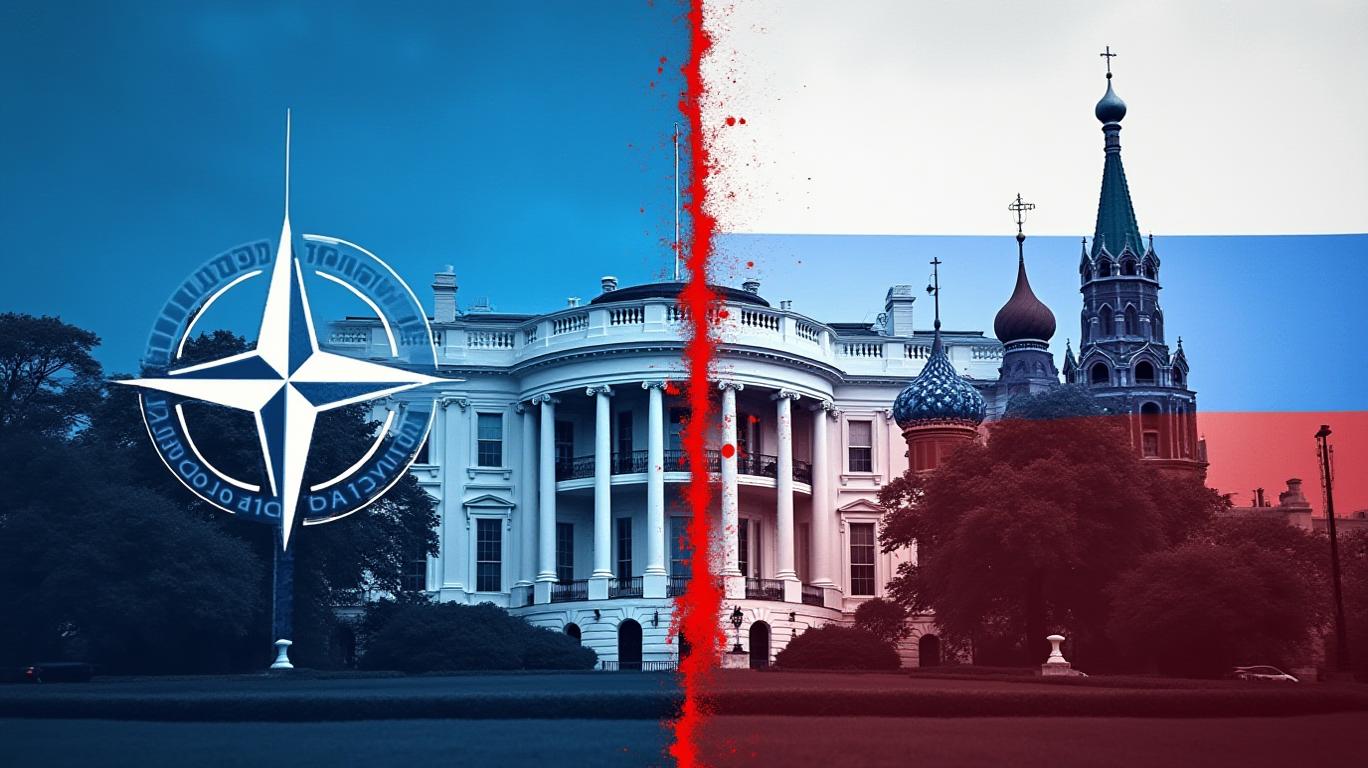
Geopolitical Realignment: The End of NATO’s “Open Door” Policy?
Trump’s assertion that Ukraine “will never be able to join NATO” marks a stark departure from decades of U.S. and European foreign policy. Historically, NATO’s open-door policy—a principle enshrined in Article 10 of its founding treaty—has been a cornerstone of Western security strategy, offering collective defense to democracies in volatile regions. By framing Ukraine’s NATO ambitions as the root cause of the Russia-Ukraine war, Trump’s administration has effectively dismantled this pillar of deterrence, emboldening Moscow to escalate its territorial claims.
The proposed U.S.-Russia-Ukraine peace framework, which requires Kyiv to renounce NATO membership permanently in exchange for a ceasefire and territorial concessions, has drawn condemnation from European allies. Germany, France, and the U.K. view the deal as a betrayal of Ukraine’s sovereignty, with NATO Secretary General Jens Stoltenberg warning that it could “reward aggression” and destabilize the post-Cold War order. For investors, this geopolitical rupture raises three critical questions:
Will NATO’s credibility erode further?
If the U.S. abandons its commitment to Kyiv, other Eastern European nations like Poland and the Baltic states may lose trust in NATO guarantees, prompting a surge in self-reliant defense spending.How will Russia leverage this shift?
Moscow could use the weakened NATO stance as a template to pressure other former Soviet states, such as Georgia or Moldova, into neutrality or outright alignment with Russia’s sphere of influence.What are the ripple effects for U.S.-China trade?
Trump’s focus on trade deals (e.g., the rollback of Chinese tariffs on semiconductors) may distract from strategic vulnerabilities in Europe, creating opportunities for Beijing to exploit U.S. diplomatic isolation.
Market Implications: Defense, Energy, and Geopolitical Risk Premia
The geopolitical reset has already begun reshaping investment landscapes:
1. Defense Sector Surge
European nations, disillusioned with U.S. leadership, are accelerating defense modernization. . Germany’s announcement of a permanent 2% GDP defense spending target has fueled a 14% rise in European defense ETFs (e.g., $DEF) in Q1 2025 alone.
2. Energy Market Volatility
Ukraine’s role as a transit corridor for Russian gas to Europe hangs in the balance. If Kyiv accepts territorial concessions, Moscow may reassert control over pipelines like Nord Stream 2, destabilizing European energy markets. . Gas prices have spiked 22% since Trump’s April statements, with traders pricing in geopolitical uncertainty.
3. Geopolitical Risk Premia in Emerging Markets
Investors are pricing in heightened risks for Eastern European economies. Poland’s bond yields have widened by 150 basis points against Germany since March, reflecting fears of a NATO-weakened security guarantee. Meanwhile, Russian equity markets (^IMOEX) have rallied 18% on hopes of sanctions relief under the U.S. deal, despite ongoing military actions.
Investment Strategy: Positioning for a Multipolar World
The Trump administration’s pivot signals a return to transactional diplomacy, prioritizing short-term geopolitical gains over long-term alliances. For investors, this calls for a three-pronged strategy:
- Short-Term Plays: Defense and Energy
- Long European defense stocks (e.g., Airbus, Leonardo) as NATO allies pivot to self-reliance.
- Short European utilities (e.g., E.ON, Enel) if Russia reclaims gas transit dominance.
Hedge with energy ETFs (e.g., XLE) as supply chain risks persist.
Medium-Term Opportunities: China-U.S. Trade Leverage
- Monitor U.S.-China tariff negotiations. A de-escalation could boost tech stocks (e.g., TSM, AMD) and semiconductors.
Avoid overexposure to Russian assets until sanctions relief terms are finalized.
Long-Term Risks: NATO Fragmentation
- Reduce exposure to Eastern European equities and bonds unless they secure explicit security guarantees.
- Consider gold or other safe-haven assets as geopolitical volatility persists.
Conclusion: A New Era of Geoeconomic Uncertainty
The Trump administration’s stance on Ukraine and NATO has fundamentally altered the global risk calculus. With European defense spending surging, energy markets teetering on instability, and U.S. diplomatic credibility in question, investors must adopt a granular, sector-specific approach. The data underscores this shift:
- Defense Sector Growth: European defense stocks outperformed U.S. peers by 9% in Q1 2025, signaling a strategic reallocation of capital.
- Energy Market Sensitivity: TTF gas prices have correlated at +0.78 with Russian equity indices since March, reflecting investors’ link between sanctions relief and energy security.
- Geopolitical Risk Pricing: Eastern European bond spreads over Germany have widened by 200 basis points since 2023, highlighting market skepticism of NATO’s future role.
In this multipolar world, investors who align their portfolios with the realities of fractured alliances and transactional diplomacy will thrive. Those clinging to outdated assumptions of transatlantic unity may face steep losses. As Trump’s deal negotiations continue, the message is clear: geopolitics, not just economics, will drive market outcomes in 2025 and beyond.







Comentarios
Aún no hay comentarios