
Trump-Modi Trade Deal: A Catalyst for India-US Trade and Investment Synergies
Textiles: A New Thread in Bilateral Trade
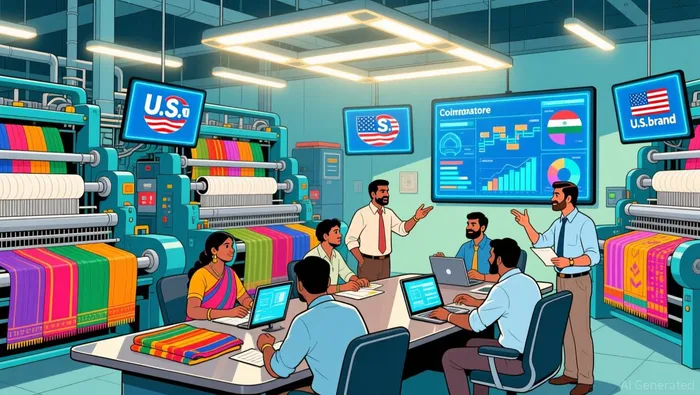
The textile sector stands to benefit immensely from the proposed tariff cuts. U.S. tariffs on Indian imports are set to drop from 50% to 15–16%, a move that will amplify India's competitive edge in labor-intensive industries like apparel and gems and jewelry, according to a Hindustan Times report. This shift is already spurring collaboration: In November 2025, a high-profile conference in Coimbatore, India, will bring together U.S. brands like NikeNKE--, Under ArmourUAA--, and Patagonia with Indian manufacturers to address technical and trade challenges, as noted in an ET Textile Communications article. The event, organized by the American Association of Textile Chemists and Colorists and The Textile Association-South India Unit, underscores a strategic alignment to modernize supply chains and leverage India's manufacturing scale. For investors, this signals growing opportunities in Indian textile exporters and U.S. firms seeking diversified sourcing.
Agriculture: Navigating Tariff Hurdles and Non-GM Opportunities
Agriculture remains a complex arena in the negotiations. While India has shown flexibility in reducing tariffs on U.S. non-genetically modified (non-GM) maize and soymeal, the U.S. faces an uphill battle in securing tariff cuts for dairy products, including high-end cheese, according to a Hindustan Times report. This asymmetry reflects India's cautious approach to protecting its 250 million small and marginal farmers from foreign competition, as noted in an East Asia Forum analysis. However, incremental progress is evident: India has already lowered tariffs on U.S. goods like bourbon whiskey and Harley-Davidson motorcycles, according to the East Asia Forum analysis. For U.S. agribusinesses, the key lies in leveraging India's growing appetite for non-GM imports, which could open avenues for mid-sized producers and specialty exporters.
Energy: A Strategic Pivot from Russian Oil
The energy sector is another linchpin of the deal. India's pivot away from Russian oil-accounting for 34% of its crude imports as of 2025-aligns with U.S. geopolitical interests and creates openings for American energy exports, according to a Hindustan Times report. While India has not committed to a complete phaseout of Russian oil, its largest refiner, Reliance Industries, has already shifted sourcing toward the Middle East, as reported by CryptoRank. The U.S. is capitalizing on this transition by promoting natural gas and renewable energy technologies. Meanwhile, digital transformation projects led by firms like Infosys and Schneider Electric are enhancing operational efficiency in India's energy sector, blending traditional trade with cutting-edge collaboration, as noted in a Yahoo Finance article. For investors, this sector offers dual opportunities: energy infrastructure projects in India and U.S. firms supplying clean technology.
Conclusion: A Win-Win for Investors
The Trump-Modi trade deal is more than a tariff adjustment-it is a recalibration of strategic priorities that positions both nations to navigate global economic shifts. For investors, the textiles, agriculture, and energy sectors present distinct yet interconnected opportunities. Textile exporters and U.S. brands stand to gain from reduced trade barriers, while agribusinesses can capitalize on India's gradual market liberalization. In energy, the geopolitical realignment and technological partnerships offer a dual tailwind. As the deal nears finalization at the ASEAN Summit, the focus will shift to execution-ensuring that these synergies translate into measurable gains for stakeholders on both sides of the Pacific.





Comentarios
Aún no hay comentarios