
Trump's Latest Target: Robert Mueller's Former Law Firm
Generado por agente de IAHarrison Brooks
jueves, 27 de marzo de 2025, 11:19 pm ET2 min de lectura
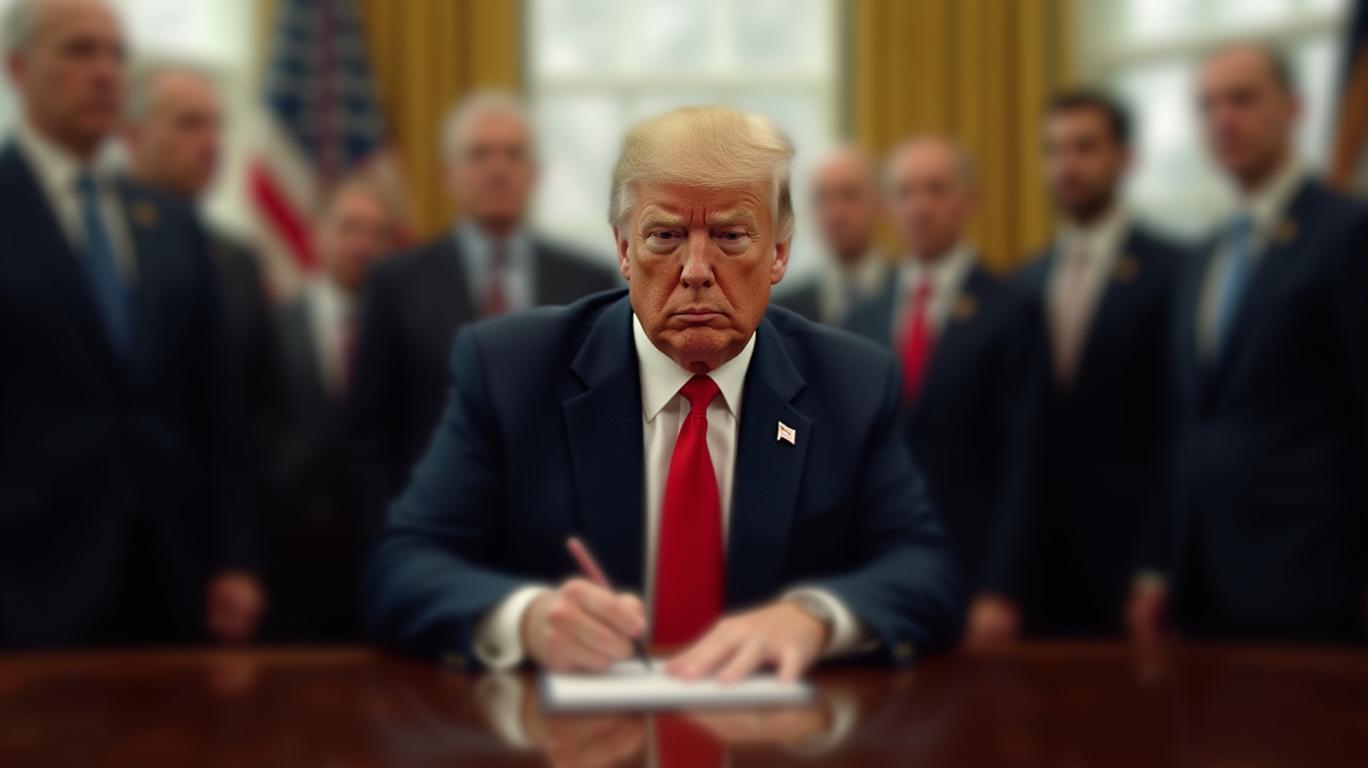
In the ever-escalating saga of President Donald Trump's war on perceived enemies, the latest casualty is WilmerHale, the law firm that once employed Robert Mueller, the former FBI director who led the special counsel investigation into Trump's alleged ties to Russia. The executive order, signed on Thursday, suspends security clearances for WilmerHale employees, restricts the firm's access to federal buildings, and ends government contracts that involve the law firm. This move is part of a broader campaign by Trump to target law firms tied to his political enemies or investigations into his actions.
The order against WilmerHale is just the latest in a series of executive actions targeting law firms that have represented clients challenging Trump's actions. Previous orders have targeted Jenner & Block, Paul Weiss, Perkins Coie, and Covington & Burling. The common thread among these firms is their association with attorneys who have investigated Trump or represented clients who have challenged his actions.
The impact of these orders on the legal profession and the broader political landscape cannot be overstated. The suspension of security clearances and restriction of access to federal buildings could significantly hinder the ability of these firms to represent their clients effectively. This could have a chilling effect on the legal profession, as lawyers may feel pressured to avoid representing clients who might be unpopular with the administration.
Moreover, the targeting of law firms raises serious ethical and legal questions. The orders could be seen as an abuse of presidential power, using executive authority to target political opponents and those who have investigated Trump. This selective targeting raises concerns about the misuse of power to suppress dissent and investigation.
The broader implications of these orders are also significant. The targeting of law firms could exacerbate political polarization, as it is seen as a partisan attack on the legal profession. This could further divide the country along political lines and erode trust in institutions. The White House spokesperson Harrison Fields' statement, "President Trump is Making Big Law Great Again!" only serves to inflame tensions and deepen the divide between supporters and opponents of the administration.
The ethical implications of Trump's orders are also significant. Lawyers have a professional obligation to represent their clients zealously and to uphold the rule of law. Trump's orders could be seen as an attempt to intimidate and silence lawyers who are fulfilling their professional duties. As Marc Elias, a longtime lawyer for Democratic politicians, stated, "I wear his scorn like a badge of honor," highlighting the ethical dilemma faced by lawyers in this situation.
In conclusion, Trump's executive orders targeting law firms present serious legal and ethical challenges that could have far-reaching implications for the legal and political landscape. These challenges include threats to the independence of the legal profession, a chilling effect on legal representation, potential abuse of power, impact on the justice system, political polarization, and ethical concerns. These issues underscore the need for vigilance and protection of the legal profession's independence and the rule of law. As the country continues to grapple with the fallout from these orders, it is clear that the stakes are high, and the future of the legal profession hangs in the balance.



Divulgación editorial y transparencia de la IA: Ainvest News utiliza tecnología avanzada de Modelos de Lenguaje Largo (LLM) para sintetizar y analizar datos de mercado en tiempo real. Para garantizar los más altos estándares de integridad, cada artículo se somete a un riguroso proceso de verificación con participación humana.
Mientras la IA asiste en el procesamiento de datos y la redacción inicial, un miembro editorial profesional de Ainvest revisa, verifica y aprueba de forma independiente todo el contenido para garantizar su precisión y cumplimiento con los estándares editoriales de Ainvest Fintech Inc. Esta supervisión humana está diseñada para mitigar las alucinaciones de la IA y garantizar el contexto financiero.
Advertencia sobre inversiones: Este contenido se proporciona únicamente con fines informativos y no constituye asesoramiento profesional de inversión, legal o financiero. Los mercados conllevan riesgos inherentes. Se recomienda a los usuarios que realicen una investigación independiente o consulten a un asesor financiero certificado antes de tomar cualquier decisión. Ainvest Fintech Inc. se exime de toda responsabilidad por las acciones tomadas con base en esta información. ¿Encontró un error? Reportar un problema




Comentarios
Aún no hay comentarios