
Trump, Kishida Set Stage for U.S.-Japan Tariff Talks
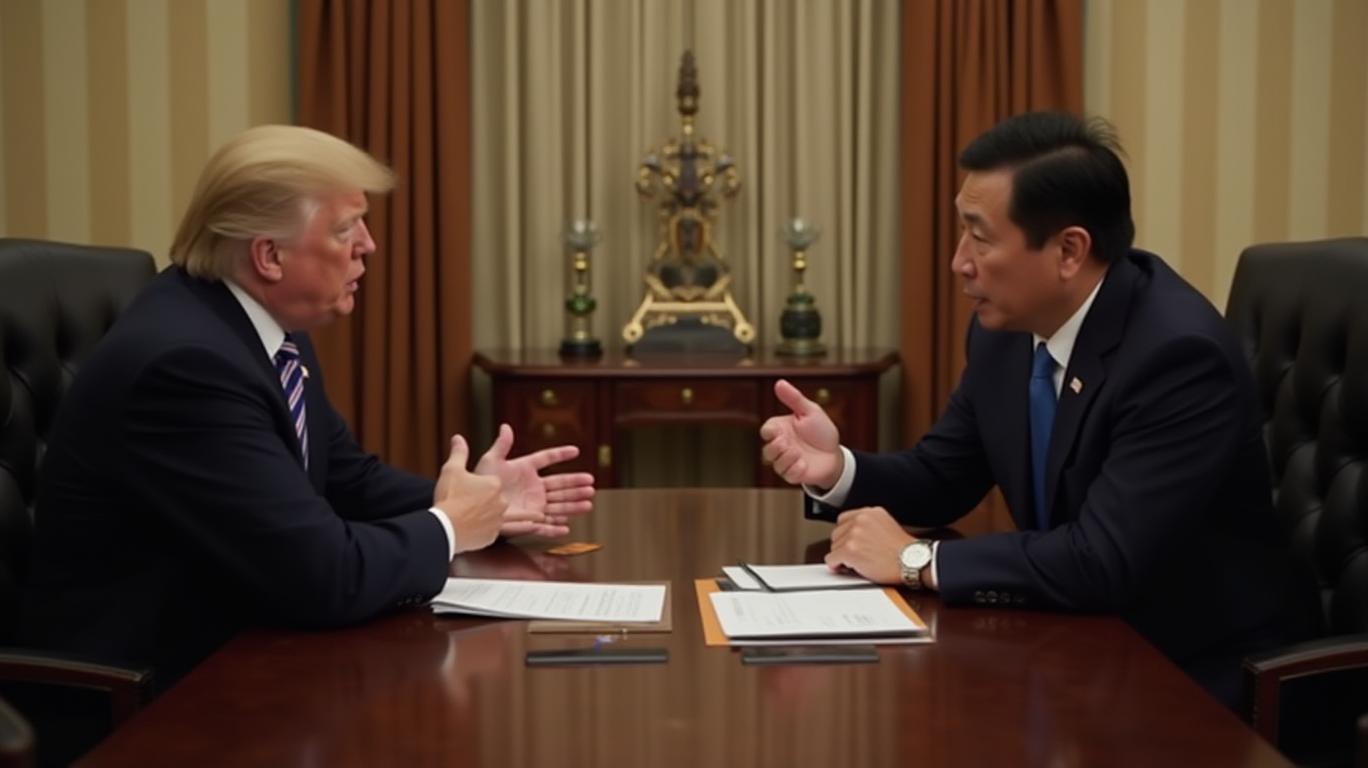
U.S. President Donald Trump announced that he had spoken with Japanese Prime Minister Fumio Kishida, setting strict but fair parameters for upcoming tariff negotiations. Trump emphasized that he would be sending a top-tier team to handle the negotiations, highlighting the significant trade imbalance between the two countries. He noted that Japan imports a large number of American goods, particularly in the automotive and agricultural sectors, while the U.S. imports far fewer Japanese products.
Trump's comments come as part of a broader effort to redefine trade relationships with various countries. He has been vocal about his intention to set strict but fair parameters for trade negotiations, aiming to address what he perceives as unfair trade practices. This approach has been a central theme of his administration's trade policy, which has often involved imposing tariffs on imported goods to pressure other nations into more favorable trade agreements.
Kishida, for his part, has indicated a willingness to engage in discussions to reach a broad agreement on tariffs. He expressed strong concerns about the potential impact of tariffs on Japanese investments in the U.S. and urged Trump to reconsider his plans. Kishida stated that Japan would strongly urge the U.S. to rethink its measures and believed that Japan could overcome this crisis-like situation. He also mentioned that he would convene a meeting with all cabinet ministers to discuss countermeasures against the tariffs and that both countries had agreed to appoint officials for further negotiations, though neither leader disclosed the names of the negotiators.
The conversation between Trump and Kishida underscores the ongoing efforts to address trade imbalances and negotiate more equitableEQH-- terms. This dialogue is part of a larger global effort to mitigate the impact of tariffs, which have been a contentious issue in international trade relations. The U.S. has been actively engaging in discussions with multiple countries to set new trade parameters. Trump's administration has been clear that while they are open to dialogue, they expect other nations to provide substantial concessions in return for reduced tariffs. This approach has led to a series of high-stakes negotiations, with the U.S. seeking to level the playing field in global trade.
The tariff negotiations between the U.S. and Japan are part of a broader strategy to reshape global trade dynamics. Trump's administration has been vocal about its intention to reduce trade deficits and ensure that trade agreements are mutually beneficial. The ongoing discussions with Japan reflect this broader goal, as both nations seek to find a balance that addresses their respective economic interests. The outcome of these negotiations will have significant implications for both the U.S. and Japan, as well as for the global economy. The ability to reach a mutually beneficial agreement will depend on the willingness of both sides to make concessions and find common ground. As the negotiations progress, it will be crucial for both nations to maintain open lines of communication and work towards a resolution that benefits both economies.







Comentarios
Aún no hay comentarios