
Trump's Inflation Challenge: Can He Tame the Beast?
Generado por agente de IATheodore Quinn
jueves, 13 de febrero de 2025, 11:50 am ET3 min de lectura
EQH--
As President Trump takes office, one of the most pressing economic challenges he faces is taming inflation. The annual inflation rate has risen to 3% in the three months since the November election, with gasoline prices climbing despite Trump's claims that his return to the White House would signal increased oil production that would lower energy costs. Inflation is punching back, and Trump could end up facing the same challenges that dragged down his predecessor, President Joe Biden.
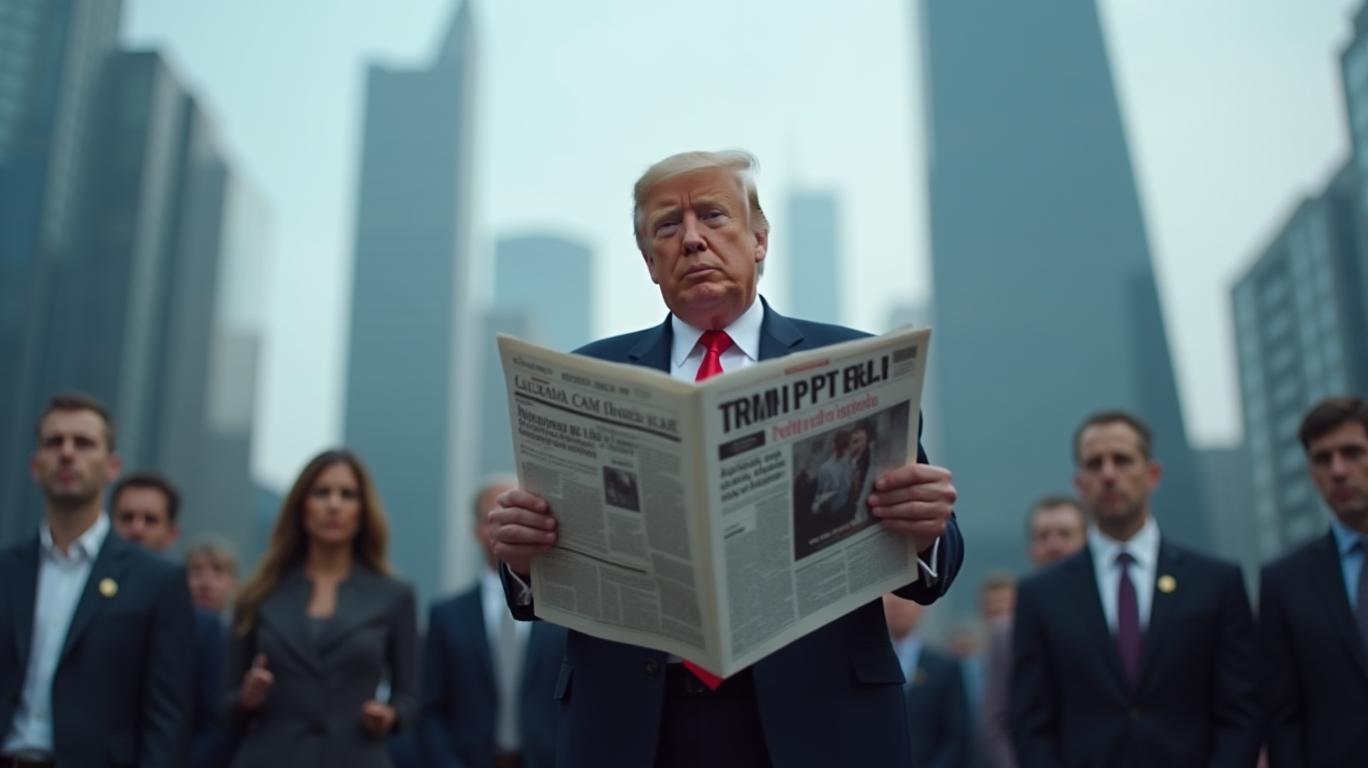
Trump frequently makes far-reaching assertions about his power to bring about change only to find that it is no match for market forces. It’s a humbling reminder that even U.S. presidents are subject to the invisible hand of supply and demand, rather than the masters of it. Consumer sentiment measures suggest the public already sees Trump’s plans to expand tariffs as increasing inflation. On Wednesday, the president called for interest rate cuts, even though rate hikes by the Federal Reserve helped lower inflation that spiked at a four-decade high in 2022.
The latest consumer price figures have unnerved economists and the financial markets because they suggest that strong consumer spending, solid job gains, and a falling unemployment rate could reignite inflation. Steady demand, particularly from wealthier consumers, makes it easier for companies to keep raising prices. The cost of goods, including toys and auto parts, rose last month even before the imposition of tariffs. Trump has placed 10% tariffs on China, in addition to announcing the removal of exemptions on his 2018 steel and aluminum tariffs. There are also potential tariff hikes on Canada and Mexico and a potential executive order that would increase tariffs to match the import taxes charged by other countries.
All of this means that baseline inflationary pressures could be at their highest level in decades. "Disinflation may be dead, and we may be looking at a higher rate of inflation than we observed for the 20 years prior to the pandemic," said Joseph Brusuelas, chief economist at RSM, a tax and advisory firm.
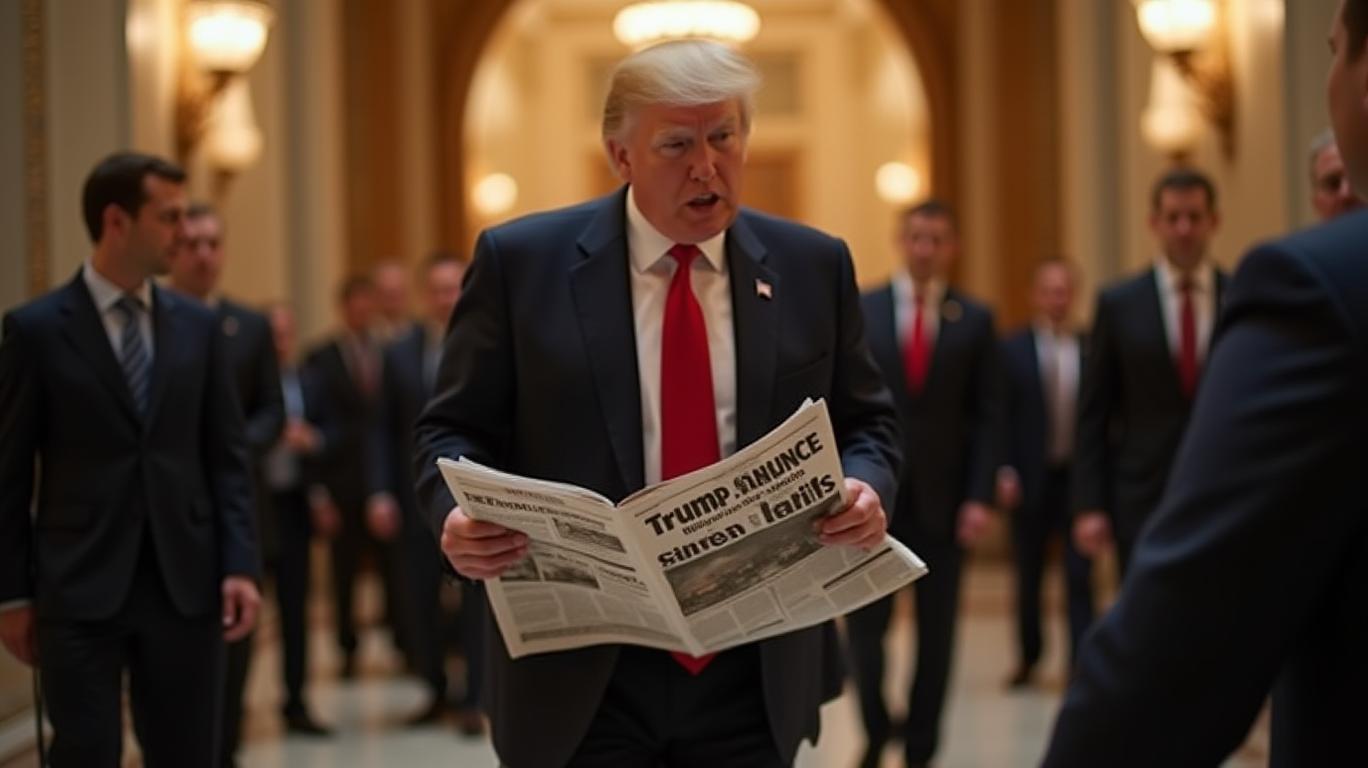
Trump's call for lower rates puts him in opposition to Fed Chairman Jerome Powell. "If inflation goes up in general, we will use our tools, which is the interest rate, to bring it back down to 2% over time," Powell told a congressional committee on Wednesday. Powell also said that Trump’s calls to lower rates wouldn’t sway the Fed.
So far, the Trump White House’s main response to this challenge has been to blame Biden, an argument with a short lifespan as Trump is exerting more control over economic policy. "The Biden administration indeed left us with a mess to deal with," White House press secretary Karoline Leavitt said at Wednesday’s news briefing. "It’s far worse than I think anybody anticipated."
But Trump allies are also starting to float new ideas for tackling inflation. Standing in the Oval Office on Tuesday, billionaire Elon Musk, the head of the president’s Department of Government Efficiency, proposed $1 trillion in spending cuts this year. Musk, the world’s richest man who continues to control Tesla, X, and SpaceX among other companies, wants to eliminate $1 out of every $7 spent by the federal government in order to bring the inflation rate to zero. It’s not clear based on lawsuits and Congress’ responsibility for government funding that Musk can deliver those savings.
"If you cut the budget deficit by a trillion between now and next year, there is no inflation," Musk said. "And if the government is not borrowing as much, it means that interest costs decline. So everyone’s mortgage, their car payment, their credit card bills, anything, their student debt, the monthly payments drop. That’s a fantastic scenario for the average American."
Such a steep cut might bring lower prices but also the pain of a sharp economic downturn. "That would be a roughly 4% of GDP cut to federal spending, all in one year," said Michael Linden, a senior policy fellow at the Washington Center for Equitable Growth. "It would be an instant recession."
For now, markets are anticipating more inflation as consumer demand stays strong and Trump has yet to show how exactly his policies would keep prices low, as he promised to voters. The yield on the 10-year Treasury note jumped Wednesday to 4.62% in response to the inflation report, a sign that investors expect interest rates, growth, and inflation to be higher in the coming months.
In conclusion, Trump faces a significant challenge in taming inflation as he takes office. His proposed economic policies, such as tariffs and immigration restrictions, could have significant impacts on inflation rates in both the short and long term. A stronger US dollar and higher US inflation could have significant global economic implications, particularly for countries with large trade surpluses with the US. Trump's influence on the Federal Reserve's monetary policy could also lead to higher interest rates, inflation, and economic growth. However, with the right policies and leadership, Trump could potentially turn the tide on inflation and deliver on his promises to voters.
JOE--
TSLA--
As President Trump takes office, one of the most pressing economic challenges he faces is taming inflation. The annual inflation rate has risen to 3% in the three months since the November election, with gasoline prices climbing despite Trump's claims that his return to the White House would signal increased oil production that would lower energy costs. Inflation is punching back, and Trump could end up facing the same challenges that dragged down his predecessor, President Joe Biden.
Trump frequently makes far-reaching assertions about his power to bring about change only to find that it is no match for market forces. It’s a humbling reminder that even U.S. presidents are subject to the invisible hand of supply and demand, rather than the masters of it. Consumer sentiment measures suggest the public already sees Trump’s plans to expand tariffs as increasing inflation. On Wednesday, the president called for interest rate cuts, even though rate hikes by the Federal Reserve helped lower inflation that spiked at a four-decade high in 2022.
The latest consumer price figures have unnerved economists and the financial markets because they suggest that strong consumer spending, solid job gains, and a falling unemployment rate could reignite inflation. Steady demand, particularly from wealthier consumers, makes it easier for companies to keep raising prices. The cost of goods, including toys and auto parts, rose last month even before the imposition of tariffs. Trump has placed 10% tariffs on China, in addition to announcing the removal of exemptions on his 2018 steel and aluminum tariffs. There are also potential tariff hikes on Canada and Mexico and a potential executive order that would increase tariffs to match the import taxes charged by other countries.
All of this means that baseline inflationary pressures could be at their highest level in decades. "Disinflation may be dead, and we may be looking at a higher rate of inflation than we observed for the 20 years prior to the pandemic," said Joseph Brusuelas, chief economist at RSM, a tax and advisory firm.
Trump's call for lower rates puts him in opposition to Fed Chairman Jerome Powell. "If inflation goes up in general, we will use our tools, which is the interest rate, to bring it back down to 2% over time," Powell told a congressional committee on Wednesday. Powell also said that Trump’s calls to lower rates wouldn’t sway the Fed.
So far, the Trump White House’s main response to this challenge has been to blame Biden, an argument with a short lifespan as Trump is exerting more control over economic policy. "The Biden administration indeed left us with a mess to deal with," White House press secretary Karoline Leavitt said at Wednesday’s news briefing. "It’s far worse than I think anybody anticipated."
But Trump allies are also starting to float new ideas for tackling inflation. Standing in the Oval Office on Tuesday, billionaire Elon Musk, the head of the president’s Department of Government Efficiency, proposed $1 trillion in spending cuts this year. Musk, the world’s richest man who continues to control Tesla, X, and SpaceX among other companies, wants to eliminate $1 out of every $7 spent by the federal government in order to bring the inflation rate to zero. It’s not clear based on lawsuits and Congress’ responsibility for government funding that Musk can deliver those savings.
"If you cut the budget deficit by a trillion between now and next year, there is no inflation," Musk said. "And if the government is not borrowing as much, it means that interest costs decline. So everyone’s mortgage, their car payment, their credit card bills, anything, their student debt, the monthly payments drop. That’s a fantastic scenario for the average American."
Such a steep cut might bring lower prices but also the pain of a sharp economic downturn. "That would be a roughly 4% of GDP cut to federal spending, all in one year," said Michael Linden, a senior policy fellow at the Washington Center for Equitable Growth. "It would be an instant recession."
For now, markets are anticipating more inflation as consumer demand stays strong and Trump has yet to show how exactly his policies would keep prices low, as he promised to voters. The yield on the 10-year Treasury note jumped Wednesday to 4.62% in response to the inflation report, a sign that investors expect interest rates, growth, and inflation to be higher in the coming months.
In conclusion, Trump faces a significant challenge in taming inflation as he takes office. His proposed economic policies, such as tariffs and immigration restrictions, could have significant impacts on inflation rates in both the short and long term. A stronger US dollar and higher US inflation could have significant global economic implications, particularly for countries with large trade surpluses with the US. Trump's influence on the Federal Reserve's monetary policy could also lead to higher interest rates, inflation, and economic growth. However, with the right policies and leadership, Trump could potentially turn the tide on inflation and deliver on his promises to voters.

Divulgación editorial y transparencia de la IA: Ainvest News utiliza tecnología avanzada de Modelos de Lenguaje Largo (LLM) para sintetizar y analizar datos de mercado en tiempo real. Para garantizar los más altos estándares de integridad, cada artículo se somete a un riguroso proceso de verificación con participación humana.
Mientras la IA asiste en el procesamiento de datos y la redacción inicial, un miembro editorial profesional de Ainvest revisa, verifica y aprueba de forma independiente todo el contenido para garantizar su precisión y cumplimiento con los estándares editoriales de Ainvest Fintech Inc. Esta supervisión humana está diseñada para mitigar las alucinaciones de la IA y garantizar el contexto financiero.
Advertencia sobre inversiones: Este contenido se proporciona únicamente con fines informativos y no constituye asesoramiento profesional de inversión, legal o financiero. Los mercados conllevan riesgos inherentes. Se recomienda a los usuarios que realicen una investigación independiente o consulten a un asesor financiero certificado antes de tomar cualquier decisión. Ainvest Fintech Inc. se exime de toda responsabilidad por las acciones tomadas con base en esta información. ¿Encontró un error? Reportar un problema




Comentarios
Aún no hay comentarios