
Trump Imposes 25% Tariff on Foreign Cars, Threatens EU and Canada
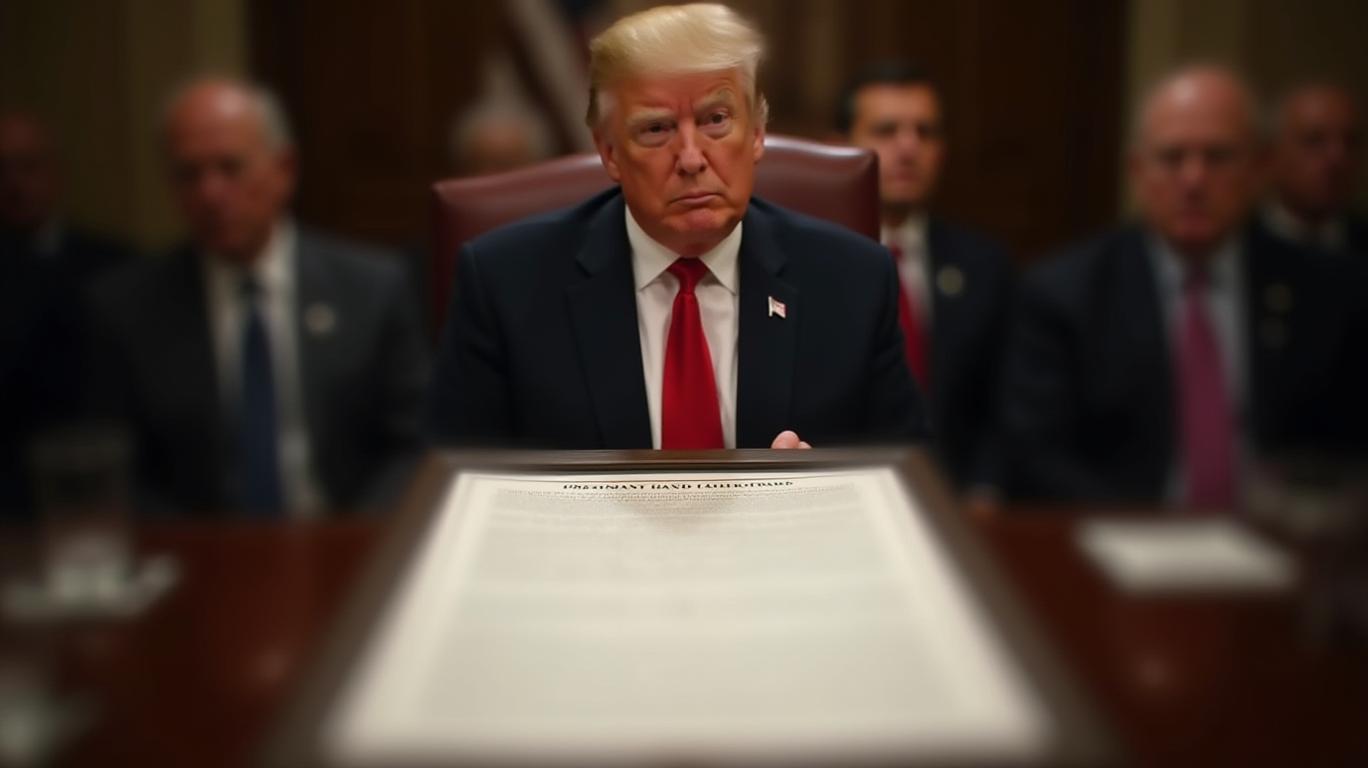
President Trump has issued a stern warning to the European Union and Canada, threatening to impose large-scale tariffs if they collaborate to inflict economic harm on the United States. This escalation in trade tensions comes as Trump announced a sweeping 25% tariff on all cars and light trucks not manufactured within the United States. The move, revealed during a press conference from the Oval Office, marks a significant escalation in the administration’s ongoing efforts to revive domestic manufacturing. Trump emphasized that foreign car companies with existing plants in the U.S. would be in a favorable position to expand their operations quickly and inexpensively, while others would need to consider building new facilities within the country.
The tariffs, set to take effect on April 3, are being implemented under Section 232 of U.S. law, which allows for tariffs on national security grounds. The administration has also indicated that tariffs on key automobile partsMPAA-- will begin no later than May 3. Notably, automobile parts compliant with the United States-Mexico-Canada Agreement (USMCA) will remain tariff-free until further notice. The auto industry, already grappling with global supply chain issues and rising material costs, now faces additional challenges. Industry experts warn that the new tariffs could lead to higher prices for American consumers, with a study by the U.S. International Trade Commission suggesting that a 25% blanket tariff on auto imports could increase average vehicle prices by 5%.
The European Union and Canada have responded with strong condemnation. European Commission President Ursula von der Leyen described the tariffs as a direct attack on the EU, while Canadian Prime Minister Mark Carney called them a violation of the USMCA. Carney also expressed his intention to discuss the tariffs with Trump. Japan, a significant employer in the U.S. through its automakers, has called the tariffs extremely regrettable and is seeking an exception. The administration’s aides have estimated that the tariffs could generate $100 billion in annual revenue for the government, implying tariffs on $400 billion of car sales.
Trump’s warning of additional large-scale tariffs on the EU and Canada if they collaborate to harm U.S. interests underscores the escalating trade tensions. The administration’s global steel and aluminum tariffs have already increased input costs for U.S. carmakers, and the threat of automotive tariffs turning into policy adds another layer of uncertainty for the industry. Trump framed the decision as a win for American jobs and a nudge to automakers that have delayed investing in U.S. production. However, the long-term impact on consumer prices and the broader economy remains uncertain.







Comentarios
Aún no hay comentarios