
Trump Imposes 10 Percent Tariff on Nations Supporting BRICS Policies
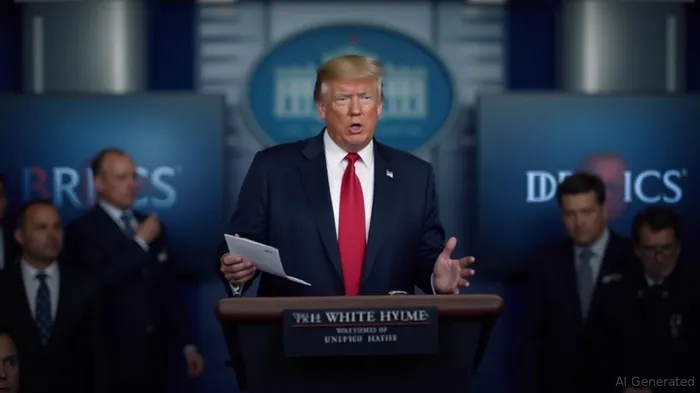
President Trump has declared that any nation supporting what he refers to as the "anti-American policies" of the BRICS group will incur an additional 10 percent tariff on imports from the United States. This announcement was made as leaders from the BRICS countries, which include Russia, China, Brazil, South Africa, India, Egypt, Saudi Arabia, UAE, Ethiopia, Iran, and Indonesia, gathered for a summit in Brazil. The BRICS group serves as a platform for political and diplomatic coordination among Global South countries, addressing a wide array of issues.
Trump's statement, posted on his Truth Social account, underscored that there would be no exceptions to this policy. He further elaborated that specific tariff rates and deadlines for each country would be communicated by July 9. Nations from India to the EU and Thailand are urgently working to finalize trade deals before the August 1 deadline to avoid the increased tariffs.
This announcement follows Trump's earlier declaration in April, where he set a base rate of 10 percent on most imports, with additional duties reaching up to 50 percent on certain products. The implementation of rates above the 10 percent base was postponed until July 9, providing countries with an extra three weeks to negotiate agreements with Washington.
Commerce Secretary Lutnick confirmed that the increased tariffs would take effect on August 1, while Trump is currently determining the rates and deals. Treasury Secretary Bessent, speaking on a Sunday news program, indicated that several significant trade announcements could be expected soon. He noted that talks with the EU have progressed well and that letters would be sent to about 100 smaller trading partners, informing them that without an agreement, their tariffs would revert to the higher levels initially set for April 2 and then delayed until July 9.
The tariff measures have sparked an international trade dispute, prompting many governments to seek protective measures or new agreements, both with the United States and among themselves. Kevin Hassett, head of the National Economic Council at the White House, suggested that there could be some flexibility for countries making sincere progress in negotiations, potentially allowing extensions past the August 1 deadline.
Trump has expressed optimism about reaching trade deals with India and the EU, while remaining skeptical about the prospects of a trade pact with Japan. In Southeast Asia, Thailand has been swift in its efforts to avoid a looming 36 percent tariff. Reports indicate that New Delhi and Washington are close to finalizing a modest trade agreement within the next 24 to 48 hours.







Comentarios
Aún no hay comentarios