
Trump's Housing Push: A Catalyst for Real Estate Tech or a Temporary Pop?
The immediate driver for the real estate tech rally is a specific, two-part policy announcement from President Trump. The first leg, announced earlier this week, was a directive for the government-sponsored enterprises Fannie Mae and Freddie Mac to buy $200 billion in mortgage bonds. The stated goal was to drive mortgage rates down and make homeownership more affordable. The market's reaction was swift: following the order, the 30-year mortgage rate dropped on Friday to near 6%, its lowest level since early 2023.
The second, and more disruptive, part came on Wednesday. Trump announced a plan to ban large institutional investors from buying more single-family homes, calling it a step to help make housing more affordable. This move directly targets the business models of major home-owning REITs and private equity firms. The stock market's verdict was immediate and harsh, with shares of companies like Invitation HomesINVH-- and American Homes 4 RentAMH-- falling sharply on the news.
Together, these actions create a clear event-driven setup. The bond-buying order aims to lower borrowing costs, a potential tailwind for homebuyers and the broader housing market. The investor ban, meanwhile, is a direct hit to a specific sector of the real estate industry. For real estate tech companies that facilitate home buying, selling, or financing, this dual push presents a near-term catalyst. The stock surge is a direct reaction to this policy shift, with clear winners in the housing market and clear losers in the institutional property sector. The sustainability of the move now hinges on whether these orders are implemented as promised and whether their intended effects-lower rates and more affordable homes-actually materialize.
Immediate Market Impact: Winners, Losers, and Valuation
The market's verdict on the housing policy is clear and immediate. The dual announcement created a stark divide in the real estate sector. On one side, transaction-focused platforms like Opendoor saw their stock surge. Shares of Opendoor Technologies (OPEN) climbed more than 13% after rising as much as 23% on Friday. This pop is a direct bet on the policy's stated goal of boosting affordability and transaction volumes. Lower mortgage rates, driven by the promised $200 billion bond-buying, would help more buyers qualify and encourage homeowners to list, directly feeding the business models of companies that facilitate home sales.
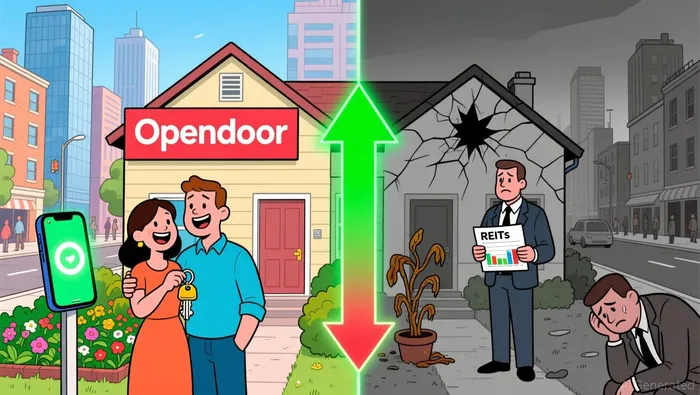
On the flip side, the institutional investor ban delivered a sharp, negative shock to a specific group of real estate players. Shares of home leasing companies fell sharply on the news. Invitation Homes' stock slid more than 7%, while American Homes 4 Rent dropped 6.3%. This is the immediate risk/reward setup in action: the policy aims to make housing more affordable by limiting large-scale ownership, which pressures the valuation of firms whose business is renting homes to tenants.
The mechanism is straightforward. The bond-buying order targets the cost of capital, a fundamental input for homebuyers. The investor ban targets the supply side, aiming to reduce competition for homes from institutional owners. For real estate tech, the net effect leans positive. Companies that connect buyers and sellers stand to benefit from both lower borrowing costs and potentially higher housing supply. The market is pricing in this tailwind, with Opendoor's move reflecting optimism about a near-term housing recovery. Yet the setup remains event-driven. The rally's sustainability depends entirely on the policy's implementation and whether it actually spurs the transaction volume it promises.
The Setup: Execution Risk vs. Market Reality
The market's rally is a bet on policy promise, but the real estate market operates on physical and economic reality. Three key constraints highlight the gap between the stated goals of lower rates and more affordable homes, and the practical conditions that will determine if this event-driven pop has legs.
First is the powerful "lock-in" effect. Millions of homeowners are deeply entrenched in ultra-low mortgage rates from years ago. As noted, many sellers have been unwilling to give up the ultra-low mortgage rates they locked in years ago. The policy aims to lower rates for new buyers, but it does little to incentivize these entrenched owners to list. Without a significant supply response from this group, the promised "higher housing supply" to boost transactions remains a theoretical tailwind, not an immediate catalyst.
Second, the affordability crisis runs deeper than just mortgage rates. The policy targets borrowing costs, but the data shows a systemic issue with buyer access. In 2024, only 24% of home purchases were made by first-time homebuyers, down from 50% in 2010. This stark decline points to a market where even with lower rates, the path to ownership is blocked by other factors like down payments and overall price levels. The rally in transaction platforms like Opendoor assumes a broad-based recovery in buyer demand, but the underlying demographic trend suggests a persistent structural challenge.
Finally, the institutional investor ban creates significant regulatory uncertainty. The announcement lacks specifics on scope, effective date, or enforcement mechanisms. As the White House did not immediately respond to a request for more details, the market is left to price in a vague threat. This ambiguity introduces a new layer of risk for the real estate sector, making it difficult to model the long-term impact on housing supply and pricing.
The bottom line is that the rally is event-driven, reacting to a specific policy catalyst. The market is pricing in the potential for lower rates and a supply boost. Yet the three constraints above-locked-in sellers, deep affordability issues, and regulatory fog-suggest the path to a sustained housing recovery is far from guaranteed. The setup now hinges on whether the policy can overcome these entrenched realities or if the pop is a temporary mispricing of the risks.
Catalysts and Risks: What to Watch Next
The market's initial optimism is now a setup waiting for confirmation. The rally in real estate tech is a bet on policy success, but the sustainability of this event-driven pop hinges on three concrete signals in the coming weeks.
First, monitor mortgage rate trends and housing inventory data. The policy's core promise is lower borrowing costs. The 30-year rate's drop to near 6% is a start, but the key question is whether this is a sustained move or a temporary pop. Watch for a clear, persistent decline in the average rate as the promised $200 billion in bond purchases materialize. More critically, track housing inventory. The policy aims to boost supply by making owners more willing to list. If inventory starts to climb meaningfully, it would validate the market's bet that lower rates are unlocking the "lock-in" effect. If rates stabilize and inventory remains flat, the tailwind is fading.
Second, watch for specific regulatory details on the institutional investor ban. The White House's silence on implementation details is a major overhang. The market is pricing in a threat, but not a concrete rule. The critical date is the World Economic Forum in Davos, where Trump said he will provide more details. Until then, the ambiguity creates uncertainty for the entire sector. Look for specifics on the ban's scope (what constitutes "large institutional investors?"), its effective date, and enforcement mechanisms. Clear, imminent details would remove a key overhang; vague or delayed plans would likely reignite volatility.
Finally, track transaction volume and platform activity for real estate tech companies as a leading indicator. The rally in platforms like Opendoor is a direct bet on a surge in home sales. The best leading indicator will be activity on these platforms themselves. If transaction volumes on Opendoor, Redfin, and similar services show a clear, sustained uptick in the weeks following the policy announcements, it would be the strongest evidence that the policy is working and the rally is justified. Conversely, if volumes remain sluggish, it would signal that deeper affordability issues or lack of supply are still the dominant forces, turning the initial pop into a fleeting reaction.
The bottom line is that the event has been set, but the play is not yet over. The next few weeks will reveal whether the policy's intended impact is materializing in the data, or if the market's optimism is outpacing reality.





Comentarios
Aún no hay comentarios