
Trump Holiday Order Spikes Travel Demand, Leaves Postal Network Unchanged
President Donald Trump Declares Christmas Eve a National Holiday
President Donald Trump has declared Christmas Eve a national holiday, altering the usual federal schedule for the year-end festivities. The executive order grants many federal employees a five-day holiday break spanning Dec. 24 through Dec. 26. However, the U.S. Postal Service and banking institutions will remain operational, maintaining their regular schedules despite the extended federal holiday according to the order.
The decision to extend the holiday period is expected to impact travel and logistics over the festive season. With more federal workers off duty, there could be delays in administrative processes and services reliant on federal offices. The White House did not provide further details on the rationale for the move, though it aligns with efforts to boost public morale during a period of economic uncertainty.
The U.S. Postal Service, which delivers essential mail and packages nationwide, is not affected by the federal holiday order. Susan Wright, a USPS spokeswoman, confirmed that postal delivery will continue as usual during the holiday period. This includes the handling of millions of packages during the peak shopping season, a critical time for the postal service.
Impacts on Logistics and Travel
The holiday travel season is already shaping up to be one of the busiest on record. US airlines are bracing for a record number of passengers, with an average of 2.9 million travelers expected daily from Dec. 19 to Jan. 5. This represents a 1.5% increase compared to the same period last year. Airfares have climbed 7% year-on-year, averaging $900 for a round trip, according to the American Automobile Association.
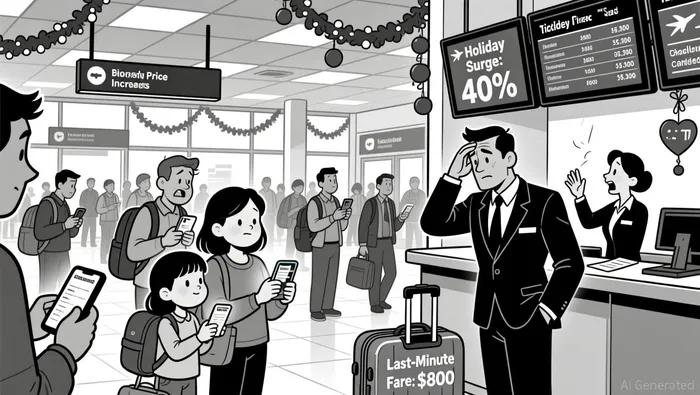
Airports in major cities are also expecting record-breaking numbers. The Port Authority of New York and New Jersey anticipates 5.7 million travelers from Dec. 22 to Jan. 4, a 1% increase from last year. Chicago's O'Hare and Midway airports are preparing for nearly 4.8 million passengers, up 6% year-on-year, while Dallas Fort Worth International Airport expects five million travelers, a 3.2% rise according to travel data.
Businesses and Tariffs
The backdrop for the holiday season is a mix of economic resilience and structural challenges. The US GDP expanded by 4.3% in the third quarter, outperforming forecasts. However, smaller businesses continue to struggle with the impact of tariffs and rising costs. The affordability crisis has begun to dent public approval of Trump's policies, as households face higher utility bills and the looming threat of rising health insurance premiums in 2026.
The Trump administration's aggressive economic policies have also reshaped the landscape for industries like tech and manufacturing. For example, Trump recently approved Nvidia's plan to ship its H200 artificial intelligence chips to China, albeit with a 25% cut for the US government. This move has sparked speculation about whether the US-China AI gap might narrow further, given Beijing's potential appetite for the advanced chips.
Meanwhile, US officials are investigating a Singapore-based cloud company, Megaspeed, over allegations of smuggling Nvidia chips to China according to reports. The company has denied the allegations and said it has undergone multiple inspections by US, Malaysian, and Nvidia officials with no violations found according to company statements. Nvidia also confirmed that its visits to Megaspeed's facilities found no evidence of illegal activity according to Nvidia.
Infrastructure and Defense
In a separate but related development, Trump unveiled plans for a new class of battleships, dubbed the "Trump-class," as part of his "Golden Fleet" initiative to counter China's growing maritime dominance according to the plan. The first ship, the USS Defiant, is set to begin construction "almost immediately," according to the president. The new ships will be triple the size of an Arleigh Burke-class destroyer and equipped with advanced weapons systems, including nuclear and hypersonic missiles according to defense analysts.
The initiative reflects broader efforts to revitalize US defense manufacturing and speed up weapons production. Trump has already pushed for defense contractors to prioritize production over shareholder payouts, citing the need for rapid modernization in the face of global competition according to industry reports.
A Busy Holiday for the Postal Service
As Trump's executive order takes effect, the Postal Service continues to manage one of the most demanding periods of the year. Postal workers are handling over 400 million packages weekly and delivering essential items such as prescriptions, Social Security checks, and holiday gifts. The Save the Post Office Coalition has warned of ongoing threats to the institution, including potential stealth privatization efforts that could undermine its public service model according to coalition leaders.
The coalition emphasized that the Postal Service is more than just a delivery network-it is a vital component of the American social safety net. With its universal service obligation, the post office ensures that mail and packages reach every ZIP code, including remote and underserved communities according to the coalition. As the agency navigates a politically charged landscape, its role in maintaining connectivity and access during the holidays remains critical.
Businesses and households alike will be watching how the administration's policies impact the postal system and broader economy in the coming months. The holiday season is a barometer of consumer confidence and a test of logistical capacity in a rapidly shifting global landscape.







Comentarios
Aún no hay comentarios