
Trump's Hanukkah Rhetoric and Executive Actions: A Strategic Investment Analysis of Defense, Media, and Higher Education Sectors
Political polarization in the U.S. has long shaped foreign policy and domestic economic strategies, but the interplay between cultural symbolism and geopolitical action reached a new inflection point during Donald Trump's 2025 Hanukkah policies. By examining the intersection of Trump's rhetoric, executive orders, and sector-specific regulatory shifts, investors can better navigate the evolving landscape of U.S.-Israel relations and their financial implications. This analysis focuses on three key industries-defense, media, and higher education-where Trump's actions have directly influenced investment trends, regulatory frameworks, and institutional behavior.
Defense Sector: Tariffs, Efficiency Drives, and Strategic Reshoring
Trump's 2025 Hanukkah period saw the imposition of a 17% tariff on Israeli goods, a move that sparked global criticism but also catalyzed a parallel push for defense sector modernization. According to Reuters, the administration announced plans to restrict dividends, stock buybacks, and executive compensation for defense contractors whose projects are over-budget or delayed. This policy aims to redirect capital toward operational efficiency, a critical factor for investors evaluating firms like Lockheed MartinLMT-- or Raytheon.
The 2025 National Security Strategy, emphasizing "Peace Through Strength," further underscores a shift toward reshoring critical supply chains and prioritizing domestic production. For example, the administration's focus on reducing reliance on foreign materials-such as copper and synthetic opioids-has spurred venture capital interest in U.S.-based mining and chemical firms. 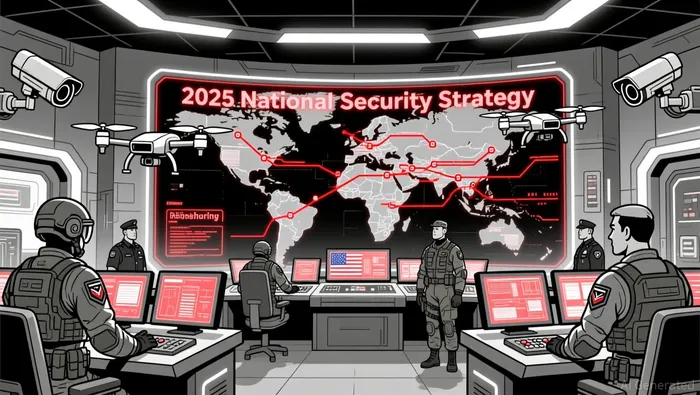 However, investors must weigh these opportunities against the short-term volatility caused by Trump's tariffs on Israeli exports, which have strained bilateral trade relations.
Media Sector: Regulatory Overhauls and Geopolitical Narratives
Trump's Hanukkah address at the White House doubled as a campaign-style defense of Israel, where he criticized media outlets like CNN and framed antisemitism as a growing threat. This rhetoric coincided with regulatory changes in Israel's media landscape, including the contentious 2025 Communications Bill, which seeks to dissolve broadcast regulators and merge ownership with news production. Critics argue this bill could erode editorial independence, creating a fragmented media environment that may deter foreign investment in Israeli media firms.
In the U.S., the administration's emphasis on combating antisemitism has also influenced media funding. For instance, the Department of Education's new foreign funding reporting portal, launched in January 2026, requires universities to disclose foreign gifts exceeding $250,000. While this enhances transparency, it may chill partnerships between U.S. media companies and Israeli tech startups reliant on cross-border capital. Investors should monitor how these regulatory shifts affect media conglomerates with ties to the Middle East, particularly those in cybersecurity and AI-driven content moderation.
Higher Education: Funding Cuts, DEI Dismantling, and Institutional Realignments
The Trump administration's 2025 policies targeting diversity, equity, and inclusion (DEI) initiatives have had profound financial consequences for U.S. universities. Federal funding for research programs at institutions like Harvard and Columbia has been frozen or reduced due to allegations of antisemitism and DEI-related violations. According to a Forbes analysis, nearly $163 billion in discretionary spending was cut for FY 2026, impacting minority-serving institutions and STEM research.
For investors, this signals a shift in endowment strategies. Universities are now prioritizing cost-cutting measures and aligning with the administration's political priorities to retain federal grants. The proposed "Compact for Academic Excellence," though rejected by most institutions, highlights the growing pressure to conform to conservative policy frameworks. Additionally, the administration's focus on merit-based admissions and Title IX reforms may attract private funding from donors sympathetic to these agendas, creating niche opportunities in for-profit education and vocational training sectors.
Conclusion: Navigating Polarization Through Sector-Specific Opportunities
Trump's Hanukkah 2025 policies exemplify how cultural and political symbolism can directly influence economic outcomes. In defense, the push for efficiency and reshoring offers long-term gains for investors willing to tolerate short-term volatility. The media sector faces regulatory and ideological headwinds, particularly in Israel, where ownership reforms may fragment markets. Higher education, meanwhile, is undergoing a funding realignment that favors institutions adaptable to political and regulatory shifts.
As political polarization continues to shape U.S.-Israel relations, investors must adopt a nuanced approach, leveraging sector-specific insights to capitalize on both risks and opportunities. The key lies in aligning portfolios with policies that prioritize strategic resilience-whether through defense sector efficiency, media transparency, or higher education adaptability.





Comentarios
Aún no hay comentarios