
Trump's Greenland Play Could Turn the US Into the World's Bitcoin Capital
U.S. President Donald Trump has intensified his focus on Greenland, aligning it with a broader national security and economic strategy. Following military actions in Venezuela, Trump’s administration has shifted attention to Greenland, emphasizing the island’s strategic and resource value. The White House has not ruled out the use of military force to acquire the territory, which is currently a self-ruling Danish territory.
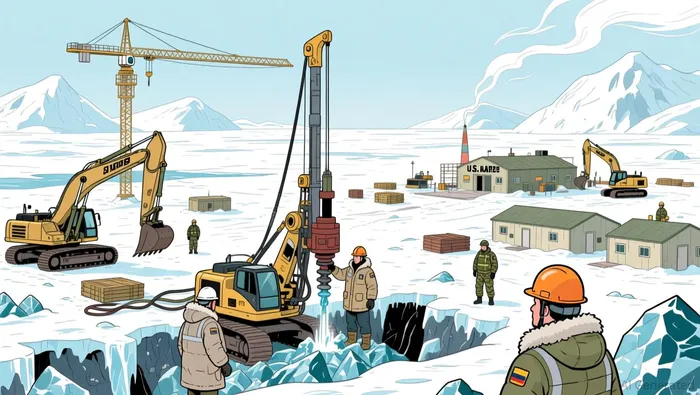
Greenland’s rich deposits of rare-earth minerals and other critical resources have drawn global interest. The island possesses 39 of 50 minerals the U.S. classifies as critical for national security, including neodymium, dysprosium, and terbium. These elements are essential in defense and high-tech manufacturing. China has seen several projects stall or be canceled in Greenland’s mining sector.
Trump has framed Greenland as a strategic asset for U.S. global interests. His administration argues that Denmark, a NATO ally, is not adequately securing the island’s future. The U.S. military already has a presence in Greenland, including missile defense systems. Trump has called for expanded U.S. control, citing Arctic security concerns.
What Are the Global Reactions to Trump’s Greenland Gambit?
European leaders have issued a unified statement supporting Denmark’s position. France, Germany, and other NATO allies have expressed concern over Trump’s aggressive rhetoric and the potential for destabilization in the Arctic. Danish Prime Minister Mette Frederiksen has warned that any U.S. military action against Greenland could jeopardize NATO cohesion. Denmark has requested urgent dialogue with the US to address security concerns while defending its sovereignty.
China has also taken note of the geopolitical shift. The Chinese state-owned firm Shenghe Resources had previously acquired a stake in Greenland’s Kvanefjeld project, a rare-earth and uranium deposit. However, the project was halted after Greenland reinstated a uranium mining ban in 2021. Analysts suggest that Chinese interest in Greenland may wane further if U.S. influence expands, due to rising geopolitical risk and high operational costs.
How Is Greenland’s Business Community Responding to U.S. Interest?
Greenland’s business community remains divided on the implications of Trump’s focus. Some see increased investment and economic opportunities, especially in mining and energy. Amaroq Ltd, a Toronto-based mining company, has attracted significant investor interest in Greenland’s gold and mineral exploration. The company argues that the island needs outside capital to develop its resources and achieve greater economic independence.
However, the aggressive tone of Trump’s rhetoric has created uncertainty. Some Greenlandic leaders have called for direct negotiations with the U.S. to clarify intentions. Independence is a growing priority for many Greenlanders, but they also want to ensure that external interests do not dominate their economy or politics.
Mindstream Energy, a U.S.-based company, has also entered the scene with an ambitious plan to convert low-cost natural gas into energy for BitcoinBTC-- mining and AI data centers. The company’s Regulation D, Rule 506(c) offering targets accredited investors and plans to scale to 250 megawatts. This initiative highlights the growing intersection of energy, technology, and geopolitics.
What Are the Investment and Market Implications for Greenland?
The U.S. interest in Greenland has implications for global markets. Investors are monitoring developments in rare-earth mining and energy infrastructure. Energy Transition Minerals Ltd., an Australian company with a rare-earth project in Greenland, has seen its stock surge 80% this year. The company attributes this to growing demand for secure mineral supply chains and geopolitical shifts.
Data center operators are also showing interest in Greenland’s potential. The island’s natural resources could support low-cost, high-capacity data centers, which are in high demand due to the rise of artificial intelligence. Mindstream Energy’s plans for modular data centers powered by natural gas illustrate this trend. Such projects require significant capital but could position Greenland as a key player in the digital economy.
The U.S. and Greenland have a complex relationship rooted in history and strategy. While Trump’s administration emphasizes national security and resource control, Greenland’s government seeks a balance between independence and international engagement. As the Arctic becomes more accessible due to climate change, the race for influence over Greenland’s resources is likely to intensify.
The outcome of these developments will have far-reaching effects for global investors. Greenland’s natural resources, combined with strategic positioning and technological innovation, could reshape the Arctic’s economic and geopolitical landscape. Investors will need to monitor evolving policies to assess opportunities and risks.







Comentarios
Aún no hay comentarios