
Trump's Food Supply Chain Executive Order and Its Implications for Antitrust Enforcement and Food Sector Stocks
The U.S. food supply chain has long been a focal point for policymakers, with regulatory interventions shaping market dynamics and investment trends. President Donald Trump's executive order in 2021, which established task forces to investigate anti-competitive behavior in the food sector, marked a pivotal shift in antitrust enforcement. This article examines how Trump's directive to scrutinize market concentration, foreign control, and price-fixing risks has influenced stock performance, regulatory frameworks, and long-term structural changes in agriculture and food processing.
Key Provisions of Trump's Executive Order
Trump's executive order directed the DOJ and FTC to form task forces to investigate potential antitrust violations in the food supply chain, particularly those involving foreign-owned companies. The primary objectives included addressing price-fixing and ensuring affordability, and safeguarding national security by mitigating risks from over-reliance on foreign-controlled entities. The task forces were empowered to propose regulatory reforms and initiate enforcement actions, with progress reports mandated to Congress within 180 and 365 days of the order. This move underscored Trump's broader agenda to curb corporate dominance and protect domestic producers, especially in the meatpacking industry, where four firms-JBS, Cargill, Tyson FoodsTSN--, and National Beef-control over 80% of the U.S. beef processing market.
Antitrust Enforcement and Stock Market Volatility
The meatpacking sector has been a central battleground for Trump's antitrust initiatives. In late 2025, the DOJ launched investigations into the "Big Four" meatpackers, alleging collusion and price manipulation. Publicly traded companies like JBSJBS-- and TysonTSN-- Foods experienced immediate stock volatility following the announcement. For instance, Tyson's shares initially dropped but rebounded by the close of the trading day, reflecting investor uncertainty about potential regulatory outcomes. Historical data from 2020–2025 reveals a pattern of short-term volatility in response to antitrust scrutiny, though long-term trends remain influenced by broader market forces. A 2025 event study on Trump's tariff-related executive orders found that stock prices in the S&P 500 Food Index exhibited sharp initial declines followed by rapid reversals, consistent with investor overreaction to regulatory uncertainty.
Structural Shifts in the Food Sector
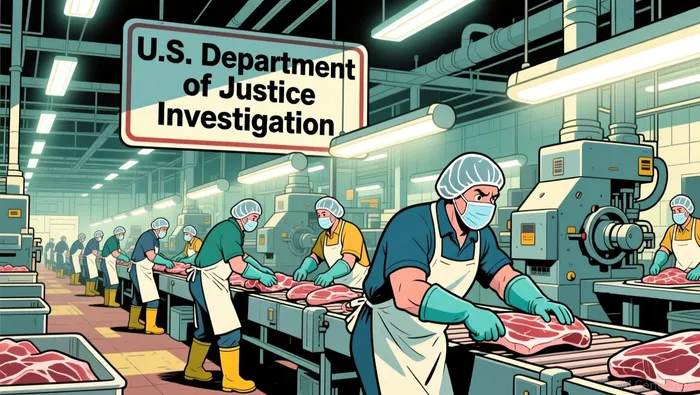 Trump's antitrust focus has exposed systemic vulnerabilities in the U.S. food supply chain. The meatpacking industry's high concentration has drawn criticism for squeezing ranchers and inflating consumer prices, despite USDA data showing a narrowing farm-to-wholesale price spread in recent years. Critics argue that consolidation has reduced competition, leaving ranchers with fewer buyers and lower prices according to analysis from farm advocacy groups. Meanwhile, the administration's mixed approach-scrutinizing antitrust violations while also accelerating slaughterhouse production speeds-has created regulatory contradictions. For example, while investigations into meatpackers aim to curb monopolistic practices, policies favoring corporate efficiency over worker safety risk entrenching existing power imbalances.
Investment Opportunities and Risks
For investors, Trump's antitrust agenda presents both risks and opportunities. Companies facing investigations, such as JBS and Tyson, may see short-term volatility but could benefit from long-term reforms that promote fair competition. Conversely, smaller producers and diversified food companies may gain traction as regulatory scrutiny curbs monopolistic practices. The USDA's $300 million Organic Transition Initiative and $75 million for urban agriculture, part of Biden's complementary supply chain strategy, also highlight growing demand for localized, sustainable food systems. Investors should monitor DOJ enforcement actions and congressional responses to the task forces' reports, as these could reshape market structures and investment flows.
Conclusion
Trump's Food Supply Chain Executive Order has intensified antitrust scrutiny in the food sector, exposing vulnerabilities in market concentration and foreign control. While short-term stock volatility remains a risk, the long-term implications-such as increased competition and regulatory reforms-could foster a more resilient food system. Investors must navigate this evolving landscape by balancing exposure to large, scrutinized firms with opportunities in smaller, innovation-driven players. As regulatory frameworks continue to adapt, the interplay between enforcement actions and market dynamics will remain a critical factor in shaping the future of agriculture and food processing.







Comentarios
Aún no hay comentarios