
Trump's Fed Chair Shortlist: Policy Signals and Investment Opportunities in a Dovish Era
The U.S. Federal Reserve's next chair will inherit a central bank at a crossroads. With President Donald Trump's shortlist of nominees-Kevin Warsh, Kevin Hassett, Christopher Waller, and others-revealing a clear tilt toward dovish policies, investors must grapple with the implications for monetary strategy and asset allocation. The administration's emphasis on rate cuts, balance sheet reductions, and rethinking traditional tools like quantitative easing signals a potential departure from the Fed's recent hawkish stance. This shift, if realized, could reshape equity markets, fixed-income yields, and alternative investments in 2026 and beyond.
Policy Preferences of the Contenders: A Dovish Lean
The Trump administration's narrowed list of candidates underscores a preference for Fed leadership that prioritizes rate cuts and structural flexibility. Kevin Warsh, a leading contender, has explicitly called for a "regime change" at the Fed, advocating for reduced interest rates and a partnership with the Treasury Department reminiscent of the 1951 accord, as he told CNBC. His recent pivot from hawkish stances-where he once warned of inflation risks during the 2008 crisis-to dovish advocacy aligns with Trump's public demands for aggressive rate reductions, according to the Detroit News. Warsh's proposal to shrink the Fed's balance sheet to create conditions for rate cuts further signals a departure from the current accommodative stance, as argued in a Bloomberg opinion piece.
Kevin Hassett, another top candidate, has emphasized the Fed's need to remain "100% independent" from political influence, a statement that appears strategically calibrated to balance loyalty to the administration with reassurance to markets, as reported by Global Market News. While Hassett supports Treasury Secretary Scott Bessent's push to reevaluate Fed operations, he has avoided endorsing specific structural changes, leaving room for ambiguity. This duality-advocating for independence while aligning with Trump's economic agenda-raises questions about the Fed's future autonomy.
The administration's exclusion of Bessent from the chair shortlist, despite his role in narrowing the candidate pool, highlights Trump's preference for nominees with strong ties to his economic vision, according to the AP. The eventual nominee, likely first appointed as a Fed Governor, will face intense scrutiny as the Fed navigates inflation, employment, and financial stability in a post-pandemic economy.
Historical Market Responses to Dovish Shifts
Historical data reveals a mixed but generally positive correlation between Fed rate cuts and equity performance, particularly in non-recessionary environments. For instance, the 1966 rate-cut cycle, which coincided with a 3% fiscal expansion, avoided recession and delivered robust market returns, according to a CFA Institute analysis. Conversely, the 2008 financial crisis saw rate cuts fail to prevent a deep downturn, underscoring the limitations of monetary policy in severe economic contractions, as discussed in that CFA Institute piece.
The 2025 rate cut-part of a broader dovish shift-has already spurred gains in growth stocks and alternative assets. Large-cap technology companies like Apple and Microsoft have benefited from lower discount rates, while the consumer discretionary sector has seen tailwinds from reduced borrowing costs, according to Talk Markets. Real estate and housing markets are also poised for growth as mortgage rates decline, potentially boosting homebuilder stocks and related industries, per the same Talk Markets coverage.
However, the effectiveness of rate cuts depends on broader economic conditions. For example, the 2024 rate-cut cycle saw a 35-month lag between yield curve inversion and market peak, deviating from historical norms noted by CFA Institute. This suggests that while monetary easing can cushion economic momentum, it may not always avert recessions once structural weaknesses emerge.
Investment Opportunities in a Dovish Era
The anticipated easing cycle offers several strategic entry points for investors. Fixed-income portfolios may benefit from focusing on the "belly" of the Treasury yield curve (three to seven years), where risk-reward profiles appear most favorable, as highlighted by iShares. Equities, particularly large-cap growth stocks in the technology sector, are well-positioned to capitalize on lower discount rates, a point iShares emphasizes. International equities could also gain traction as the U.S. dollar weakens, offering diversification and exposure to global growth opportunities, according to iShares.
Alternatives like gold and BitcoinBTC-- have historically performed well during Fed easing cycles and remain relevant as diversifiers, a trend iShares also discusses. Meanwhile, financials may face headwinds from compressed net interest margins, though increased lending activity could partially offset these pressures, as noted by Talk Markets. Savers and income-focused investors, meanwhile, may need to pivot toward high-yielding corporate bonds or cryptocurrencies to compensate for diminished returns on traditional fixed-income products, according to Talk Markets.
Conclusion: Navigating Uncertainty
The Trump administration's Fed chair shortlist signals a clear policy direction: a dovish tilt toward rate cuts, balance sheet adjustments, and rethinking traditional tools. While this approach could stimulate growth and buoy asset prices, it also raises concerns about the Fed's independence and the long-term credibility of its monetary framework. Investors must remain agile, balancing exposure to growth-oriented equities and alternatives while hedging against potential volatility. As the nomination process unfolds, the interplay between political influence and central bank autonomy will remain a critical factor shaping market dynamics.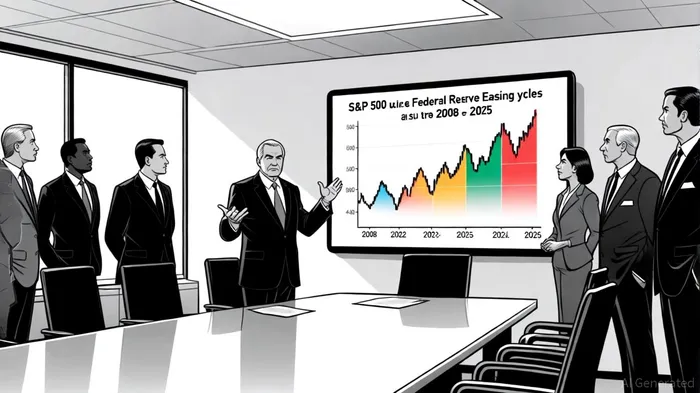






Comentarios
Aún no hay comentarios