
The Trump Family's Strategic Crypto Play: A New Era of Tokenized Wealth
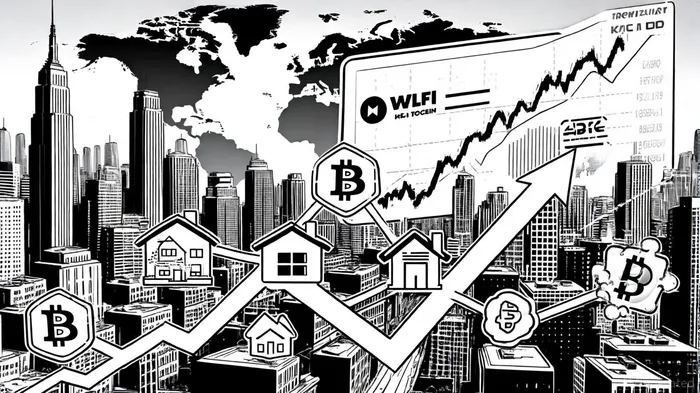
The TrumpTRUMP-- family's foray into cryptocurrency and tokenized assets has redefined their financial trajectory, transforming their net worth from $6.4 billion to $7.7 billion in 2025 through ventures like World Liberty Financial (WLFI) and American BitcoinABTC-- Corp. (ABTC) . This meteoric rise underscores a broader shift in how high-net-worth individuals are leveraging blockchain technology to diversify wealth, democratize access to real estate, and capitalize on decentralized finance (DeFi). For investors, the Trumps' strategy offers a blueprint for navigating the intersection of traditional assets and digital innovation—a space poised for explosive growth.
WLFI and ABTC: The Trumps' Crypto Powerhouses
World Liberty Financial (WLFI), co-founded by Donald Trump Jr., Eric Trump, and Barron Trump, has become a cornerstone of the family's crypto empire. The WLFI token, launched in September 2024, debuted with a $7 billion market cap, contributing $670 million to the family's wealth . Despite a 40% price drop shortly after its public trading debut, the token's volatility reflects the speculative nature of DeFi projects while highlighting the family's ability to attract capital. DT Marks DEFI LLC, a Trump-linked entity, holds 22.5 billion WLFI tokens, with Trump owning 70% of the firm—a stake valued at over $500 million as of mid-2025 .
Complementing WLFI, American BitcoinBTC-- (ABTC) has positioned the Trumps in the Bitcoin mining sector. Eric Trump's 7.5% stake in ABTCABTC-- briefly valued his holding at $1 billion following the company's reverse merger with Gryphon Digital Mining and its pending Nasdaq listing . This move aligns with the family's broader strategy to anchor their crypto portfolio in energy-efficient mining operations, a sector projected to benefit from the U.S. Strategic Bitcoin Reserve initiative under the Trump administration .
Tokenized Real Estate: The Next Frontier
The Trumps' next target is tokenizing their real estate empire. With properties like Trump Tower and Mar-a-Lago, the family aims to convert illiquid assets into tradable digital tokens, enabling fractional ownership and global liquidity . This approach mirrors industry trends: Deloitte predicts tokenized real estate will reach $1 trillion by 2035, while ScienceSoft forecasts a $3 trillion market by 2030 . By leveraging blockchain, the Trumps could unlock billions in value, attracting retail and institutional investors to assets previously reserved for the ultra-wealthy.
However, challenges persist. Regulatory scrutiny, particularly from the SEC, looms over tokenized real estate, which often straddles the line between securities and commodities . Additionally, the WLFI token's large circulating supply and price volatility raise questions about its long-term utility as a stable store of value .
DeFi Integration and Risk Mitigation
The Trump family's DeFi strategy extends beyond real estate. WLFI's platform already explores tokenizing oil and gas assets, while ABTC's mining operations integrate with DeFi protocols for yield farming and staking . These moves reflect a broader trend: tokenized assets are increasingly being used as collateral in DeFi ecosystems, generating passive income for holders.
To mitigate risks, the Trumps have diversified into memecoins ($TRUMP, $MELANIA), NFTs, and DeFi treasury vehicles like Dominari HoldingsDOMH-- . While memecoins remain speculative, their role in brand visibility and liquidity generation cannot be ignored. Meanwhile, the family's political influence—via deregulatory policies favoring crypto—creates a favorable environment for scaling these ventures .
Investment Case: Positioning Before the Tipping Point
For investors, the Trumps' crypto play highlights three key opportunities:
1. Early Adoption of Tokenized Real Estate: As platforms like WLFI and Kin Capital's Chintai network mature, fractional ownership tokens could become mainstream, offering liquidity previously unavailable in traditional real estate.
2. DeFi Infrastructure Exposure: ABTC's Nasdaq listing and WLFI's expanding use cases position investors to benefit from the convergence of blockchain and institutional finance.
3. Policy Tailwinds: The Trump administration's pro-crypto policies, including the U.S. Digital AssetDAAQ-- Stockpile, signal a regulatory environment more hospitable to innovation than under Biden .
Conclusion
The Trump family's crypto ventures exemplify the transformative potential of tokenized assets and DeFi. While risks like regulatory ambiguity and market volatility remain, the scale of their success—$1.3 billion in crypto gains in 2025 alone—demonstrates the viability of this asset class. For investors, the lesson is clear: positioning in tokenized real estate and DeFi before these markets scale could yield outsized returns, provided they navigate the risks with caution and strategic foresight.







Comentarios
Aún no hay comentarios