
Trump's Escalated Trade War with China: Who Will Be the Victim in the Stock Market?
Trump's trade war 2.0 is a looming risk, with an additional 10% tariff already in place. Many U.S. giants are likely to feel the pain, given their significant business ties with China—some through manufacturing and imports, others through heavy ads spending. As more tariffs are introduced, which stocks are most likely to struggle? Here's a list of the most vulnerable.
Apple:
Apple has had a strong presence in China for years, both in terms of demand and supply. It could be a primary target. In FY2024, China accounted for $67 billion in sales, making it Apple's third-largest market and 17% of its total revenue. While iPhone remains dominant in China, growing competition, regulatory headwinds, and geopolitical risks are increasing.

Moreover, Apple's supply chain is heavily reliant on China, with approximately 90% of its products being assembled there. As U.S.-China relations deteriorate and Trump's tariffs intensify, Apple's fundamentals may come under threat.
Tesla:
Tesla's situation is more ambiguous. While its electric vehicles are highly favored by China's 20-30s demographic, and the market is experiencing growth due to the green transition, Tesla faces mounting competition. Musk's deep ties with Trump may escalate geopolitical risks, but on the other hand, Musk has also fostered a long-term, friendly relationship with the Chinese government, which could help bridge relations between President Trump and Xi.
From a financial standpoint, Tesla generated $20.9 billion in revenue from China in 2024, representing 21% of its total annual sales.  The Shanghai Gigafactory is now Tesla's most productive site, with an annual capacity of ~1 million units for Model 3/Y. As Tesla's vehicles are fully manufactured in both China and the U.S., the company faces much less tariff risk compared to Apple.
Nvidia:
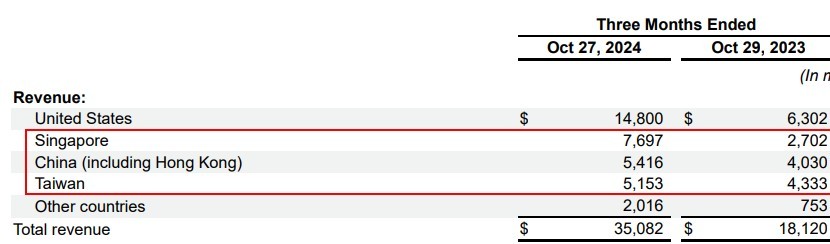
Nvidia also warrants attention. While mainland China (including Hong Kong) accounted for about 15% of its Q3 2024 revenue, its sales in Singapore were substantial, amounting to $7.7 billion (22% of sales). China's major tech giants—Alibaba, ByteDance, and Tencent—are based in Singapore, giving them access to Nvidia's advanced AI chips. Some have speculated that Singapore may be a transit point for Nvidia's chips to enter mainland China under the current strict export controls.
Amazon:
Amazon may also face pain from additional tariffs, as a significant portion of its third-party sellers and advertising revenue comes from China. In 2024, third-party sales were $156 billion, with approximately 50% ($78 billion) originating from China, accounting for 12% of Amazon's total sales.

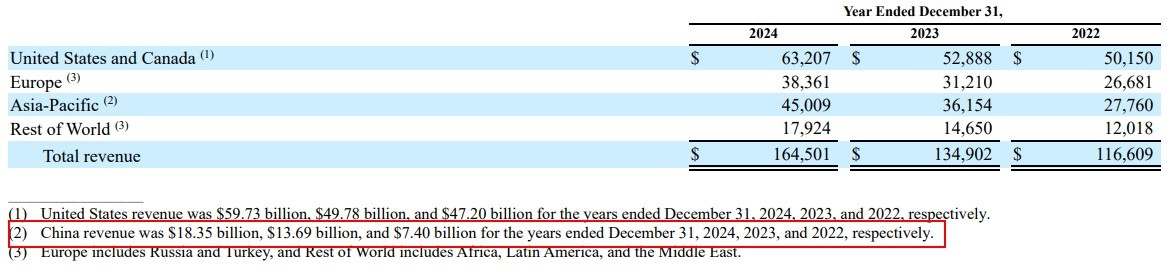
Meta could also be impacted if tariffs increase. China is a key customer for Meta's advertising business, which posted $18.35 billion in revenue for 2024, representing 34% year-over-year growth and 11% of total sales. If Trump imposes stricter tariffs, Chinese companies may become more reluctant to spend on ads.
Microsoft and Google:
Both Microsoft and Google have limited exposure to China but are still reliant on the country for supply chains. For instance, Microsoft manufactures its Surface laptops in China. Any disruptions to these supply chains could affect their operations.
Retailers:
Similar to Amazon, Walmart is highly dependent on Chinese imports, with over 70% of its non-grocery products coming from China. However, its focus on groceries, which are domestically sourced, helps mitigate some of the risks. Non-food items represent about 25% of Walmart's total revenue, so an 18% impact from tariff increases is possible. Still, Walmart's grocery-centered business model offers some protection.
Costco is in a similar situation. However, Target and Best Buy are more vulnerable, as both rely heavily on Chinese imports for non-essential items and electronics. Target has stated that China is its single largest source of merchandise imports, while around 60% of Best Buy's goods are sourced from Chinese suppliers.

Nike, on the other hand, has managed to diversify its supply chain. While 16% of its footwear is still made in China, most of its products are now manufactured in Vietnam and Indonesia. In FY2024, China accounted for 15% of Nike's total sales, though intensifying competition and waning brand influence may affect its performance.
Semiconductors:
Even the advanced semiconductor sector could be impacted, as Trump is dissatisfied with the U.S. importing too many chips from Taiwan. TSMC dominates the advanced chip market, producing chips for Apple, Nvidia, Broadcom, Qualcomm, AMD, and others. If Trump imposes a 100% tariff on imports from Taiwan, companies may be forced to shift production to the U.S. However, TSMC has been building a foundry in the U.S., but it will take time to fully ramp up production.
Reports indicate that TSMC may raise semiconductor prices by 15%, which would increase the cost of advanced chips and potentially disrupt the entire semiconductor supply chain. Furthermore, the growing demand for AI from cloud giants will likely lead to higher prices, impacting consumer-facing companies like Apple, where competition and costs could threaten profitability.
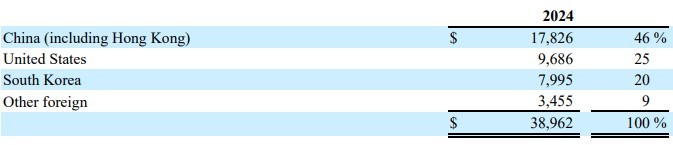
In addition, sales heavily reliant on China, along with worsening relationships and tariffs, could further hurt business, as China may seek domestic replacements. For example, Qualcomm generated nearly 50% of its sales from China in 2024.
Chinese Stocks:
The tariff will hit Chinese e-commerce companies hard when exporting to the U.S., such as Alibaba and Temu, an affiliate of PDD. It is reported that Temu has captured at least 17% of the U.S. e-commerce market, mainly due to extremely low prices and "de minimis" rules that exempt tariffs. However, the Trump administration once paused USPS from accepting packages from mainland China and Hong Kong to correct the de minimis rule, which allows exporters to ship packages worth less than $800 into the U.S. duty-free, leading to chaos. Although USPS has since resumed accepting packages, further retaliation could cause major problems for PDD, as Temu is now their main growth engine.
Trump's renewed tariff war could be disastrous for many domestic giants, as China is a key customer and supplier. Retaliatory measures may disrupt entire supply chains, creating a negative feedback loop. As the fundamentals of these companies deteriorate, investors should remain cautious in light of the escalating risks posed by the trade conflict.

Unlock Market-Moving Insights.
Subscribe to PRO Articles.
Already have an account? Sign in
Unlock Market-Moving Insights.
Subscribe to PRO Articles.
Already have an account? Sign in




