
Trump's Energy Agenda: Withdrawal from Paris Agreement and Boost for Fossil Fuels and Mineral Mining
Generado por agente de IACyrus Cole
lunes, 20 de enero de 2025, 7:34 pm ET2 min de lectura
FOSL--
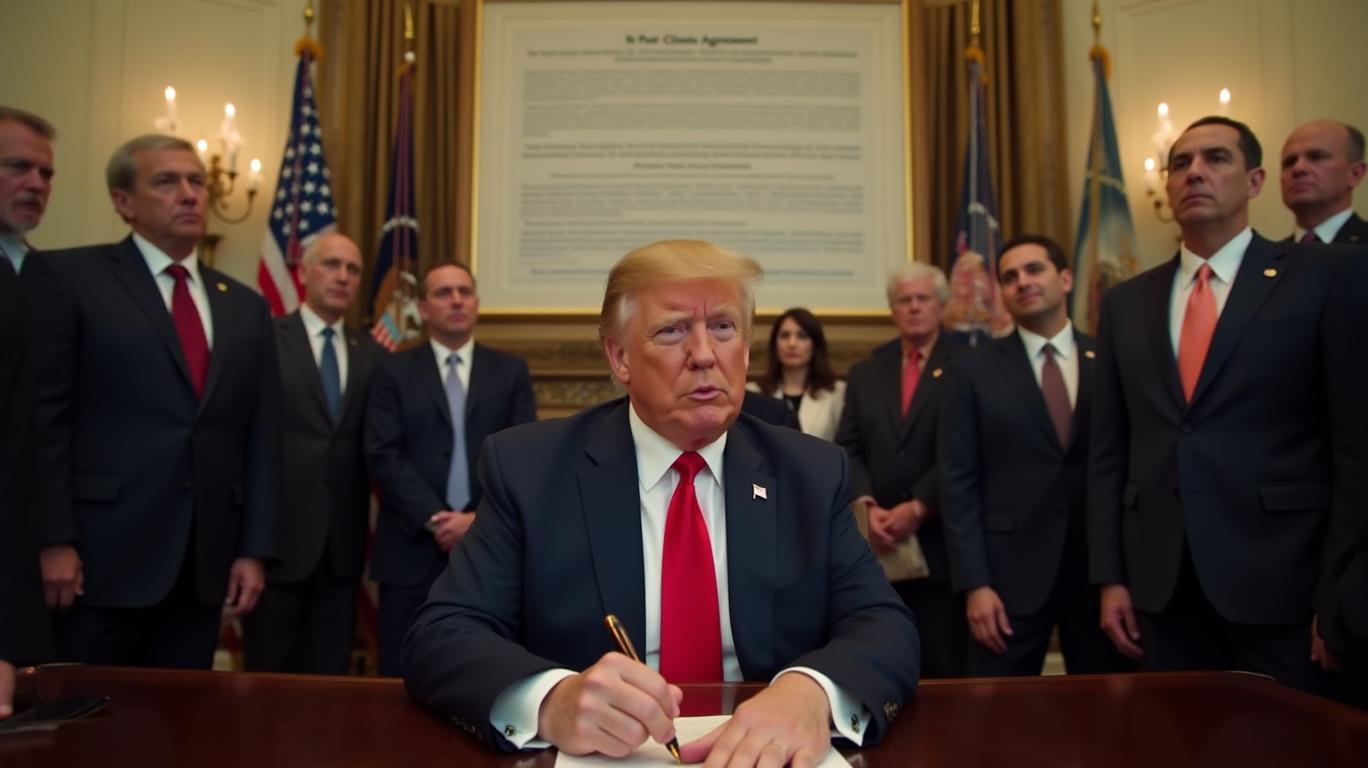
President Donald Trump has signed executive actions to withdraw the United States from the Paris climate agreement and promote fossil fuels and mineral mining, signaling a significant shift in US energy policy. The move, which comes as climate change-fueled fires ravage Southern California and following the globe's hottest year on record, has raised concerns about the US's commitment to combating global warming and its impact on energy markets and supply chains.
Trump's decision to withdraw from the Paris Agreement, a voluntary pact aimed at limiting long-term global warming, is expected to have a substantial impact on global climate change efforts. The US, as the second biggest annual carbon polluting country, is responsible for nearly 22% of the carbon dioxide put in the atmosphere since 1950. Its withdrawal will not only reduce the collective effort to combat climate change but also send a message to other nations that the US is not committed to the global fight against climate change.
Trump's energy agenda includes several policies aimed at promoting fossil fuels and mineral mining. One of the key policies is the streamlining of permitting and reduction of environmental regulations in the mining sector. This is expected to make it easier for domestic critical minerals producers to commence or expand operations, potentially leading to increased domestic production of critical minerals. However, this could also lead to environmental concerns and potential conflicts with local communities and environmental advocacy groups.
Another policy is the expedited permitting for energy infrastructure, which aims to facilitate the transportation and processing of fossil fuels and minerals. This could help reduce supply chain disruptions and support the growth of the domestic energy industry. Additionally, Trump has proposed changes to the Inflation Reduction Act (IRA) and other legislation, including the addition of copper to the federal critical minerals list, which could help facilitate the mining and processing of this essential mineral for the energy sector.
Trump's policies are expected to have significant impacts on the energy and resources sectors, both domestically and internationally. Domestically, the focus on reducing bureaucracy and rolling back environmental regulations in the mining sector could lead to more mining permits being granted and mines entering production faster. This could result in increased domestic production of critical minerals, benefiting US-based mining companies. However, it may also lead to environmental concerns and potential conflicts with local communities and environmental advocacy groups.
Internationally, Trump's hardline approach to China and his focus on "decoupling" could exacerbate geopolitical tensions, particularly in the context of critical mineral supply chains. This could lead to increased competition and potential conflicts between the US and other nations, such as China, over access to critical minerals. Additionally, Trump's withdrawal from the Paris climate agreement and his focus on boosting fossil fuel production could undermine international efforts to combat climate change, potentially slowing down the transition to clean energy in other countries.
In conclusion, President Trump's re-election and the Republican Party's control of the US Senate are expected to have significant impacts on the energy and resources sectors, both domestically and internationally. While some of these policies may benefit certain industries and stakeholders, they could also lead to environmental concerns, geopolitical tensions, and potential disruptions in global commodity markets. It is essential to monitor these developments closely and assess their implications for various industries and countries.
President Donald Trump has signed executive actions to withdraw the United States from the Paris climate agreement and promote fossil fuels and mineral mining, signaling a significant shift in US energy policy. The move, which comes as climate change-fueled fires ravage Southern California and following the globe's hottest year on record, has raised concerns about the US's commitment to combating global warming and its impact on energy markets and supply chains.
Trump's decision to withdraw from the Paris Agreement, a voluntary pact aimed at limiting long-term global warming, is expected to have a substantial impact on global climate change efforts. The US, as the second biggest annual carbon polluting country, is responsible for nearly 22% of the carbon dioxide put in the atmosphere since 1950. Its withdrawal will not only reduce the collective effort to combat climate change but also send a message to other nations that the US is not committed to the global fight against climate change.
Trump's energy agenda includes several policies aimed at promoting fossil fuels and mineral mining. One of the key policies is the streamlining of permitting and reduction of environmental regulations in the mining sector. This is expected to make it easier for domestic critical minerals producers to commence or expand operations, potentially leading to increased domestic production of critical minerals. However, this could also lead to environmental concerns and potential conflicts with local communities and environmental advocacy groups.
Another policy is the expedited permitting for energy infrastructure, which aims to facilitate the transportation and processing of fossil fuels and minerals. This could help reduce supply chain disruptions and support the growth of the domestic energy industry. Additionally, Trump has proposed changes to the Inflation Reduction Act (IRA) and other legislation, including the addition of copper to the federal critical minerals list, which could help facilitate the mining and processing of this essential mineral for the energy sector.
Trump's policies are expected to have significant impacts on the energy and resources sectors, both domestically and internationally. Domestically, the focus on reducing bureaucracy and rolling back environmental regulations in the mining sector could lead to more mining permits being granted and mines entering production faster. This could result in increased domestic production of critical minerals, benefiting US-based mining companies. However, it may also lead to environmental concerns and potential conflicts with local communities and environmental advocacy groups.
Internationally, Trump's hardline approach to China and his focus on "decoupling" could exacerbate geopolitical tensions, particularly in the context of critical mineral supply chains. This could lead to increased competition and potential conflicts between the US and other nations, such as China, over access to critical minerals. Additionally, Trump's withdrawal from the Paris climate agreement and his focus on boosting fossil fuel production could undermine international efforts to combat climate change, potentially slowing down the transition to clean energy in other countries.
In conclusion, President Trump's re-election and the Republican Party's control of the US Senate are expected to have significant impacts on the energy and resources sectors, both domestically and internationally. While some of these policies may benefit certain industries and stakeholders, they could also lead to environmental concerns, geopolitical tensions, and potential disruptions in global commodity markets. It is essential to monitor these developments closely and assess their implications for various industries and countries.

Divulgación editorial y transparencia de la IA: Ainvest News utiliza tecnología avanzada de Modelos de Lenguaje Largo (LLM) para sintetizar y analizar datos de mercado en tiempo real. Para garantizar los más altos estándares de integridad, cada artículo se somete a un riguroso proceso de verificación con participación humana.
Mientras la IA asiste en el procesamiento de datos y la redacción inicial, un miembro editorial profesional de Ainvest revisa, verifica y aprueba de forma independiente todo el contenido para garantizar su precisión y cumplimiento con los estándares editoriales de Ainvest Fintech Inc. Esta supervisión humana está diseñada para mitigar las alucinaciones de la IA y garantizar el contexto financiero.
Advertencia sobre inversiones: Este contenido se proporciona únicamente con fines informativos y no constituye asesoramiento profesional de inversión, legal o financiero. Los mercados conllevan riesgos inherentes. Se recomienda a los usuarios que realicen una investigación independiente o consulten a un asesor financiero certificado antes de tomar cualquier decisión. Ainvest Fintech Inc. se exime de toda responsabilidad por las acciones tomadas con base en esta información. ¿Encontró un error? Reportar un problema


SOBRE NOSOTROS
Nuestra historiaAutores de noticiasBase de conocimientosPolítica de privacidadTérmino de usoDescargo de responsabilidad de corretaje de tercerosTérminos de uso de AIMEDivulgaciones de riesgos de AInvest AICarrerasCONTÁCTENOS
Email: support@ainvest.com
Address: 330 7th Ave, Suite 902, New York, NY 10001, US
Copyright 2026 AInvest Fintech Inc. All rights reserved.


Comentarios
Aún no hay comentarios