
Trump's Energy Agenda: Reshaping Asia's Gas Supplies
Generado por agente de IACyrus Cole
jueves, 20 de febrero de 2025, 10:39 pm ET1 min de lectura
LNG--
President Donald Trump's energy policies, particularly his focus on boosting U.S. LNG exports, are set to have significant implications for Asia's energy market dynamics and geopolitics. With the U.S. emerging as the world's leading LNG exporter, the expansion of LNG exports will increase competition in the global LNG market, driving down prices and enhancing energy security for Asian countries. However, Trump's proposed tariffs on energy imports from China and other countries could lead to retaliation, potentially targeting U.S. energy exports and altering trade dynamics in the region.
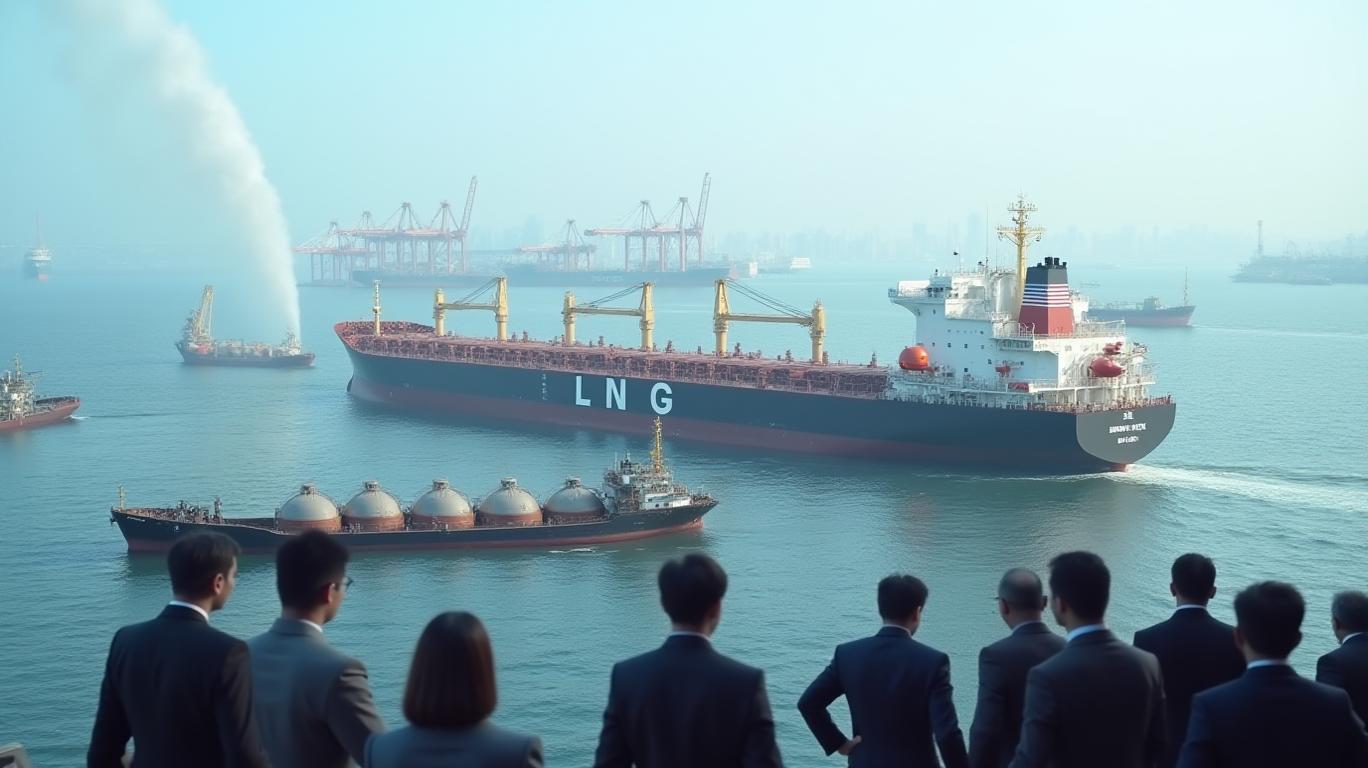
Trump's administration has prioritized increasing U.S. LNG exports, with a significant share destined for Asia. In 2023, Asia accounted for 26% of U.S. LNG exports (U.S. Energy Information Administration). Increased exports could enhance U.S. influence in the region, potentially altering trade dynamics and market opportunities for competitors. For instance, Australia, another major LNG exporter, might face increased competition from the U.S.
Trump's proposed tariffs on energy imports from China and other countries could lead to retaliation, potentially targeting U.S. energy exports. In 2018, China reacted to Trump's tariffs by imposing retaliatory tariffs on U.S. energy exports (U.S. Energy Information Administration). A tit-for-tat trade war could alter trade in the Asia-Pacific region, opening up new market opportunities for competitors.
Countries with a larger share of external demand in GDP growth, such as China, Korea, and Vietnam, will be more exposed to Trump's 'America First' trade policy. These countries are also more dependent on external demand and have a large goods trade surplus with the U.S. (CEIC). For example, Vietnam's steel and aluminum exports to the U.S. were 0.3% of its GDP in 2024, making it the most exposed country in Asia to U.S. tariffs on these metals (International Trade Administration).
Trump's rollback of EV incentives under the Inflation Reduction Act (IRA) could deter U.S. investments in Indonesian nickel smelters and battery plants, potentially disrupting the country's large ecosystem for electronic vehicles (CEIC). This could impact Indonesia's trade relations with the U.S. and other countries in the region.

In conclusion, Trump's energy policies, particularly his focus on increasing U.S. LNG exports and rolling back climate-focused regulations, have significant geopolitical implications for Asia. Increased competition in the LNG market, trade tensions, and the potential impact on the global energy transition are some of the key factors to consider. The diverse energy needs and trade relationships of Asian countries make them particularly vulnerable to these changes, with potential implications for energy security, trade dynamics, and the pace of the energy transition.
SEIC--
President Donald Trump's energy policies, particularly his focus on boosting U.S. LNG exports, are set to have significant implications for Asia's energy market dynamics and geopolitics. With the U.S. emerging as the world's leading LNG exporter, the expansion of LNG exports will increase competition in the global LNG market, driving down prices and enhancing energy security for Asian countries. However, Trump's proposed tariffs on energy imports from China and other countries could lead to retaliation, potentially targeting U.S. energy exports and altering trade dynamics in the region.
Trump's administration has prioritized increasing U.S. LNG exports, with a significant share destined for Asia. In 2023, Asia accounted for 26% of U.S. LNG exports (U.S. Energy Information Administration). Increased exports could enhance U.S. influence in the region, potentially altering trade dynamics and market opportunities for competitors. For instance, Australia, another major LNG exporter, might face increased competition from the U.S.
Trump's proposed tariffs on energy imports from China and other countries could lead to retaliation, potentially targeting U.S. energy exports. In 2018, China reacted to Trump's tariffs by imposing retaliatory tariffs on U.S. energy exports (U.S. Energy Information Administration). A tit-for-tat trade war could alter trade in the Asia-Pacific region, opening up new market opportunities for competitors.
Countries with a larger share of external demand in GDP growth, such as China, Korea, and Vietnam, will be more exposed to Trump's 'America First' trade policy. These countries are also more dependent on external demand and have a large goods trade surplus with the U.S. (CEIC). For example, Vietnam's steel and aluminum exports to the U.S. were 0.3% of its GDP in 2024, making it the most exposed country in Asia to U.S. tariffs on these metals (International Trade Administration).
Trump's rollback of EV incentives under the Inflation Reduction Act (IRA) could deter U.S. investments in Indonesian nickel smelters and battery plants, potentially disrupting the country's large ecosystem for electronic vehicles (CEIC). This could impact Indonesia's trade relations with the U.S. and other countries in the region.
In conclusion, Trump's energy policies, particularly his focus on increasing U.S. LNG exports and rolling back climate-focused regulations, have significant geopolitical implications for Asia. Increased competition in the LNG market, trade tensions, and the potential impact on the global energy transition are some of the key factors to consider. The diverse energy needs and trade relationships of Asian countries make them particularly vulnerable to these changes, with potential implications for energy security, trade dynamics, and the pace of the energy transition.

Divulgación editorial y transparencia de la IA: Ainvest News utiliza tecnología avanzada de Modelos de Lenguaje Largo (LLM) para sintetizar y analizar datos de mercado en tiempo real. Para garantizar los más altos estándares de integridad, cada artículo se somete a un riguroso proceso de verificación con participación humana.
Mientras la IA asiste en el procesamiento de datos y la redacción inicial, un miembro editorial profesional de Ainvest revisa, verifica y aprueba de forma independiente todo el contenido para garantizar su precisión y cumplimiento con los estándares editoriales de Ainvest Fintech Inc. Esta supervisión humana está diseñada para mitigar las alucinaciones de la IA y garantizar el contexto financiero.
Advertencia sobre inversiones: Este contenido se proporciona únicamente con fines informativos y no constituye asesoramiento profesional de inversión, legal o financiero. Los mercados conllevan riesgos inherentes. Se recomienda a los usuarios que realicen una investigación independiente o consulten a un asesor financiero certificado antes de tomar cualquier decisión. Ainvest Fintech Inc. se exime de toda responsabilidad por las acciones tomadas con base en esta información. ¿Encontró un error? Reportar un problema


SOBRE NOSOTROS
Nuestra historiaAutores de noticiasBase de conocimientosPolítica de privacidadTérmino de usoDescargo de responsabilidad de corretaje de tercerosTérminos de uso de AIMEDivulgaciones de riesgos de AInvest AICarrerasCONTÁCTENOS
Email: support@ainvest.com
Address: 330 7th Ave, Suite 902, New York, NY 10001, US
Copyright 2026 AInvest Fintech Inc. All rights reserved.


Comentarios
Aún no hay comentarios