
Trump Endorses Bitcoin to Alleviate US Dollar Pressure
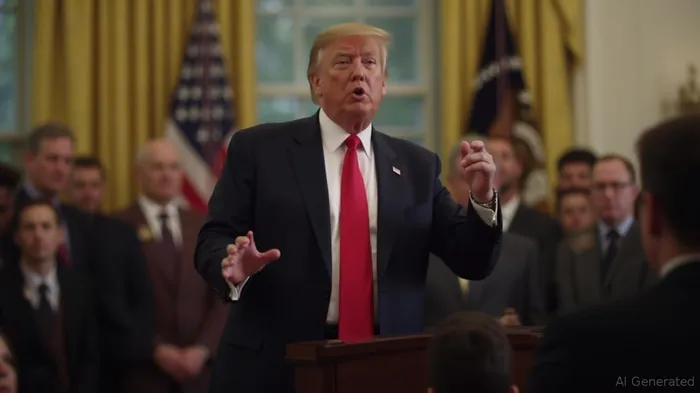
During a recent press conference, President Donald Trump highlighted the positive impacts of BitcoinBTC-- on the US economy, stating that the cryptocurrency helps alleviate pressure on the US dollar. He noted that an increasing number of transactions are being conducted in Bitcoin, which he believes is beneficial for the country. Trump's endorsement of Bitcoin comes as the US seeks to maintain its leadership in the digital assets sector, particularly in the face of competition from other nations.
Trump emphasized that Bitcoin and other cryptocurrencies have shown resilience during recent market declines, falling less than equities. He highlighted that the US has developed a robust industry around digital assets, which now generates jobs and investment. The President also pointed out that more merchants are accepting Bitcoin for payments, further integrating the cryptocurrency into the mainstream economy.
The President's comments were made during a White House press conference following a significant Supreme Court victory for his administration. He described cryptocurrency as "an industry" and revealed that he has been a "fan of crypto" for several years. Trump's endorsement of Bitcoin is seen as a strategic move to ensure that the US remains at the forefront of digital asset innovation, preventing other countries from dominating the sector.
Trump's family is involved in several cryptocurrency ventures, including World Liberty Financial (WLFI), a credit market with its own stablecoin, USD1. Additionally, they have formalized ties with the team behind the TRUMP memecoin. Despite calls from Democratic sponsors to divest from these ventures to help advance pending digital asset legislation, Trump has declined, stating that his involvement does not hinder congressional negotiations.
The President has called for a clean version of the stablecoin-focused bill to streamline its approval and create clarity for this market in the US. He believes that the statutory debates should proceed on their own merits, rather than being influenced by personal financial interests. This stance has led to a delay in approving the GENIUS Act, which only recently left the Senate to progress in the House.
Trump's endorsement of Bitcoin and his push for US leadership in the digital assets sector reflect his administration's broader strategy to leverage technology for economic growth. By embracing cryptocurrencies, the US aims to maintain its competitive edge in the global economy and foster innovation in the financial sector.
Trump's comments were interpreted by digital asset researcher Anders X as a reference to the Triffin Dilemma, which highlights the conflict of interest between being the issuer of the global reserve currency, maintaining proper trade balances, and ensuring the long-term value of the currency. As the issuer of the global reserve currency, the US must run persistent trade deficits to meet the global demand for dollars, which can dilute the value of the US dollar over time.
Trump previously floated the idea of paying off the national debt with Bitcoin, acknowledging the asymmetry between the inflationary dollar and the supply-capped asset. However, critics have argued that even if the US Treasury owned the entire Bitcoin supply, it would still not be enough to cover the growing US government debt, which could eventually collapse the value of the dollar.
Macroeconomist and Bitcoin advocate Lyn Alden coined the phrase "nothing stops this train" — a reference to the extreme likelihood that global governments will never stop printing money and destroying the future value of their national currencies. The dollar currency index (DXY), a metric that tracks the strength of the US dollar against a basket of major fiat currencies, hit its lowest level in three years on Thursday, amid elevated US government bond yields, a signal of deteriorating investor confidence in the creditworthiness of the US government and the sustainability of its debt.






Comentarios
Aún no hay comentarios