
Trump's Economic Gamble: A Reagan-Style Boom or 'Performance Art'?
Generado por agente de IAWesley Park
miércoles, 26 de febrero de 2025, 5:56 am ET2 min de lectura
ARKW--
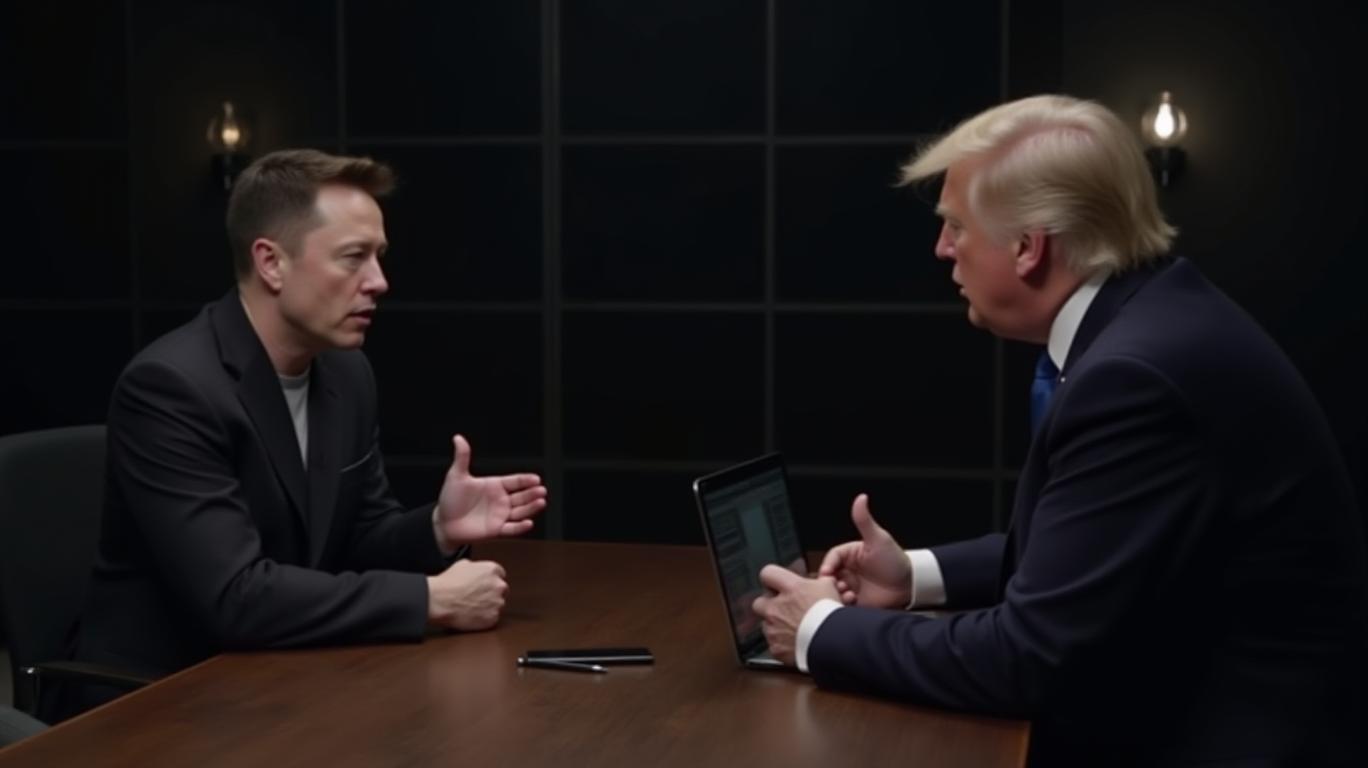
As the dust settles on the 2024 U.S. Presidential election, the world watches with bated breath as Donald Trump begins his second term. The economic policies of his administration, particularly those spearheaded by Elon Musk in the Department of Government Efficiency (DOGE), have sparked a fierce debate among economists and market experts. Cathie Wood, CEO of ArkARKW-- Invest, sees a Reagan-style boom on the horizon, while former President Barack Obama's economic adviser, Betsey Stevenson, dismisses Musk's role as 'performance art.' Let's delve into the potential impacts of Trump's economic gambit and the microeconomic implications of Musk's involvement.
The Reagan Revolution Redux?
Cathie Wood, a prominent investor and CEO of Ark Invest, believes that Trump's economic policies could dwarf the Reagan Revolution. She points to the creation of 'degrees of freedom to cut tax rates' through Musk's leadership in DOGE, which could fuel long-term growth. Wood compares the current moment to Reagan's administration, noting that the Trump Revolution could have a similar impact on the economy.
However, not everyone is convinced. Betsey Stevenson, a former economic adviser to President Obama, argues that Musk's cuts are primarily designed to dazzle us into looking away from trillions of dollars in tax cuts. She characterizes Musk's role as 'performance art,' suggesting that the cuts are more about optics than substance.
Microeconomic Implications of Musk's Role in DOGE
Elon Musk's involvement in DOGE has raised concerns about the microeconomic implications of his initiatives. Economist Justin Wolfers argues that a microeconomic analysis shows Musk creating 'huge costs for very little benefit.' He suggests that, in many cases, the benefits of Musk's initiatives do not outweigh the costs.
For instance, Musk's swift actions, including layoffs and agency closures, have led to job losses and disrupted federal operations. These actions have real-world consequences, such as reduced government services and potential economic hardship for affected workers. Additionally, court challenges and political backlash could divert resources and attention away from other policy priorities, potentially slowing down the administration's agenda.
Uncertainty and Consumer/Business Behavior
The uncertainty surrounding tax policy and the velocity of money can influence consumer and business behavior. Cathie Wood suggests that consumers and businesses may be delaying income recognition in anticipation of lower tax rates, similar to the early Reagan years. This behavior can slow down the velocity of money, as people and businesses hold onto their money instead of spending or investing it.
The slowdown in the velocity of money can have macroeconomic consequences, as it can lead to a decrease in aggregate demand. Lower aggregate demand can result in slower economic growth, as fewer goods and services are being purchased. This can also lead to a decrease in production, which can result in lower employment and wages.
In conclusion, Trump's economic gambit has sparked a fierce debate among economists and market experts. While Cathie Wood sees a Reagan-style boom on the horizon, others, like Betsey Stevenson, dismiss Musk's role as 'performance art.' The microeconomic implications of Musk's involvement in DOGE raise concerns about job losses, economic distortions, and political backlash. The uncertainty surrounding tax policy and the velocity of money can influence consumer and business behavior, with potential macroeconomic consequences. As the Trump administration begins its second term, the world will be watching to see if the economic policies of the past four years continue to shape the future of the U.S. economy.
DOGE--
As the dust settles on the 2024 U.S. Presidential election, the world watches with bated breath as Donald Trump begins his second term. The economic policies of his administration, particularly those spearheaded by Elon Musk in the Department of Government Efficiency (DOGE), have sparked a fierce debate among economists and market experts. Cathie Wood, CEO of ArkARKW-- Invest, sees a Reagan-style boom on the horizon, while former President Barack Obama's economic adviser, Betsey Stevenson, dismisses Musk's role as 'performance art.' Let's delve into the potential impacts of Trump's economic gambit and the microeconomic implications of Musk's involvement.
The Reagan Revolution Redux?
Cathie Wood, a prominent investor and CEO of Ark Invest, believes that Trump's economic policies could dwarf the Reagan Revolution. She points to the creation of 'degrees of freedom to cut tax rates' through Musk's leadership in DOGE, which could fuel long-term growth. Wood compares the current moment to Reagan's administration, noting that the Trump Revolution could have a similar impact on the economy.
However, not everyone is convinced. Betsey Stevenson, a former economic adviser to President Obama, argues that Musk's cuts are primarily designed to dazzle us into looking away from trillions of dollars in tax cuts. She characterizes Musk's role as 'performance art,' suggesting that the cuts are more about optics than substance.
Microeconomic Implications of Musk's Role in DOGE
Elon Musk's involvement in DOGE has raised concerns about the microeconomic implications of his initiatives. Economist Justin Wolfers argues that a microeconomic analysis shows Musk creating 'huge costs for very little benefit.' He suggests that, in many cases, the benefits of Musk's initiatives do not outweigh the costs.
For instance, Musk's swift actions, including layoffs and agency closures, have led to job losses and disrupted federal operations. These actions have real-world consequences, such as reduced government services and potential economic hardship for affected workers. Additionally, court challenges and political backlash could divert resources and attention away from other policy priorities, potentially slowing down the administration's agenda.
Uncertainty and Consumer/Business Behavior
The uncertainty surrounding tax policy and the velocity of money can influence consumer and business behavior. Cathie Wood suggests that consumers and businesses may be delaying income recognition in anticipation of lower tax rates, similar to the early Reagan years. This behavior can slow down the velocity of money, as people and businesses hold onto their money instead of spending or investing it.
The slowdown in the velocity of money can have macroeconomic consequences, as it can lead to a decrease in aggregate demand. Lower aggregate demand can result in slower economic growth, as fewer goods and services are being purchased. This can also lead to a decrease in production, which can result in lower employment and wages.
In conclusion, Trump's economic gambit has sparked a fierce debate among economists and market experts. While Cathie Wood sees a Reagan-style boom on the horizon, others, like Betsey Stevenson, dismiss Musk's role as 'performance art.' The microeconomic implications of Musk's involvement in DOGE raise concerns about job losses, economic distortions, and political backlash. The uncertainty surrounding tax policy and the velocity of money can influence consumer and business behavior, with potential macroeconomic consequences. As the Trump administration begins its second term, the world will be watching to see if the economic policies of the past four years continue to shape the future of the U.S. economy.

Divulgación editorial y transparencia de la IA: Ainvest News utiliza tecnología avanzada de Modelos de Lenguaje Largo (LLM) para sintetizar y analizar datos de mercado en tiempo real. Para garantizar los más altos estándares de integridad, cada artículo se somete a un riguroso proceso de verificación con participación humana.
Mientras la IA asiste en el procesamiento de datos y la redacción inicial, un miembro editorial profesional de Ainvest revisa, verifica y aprueba de forma independiente todo el contenido para garantizar su precisión y cumplimiento con los estándares editoriales de Ainvest Fintech Inc. Esta supervisión humana está diseñada para mitigar las alucinaciones de la IA y garantizar el contexto financiero.
Advertencia sobre inversiones: Este contenido se proporciona únicamente con fines informativos y no constituye asesoramiento profesional de inversión, legal o financiero. Los mercados conllevan riesgos inherentes. Se recomienda a los usuarios que realicen una investigación independiente o consulten a un asesor financiero certificado antes de tomar cualquier decisión. Ainvest Fintech Inc. se exime de toda responsabilidad por las acciones tomadas con base en esta información. ¿Encontró un error? Reportar un problema


SOBRE NOSOTROS
Nuestra historiaAutores de noticiasBase de conocimientosPolítica de privacidadTérmino de usoDescargo de responsabilidad de corretaje de tercerosTérminos de uso de AIMEDivulgaciones de riesgos de AInvest AICarrerasCONTÁCTENOS
Email: support@ainvest.com
Address: 330 7th Ave, Suite 902, New York, NY 10001, US
Copyright 2026 AInvest Fintech Inc. All rights reserved.


Comentarios
Aún no hay comentarios