
The Trump-Driven Energy Renaissance: A Strategic Case for Energy Infrastructure and Export Stocks in 2026
The U.S. energy sector is undergoing a seismic shift under President Trump's 2026 policies, which prioritize deregulation, LNG expansion, and infrastructure development. These policy tailwinds are reshaping the landscape for energy infrastructure and export stocks, creating a compelling case for investors seeking to capitalize on America's reemergence as a global energy leader.
Policy Tailwinds: Deregulation and LNG Expansion
President Trump's executive order "Unleashing American Energy" has catalyzed a dramatic reversal of Biden-era restrictions, particularly the LNG export pause. By rescinding NEPA regulations and accelerating approvals for LNG infrastructure, the Department of Energy (DOE) and Federal Energy Regulatory Commission (FERC) have streamlined the permitting process, enabling the U.S. to surpass Australia in annual LNG export capacity. This deregulatory push extends to coal, oil, and nuclear energy, with the administration allocating high-assay low-enriched uranium to advanced nuclear developers and reopening aging power plants.
The policy agenda is explicitly designed to reduce energy costs and enhance energy security. By cutting red tape and prioritizing domestic production, the administration aims to wean the U.S. off foreign energy dependence while boosting economic growth according to recent reports. However, critics warn that increased LNG exports could strain domestic natural gas supplies, contributing to a 22% price surge in 2025 compared to 2024.
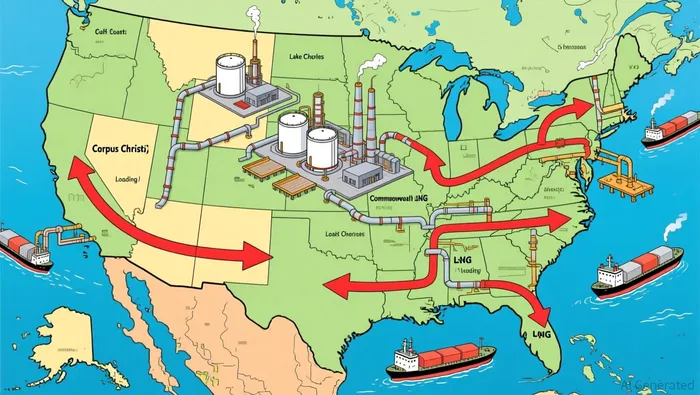
Key Beneficiaries: LNG Export Giants and Infrastructure Players
Cheniere Energy, Shell, and ChevronCVX-- stand to gain the most from this policy shift. Cheniere, with its 68% complete Corpus Christi Stage 3 expansion and 90% long-term take-or-pay agreements, is uniquely positioned to capitalize on the surge in export demand. Shell, the world's largest LNG producer following its 2016 BG Group acquisition, is leveraging its existing infrastructure and long-term contracts to meet Asian market needs. Chevron, meanwhile, has bolstered its LNG footprint through the $53 billion acquisition of Hess Corporation, which has driven production growth to 4.1 million barrels of oil-equivalent per day.
Infrastructure stocks supporting LNG development-such as pipeline and terminal operators-are also poised for gains. The Trump administration's focus on fast-tracking permits for projects like Lake Charles and Commonwealth LNG is expected to unlock new revenue streams for companies operating in constrained basins like the Appalachian region.
Financial Performance and Analyst Projections
Chevron's Q4 2025 results underscore the sector's momentum, with adjusted earnings per share exceeding expectations at $1.85 and plans to invest $9 billion in U.S. projects in 2025. In contrast, Shell's Q4 performance fell short, with adjusted earnings dropping to $3.66 billion due to weaker refining margins and LNG trading profits according to Reuters. Analysts remain cautiously optimistic, noting that while Trump's policies could drive U.S. LNG production to nearly 100 million metric tons per annum by 2031, overexpansion risks oversupply and margin compression.
Cheniere Energy has also raised its distributable cash flow guidance, reflecting confidence in its growth trajectory under the new regulatory environment. The company's strong balance sheet and project pipeline make it a standout play in the LNG sector according to industry analysis.
Risks and Challenges
Despite the bullish outlook, challenges persist. Environmental groups have raised concerns about the long-term impacts of increased LNG exports, including wetland destruction and higher carbon emissions. Legal delays for projects like Rio Grande LNG highlight the complexity of scaling up production quickly, even with regulatory support. Additionally, the affordability crisis-exemplified by a $12 billion rise in U.S. household natural gas costs in early 2025-has drawn criticism from consumer advocates.
Strategic Case for Investors
For investors, the Trump-driven energy renaissance presents a unique opportunity to align with a sector poised for sustained growth. While risks like environmental scrutiny and price volatility exist, the administration's commitment to deregulation and infrastructure development provides a robust tailwind for energy export and infrastructure stocks. Companies like Cheniere, Shell, and Chevron, with their strategic assets and strong balance sheets, are well-positioned to navigate these challenges and deliver long-term value.
As the U.S. solidifies its role as a global LNG leader, investors who act now may find themselves at the forefront of a transformative era in energy markets.







Comentarios
Aún no hay comentarios