
Trump's Direct Bet on Thacker Pass Lithium: Strategic Alignment and Supply Chain Security
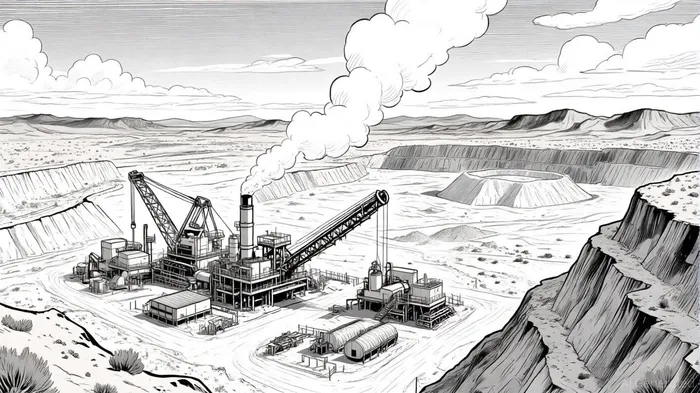
The Thacker Pass lithium project in northern Nevada has emerged as a linchpin in the U.S. effort to secure critical mineral supply chains, a goal that aligns closely with the strategic priorities of the Trump administration. While no direct financial investments or public statements from former President Donald Trump have been linked to the project, the broader policy framework he championed—prioritizing domestic mineral production and reducing reliance on foreign adversaries—creates a compelling case for viewing Thacker Pass as an indirect but significant bet on U.S. energy and national security.
Strategic Alignment with Trump-Era Policies
The Trump administration's 2020 designation of lithium as a “critical mineral” and its emphasis on reshoring supply chains laid the groundwork for projects like Thacker Pass. According to a report by Free Beacon, the project was initially approved under Trump's administration, reflecting his administration's focus on reducing dependence on China, which dominates 70% of global lithium processing[1]. This strategic alignment is further underscored by the project's potential to produce 40,000 tons of lithium annually—enough to position the U.S. as a top global producer and diversify resources away from Chinese-controlled supply chains[1].
The Biden Loan and Trump's Reconsideration
The Biden administration's $2.3 billion loan for a Thacker Pass processing facility, approved in 2022, was a critical step for the project's viability. However, the Trump administration has since signaled a potential reversal, questioning the project's competitiveness with Chinese producers and demanding long-term purchase commitments from partners like General Motors[1]. This tension highlights a broader administration focus on balancing supply chain security with fiscal responsibility, a hallmark of Trump's economic policies.
Investment Implications and Political Dynamics
For investors, the Thacker Pass saga illustrates the interplay between political influence and critical mineral strategy. The project's success hinges on maintaining bipartisan support, as Nevada lawmakers from both parties have endorsed it[1]. Yet the Trump administration's scrutiny of the loan underscores a key risk: policy shifts that prioritize short-term fiscal discipline over long-term strategic gains. This dynamic mirrors Trump's broader approach to infrastructure and energy, where cost-benefit analyses often intersect with geopolitical objectives.
Conclusion
While Trump's direct involvement with Thacker Pass remains unproven, the project's alignment with his administration's supply chain security goals positions it as a de facto extension of his critical mineral strategy. The ongoing debate over the $2.3 billion loan reflects a larger tension between accelerating domestic production and ensuring economic viability—a challenge that will define the future of U.S. mineral independence. For investors, the Thacker Pass case offers a window into how political priorities can shape—and sometimes complicate—the pursuit of strategic resource security.







Comentarios
Aún no hay comentarios