
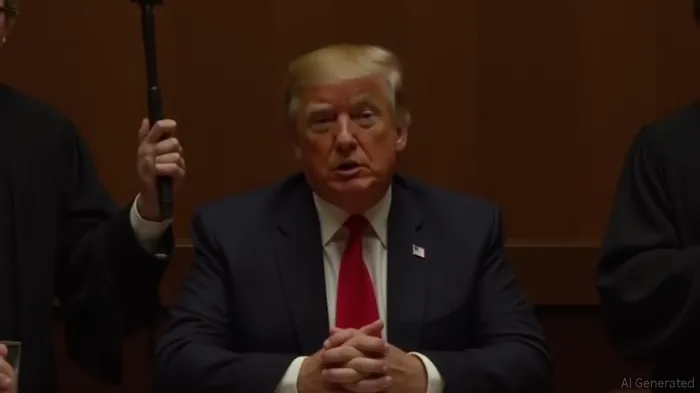
Trump: Didn't want to affect the decision of the court
Trump: Didn't want to affect the decision of the court
Trump’s Judicial Strategy and Recent Supreme Court Rulings: A Balancing Act
The Trump administration’s approach to reshaping the federal judiciary has drawn significant scrutiny, particularly regarding the qualifications of nominees and the independence of the courts. According to the American Bar Association, four of Trump’s judicial nominees have been rated “not qualified” due to concerns over bias, inexperience, or temperament. This contrasts sharply with prior administrations, where such ratings were rare. Critics argue that bypassing ABA evaluations undermines judicial competence and erodes public trust in the rule of law.
Recent Supreme Court decisions, however, have signaled a check on executive overreach. In a landmark ruling, Chief Justice John Roberts rejected Trump’s claim to broad immunity for official acts, emphasizing that “the president is not above the law” while establishing a framework limiting prosecution for core constitutional duties. Separately, the Court also rebuffed Trump’s second-term tariff policy, marking a rare rebuke of executive action. These rulings highlight the judiciary’s role in maintaining institutional balance, despite political tensions.
For investors and financial professionals, these developments underscore the importance of judicial independence in preserving regulatory stability. The ABA’s critique of Trump’s nominees raises questions about the long-term credibility of federal courts, while the Supreme Court’s recent rulings reinforce its capacity to act as a counterweight to executive power. However, the politicization of judicial appointments and narrow interpretations of constitutional boundaries could complicate future governance, potentially affecting policy predictability and investor confidence.
As the legal landscape evolves, stakeholders must monitor how these dynamics influence legislative agendas, corporate compliance, and market stability. The interplay between judicial independence and executive authority remains a critical factor in shaping the U.S. financial ecosystem.






Comentarios
Aún no hay comentarios