
Trump's DC Overhaul: Cost-Cuts and Controversy
Generado por agente de IAWesley Park
miércoles, 19 de marzo de 2025, 9:46 pm ET2 min de lectura
Ladies and gentlemen, buckle up! We're diving headfirst into the whirlwind of changes that Donald Trump is bringing to Washington D.C. in 2025. This isn't just about cost-cutting; it's about a full-blown remake of the nation's capital in Trump's image. Let's break it down!
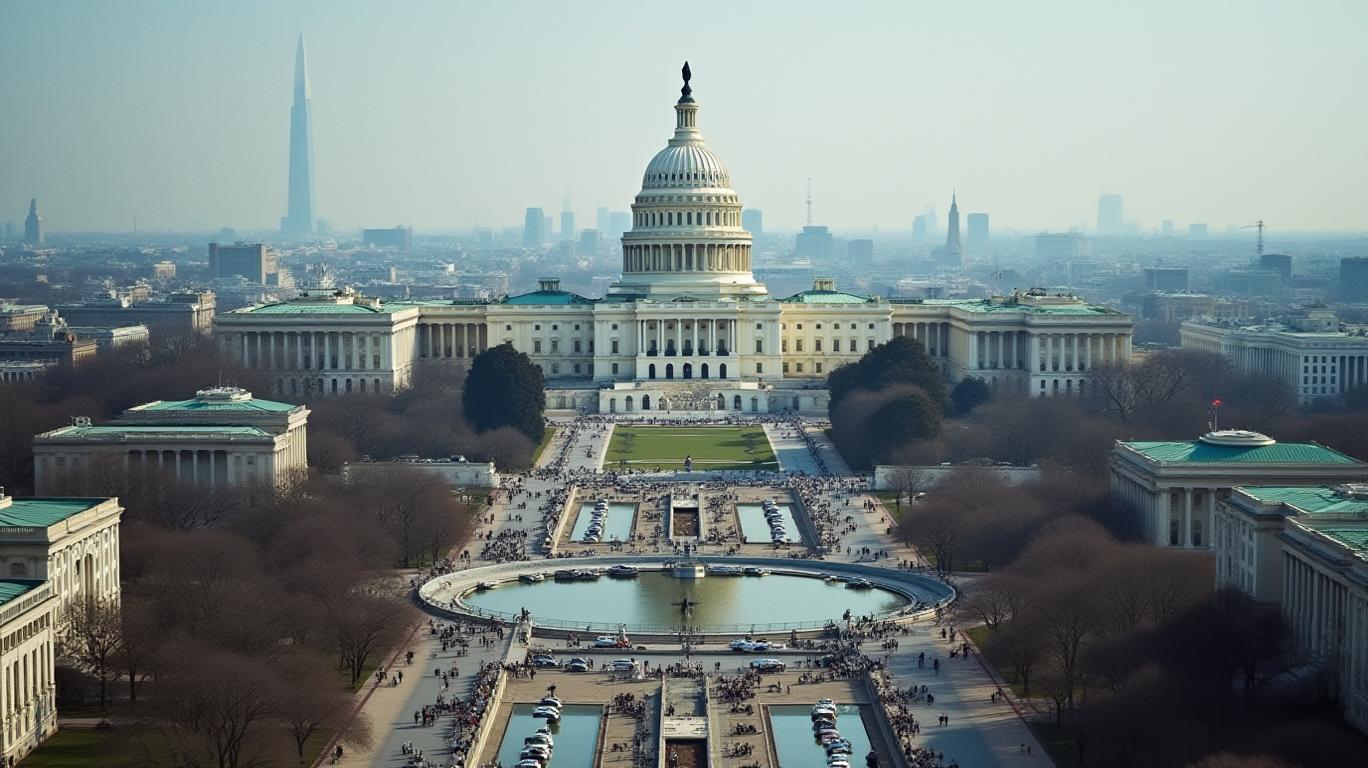
The Big Picture: Trump's Vision for DC
Trump's return to the White House has brought with it a wave of aggressive policy shifts, and Washington D.C. is right in the eye of the storm. The president's cost-cutting measures and restructuring plans are set to shake up the city's economic landscape, particularly in sectors heavily reliant on federal employment and spending. But it's not all doom and gloom—there are opportunities hidden in the chaos.
The Cost-Cutting Blitz
Trump's administration has initiated aggressive cuts to the federal workforce, targeting around 700,000 employees whose jobs are not required in statute and who face furloughs in government shutdowns. This aligns with his goal of shrinking government and reducing spending, but the immediate economic costs are significant. Regions like Washington D.C., heavily reliant on federal jobs, are bracing for unemployment to spike. These layoffs reduce consumer spending as newly jobless workers cut back, amplifying the GDP slowdown. Trump’s administration argues that privatizing and automating some federal services will eventually offset these losses, but the transition is far from seamless, and the short-term economic pain is evident.
The Real Estate Ripple Effect
The administration's plans to reduce the federal government's real property footprint by up to 25% could have significant long-term effects on the real estate market in D.C. The General Services Administration and the Department of Government Efficiency (DOGE) have made plans to shed up to 25% of the government's 360 million square feet of real estate. This includes closing Social Security buildings, IRSIRS-- taxpayer assistance centers, and Bureau of Indian Affairs offices across the United States. The reduction in federal real estate holdings could lead to a surplus of commercial properties in the D.C. area, potentially driving down rental rates and property values. Additionally, the closure of federal offices could result in a decrease in demand for nearby commercial and residential properties, further impacting the local real estate market.
The Governance Gambit
The proposed changes in D.C.'s governance structureGPCR--, including potential reversals of home rule, could significantly influence the city's ability to attract and retain businesses. The reversal of home rule could lead to increased political instability and uncertainty, deterring businesses from investing in D.C. The potential reversal of home rule could also lead to a loss of local control over economic development policies and tax policies, making it more difficult for businesses to operate in D.C. This could lead to a loss of jobs and a decrease in economic activity, as businesses may choose to relocate to other cities with more favorable policies.
The Bottom Line
Trump's cost-cutting measures and restructuring plans in Washington D.C. are likely to have significant impacts on local economic stability and growth. While the short-term pain is evident, there are opportunities for those who can navigate the chaos. The real estate market in D.C. could see significant changes, and the city's governance structure could be upended. But remember, in the world of investing, every crisis is an opportunity in disguise. So, stay tuned, stay informed, and get ready to pounce on the next big opportunity in the nation's capital!



Divulgación editorial y transparencia de la IA: Ainvest News utiliza tecnología avanzada de Modelos de Lenguaje Largo (LLM) para sintetizar y analizar datos de mercado en tiempo real. Para garantizar los más altos estándares de integridad, cada artículo se somete a un riguroso proceso de verificación con participación humana.
Mientras la IA asiste en el procesamiento de datos y la redacción inicial, un miembro editorial profesional de Ainvest revisa, verifica y aprueba de forma independiente todo el contenido para garantizar su precisión y cumplimiento con los estándares editoriales de Ainvest Fintech Inc. Esta supervisión humana está diseñada para mitigar las alucinaciones de la IA y garantizar el contexto financiero.
Advertencia sobre inversiones: Este contenido se proporciona únicamente con fines informativos y no constituye asesoramiento profesional de inversión, legal o financiero. Los mercados conllevan riesgos inherentes. Se recomienda a los usuarios que realicen una investigación independiente o consulten a un asesor financiero certificado antes de tomar cualquier decisión. Ainvest Fintech Inc. se exime de toda responsabilidad por las acciones tomadas con base en esta información. ¿Encontró un error? Reportar un problema




Comentarios
Aún no hay comentarios