
Trump's Currency Warning: A Blow to Japan and China's Exports?
Generado por agente de IAWesley Park
lunes, 3 de marzo de 2025, 6:55 pm ET2 min de lectura
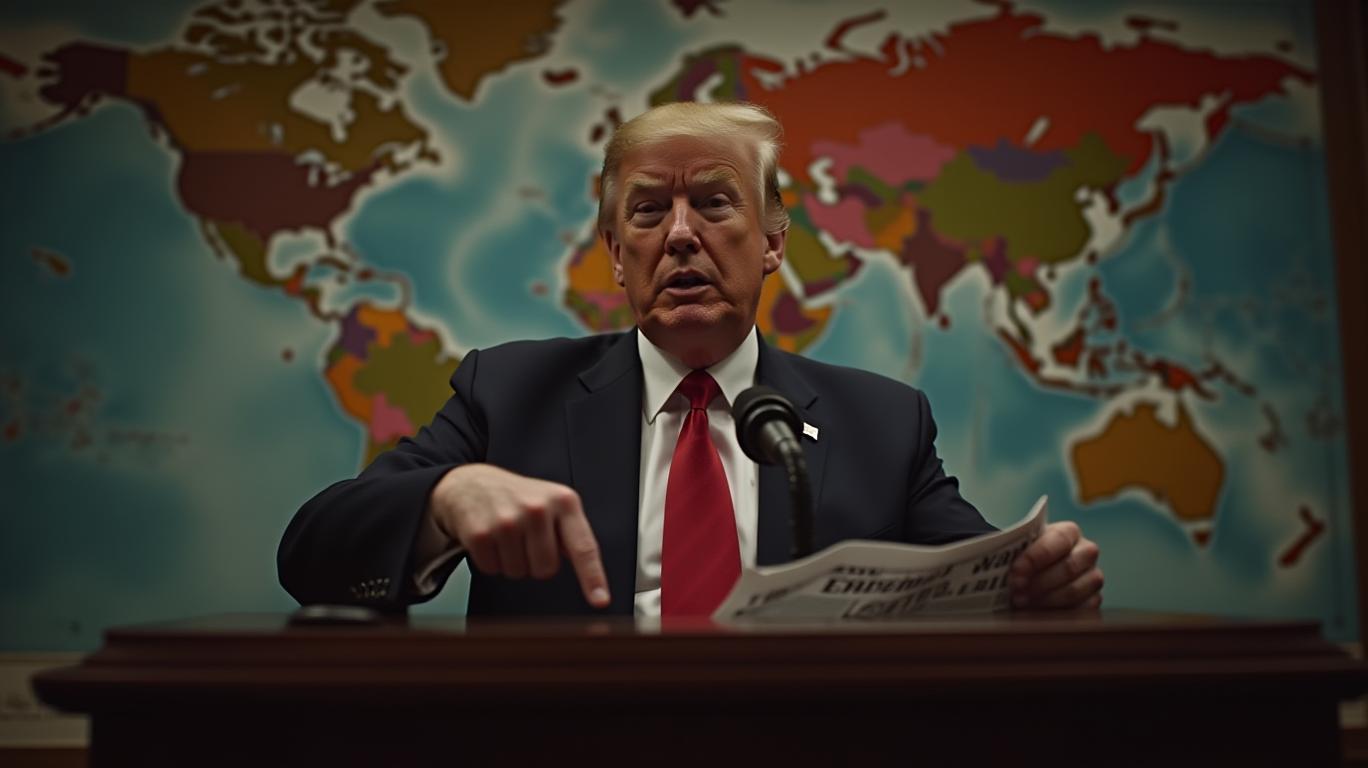
President Donald Trump has once again raised concerns about currency manipulation, this time targeting Japan and China. In a recent statement, Trump accused these countries of keeping their currencies artificially low to gain a competitive edge in global markets. This move has sparked fears of a potential trade war and raised questions about the impact on international trade and growth.
The Impact on Japanese and Chinese Exports
Currency devaluation policies can significantly influence the competitiveness of Japanese and Chinese exports in the global market. A weaker yen or yuan makes these countries' goods cheaper in foreign markets, increasing their competitiveness. For instance, in 2012, the yen depreciated by around 15% against the US dollar, which helped Japanese exports grow by 14.7% in 2013 (Source: World Bank data). Similarly, in 2015, China devalued the yuan by around 3% against the US dollar, which helped boost Chinese exports.
However, increased competitiveness can also lead to retaliation from US businesses, which could result in trade disputes or protectionist measures. This could disrupt global supply chains, leading to higher prices for consumers and potentially causing a global economic slowdown.
Implications for US Businesses
Increased competitiveness of Japanese and Chinese exports can lead to a decrease in US market share and profits, as US businesses may struggle to compete with cheaper foreign goods. This could result in job losses and reduced investment in the US, as businesses may choose to relocate production to countries with cheaper labor costs. However, US businesses can also benefit from a weaker yuan or yen, as it makes imports from Japan and China cheaper, reducing production costs and potentially increasing profits.

Moreover, a weaker yuan or yen can make US exports more competitive in Japanese and Chinese markets, potentially increasing US market share and profits in those countries.
Retaliatory Measures and Their Impact
Japan and China might take retaliatory measures in response to Trump's statement, which could potentially affect international trade and growth. Japan could impose tariffs or other trade barriers on US goods, restrict investments in the US, or strengthen ties with other countries to counterbalance US influence. China could impose retaliatory tariffs on US goods, devalue its currency, restrict investments in the US, or strengthen ties with other countries to counterbalance US influence.
These retaliatory measures could lead to a reduction in bilateral trade between the US and Japan/China, as well as a slowdown in economic growth for all three countries. Additionally, these measures could disrupt global supply chains, leading to higher prices for consumers and potentially causing a global economic slowdown.
In conclusion, Trump's statement on currency devaluation has the potential to significantly impact the global economic balance, particularly in relation to the US trade deficit. However, the impact is likely to be complex and multifaceted, with both positive and negative consequences for the US and the global economy. While increased competitiveness of foreign exports can lead to a decrease in US market share and profits, US businesses can also benefit from cheaper imports and increased competitiveness in foreign markets. The ultimate impact on US businesses will depend on the specific circumstances and the response of US businesses to the changing competitive landscape.



Divulgación editorial y transparencia de la IA: Ainvest News utiliza tecnología avanzada de Modelos de Lenguaje Largo (LLM) para sintetizar y analizar datos de mercado en tiempo real. Para garantizar los más altos estándares de integridad, cada artículo se somete a un riguroso proceso de verificación con participación humana.
Mientras la IA asiste en el procesamiento de datos y la redacción inicial, un miembro editorial profesional de Ainvest revisa, verifica y aprueba de forma independiente todo el contenido para garantizar su precisión y cumplimiento con los estándares editoriales de Ainvest Fintech Inc. Esta supervisión humana está diseñada para mitigar las alucinaciones de la IA y garantizar el contexto financiero.
Advertencia sobre inversiones: Este contenido se proporciona únicamente con fines informativos y no constituye asesoramiento profesional de inversión, legal o financiero. Los mercados conllevan riesgos inherentes. Se recomienda a los usuarios que realicen una investigación independiente o consulten a un asesor financiero certificado antes de tomar cualquier decisión. Ainvest Fintech Inc. se exime de toda responsabilidad por las acciones tomadas con base en esta información. ¿Encontró un error? Reportar un problema


SOBRE NOSOTROS
Nuestra historiaAutores de noticiasBase de conocimientosPolítica de privacidadTérmino de usoDescargo de responsabilidad de corretaje de tercerosTérminos de uso de AIMEDivulgaciones de riesgos de AInvest AICarrerasCONTÁCTENOS
Email: support@ainvest.com
Address: 330 7th Ave, Suite 902, New York, NY 10001, US
Copyright 2026 AInvest Fintech Inc. All rights reserved.


Comentarios
Aún no hay comentarios