
Trump's Crypto Pardons and Market Implications: SBF as a Cautionary Tale
The intersection of politics and cryptocurrency regulation has never been more volatile. In 2025, former President Donald Trump's pardons of high-profile crypto figures-including Ross Ulbricht, the BitMEX co-founders, and Binance's Changpeng Zhao (CZ)-sent shockwaves through the market, signaling a shift toward leniency in enforcement. These actions contrast sharply with the 2024 conviction of Sam Bankman-Fried (SBF), whose 25-year prison sentence for orchestrating the FTX collapse underscored the risks of regulatory scrutiny. Together, these events highlight how political influence can shape investor sentiment and regulatory risk in crypto markets, with divergent outcomes for the industry.
Trump's Pardons: A Signal of Regulatory Leniency
Trump's pardons of crypto offenders in 2025 were framed as a pro-business move to reduce regulatory friction. The most notable was the October 2025 pardon of CZ, who had pleaded guilty to money laundering charges and served four months in prison. The decision erased CZ's felony record and allowed Binance to reposition itself in the U.S. market. Markets reacted swiftly: Binance's native token, BNBBNB--, surged over 5% in the hours following the announcement, while CZ's memeMEME-- coin, 4, jumped 32%.
These pardons were part of a broader strategy to position the U.S. as the "crypto capital of the planet," including executive orders to repeal restrictive regulations and the formation of a presidential working group on digital assets. However, the move drew criticism for perceived favoritism, with lawmakers accusing the administration of trading clemency for financial gains through Trump's crypto ventures, such as the $TRUMP meme coin.
SBF's Conviction: A Regulatory Reckoning
In contrast, SBF's 2024 sentencing for his role in the FTX collapse marked a regulatory crackdown. Convicted of fraud and sentenced to 25 years in prison, SBF's case exposed systemic risks in the crypto industry. Judge Lewis Kaplan emphasized the "brazen" nature of the fraud, noting that FTX was built on a foundation of mismanagement and deception. The fallout from FTX's collapse-estimated at $8 billion in investor losses- prompted stricter oversight from the SEC, DOJ, and international regulators.
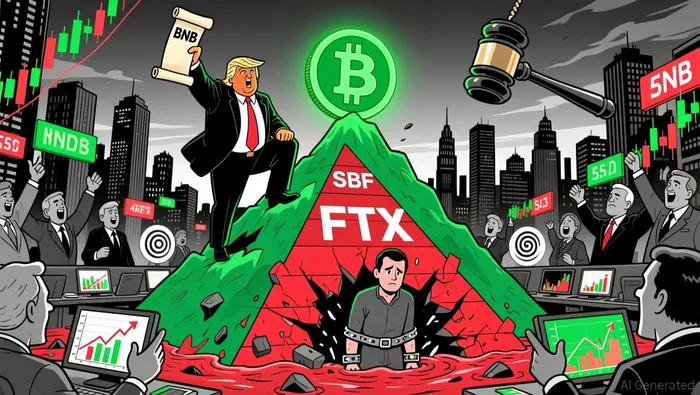
The market's reaction to SBF's conviction was muted compared to the euphoria around Trump's pardons. While BitcoinBTC-- briefly hit an all-time high of $126,000 in late 2025, the broader market faced a $1 trillion wipeout by year-end, driven by macroeconomic factors like Trump's retracted 100% tariff on Chinese imports. This divergence highlights how political actions can temporarily boost sentiment, but macro trends and regulatory enforcement ultimately dominate long-term market dynamics.
Investor Sentiment: Pardons vs. Prosecutions
The contrasting outcomes of these cases reveal a key tension in crypto markets: the interplay between political leniency and regulatory rigor. Trump's pardons, while boosting short-term investor confidence in specific tokens (e.g., BNB), raised concerns about the politicization of clemency. Critics argue that pardoning figures like CZ undermines trust in the justice system and sends a message that financial crimes can be forgiven with political connections.
SBF's conviction, meanwhile, reinforced the perception that regulators are willing to hold crypto leaders accountable. The FTX collapse led to a 90% drop in Bitcoin's price in November 2022, but the subsequent 25-year sentence for SBF signaled a commitment to deterring fraud. This duality-where political actors can both embolden and destabilize markets-underscores the fragility of investor sentiment in an industry still grappling with legitimacy.
Regulatory Risk: A Double-Edged Sword
The Trump administration's pro-crypto policies, including pardons and deregulatory measures, created a paradox. While they reduced immediate enforcement risks, they also exposed the industry to reputational damage. For example, the pardon of Trevor Milton, the former CEO of Nikola, who was convicted of fraud, drew accusations of prioritizing corporate allies over victims. Conversely, SBF's prosecution demonstrated that regulators could impose severe penalties for misconduct, even on high-profile figures.
This duality complicates the regulatory risk landscape. Investors must weigh the benefits of a lenient environment (e.g., faster innovation) against the risks of political favoritism and inconsistent enforcement. The FTX case, in particular, has pushed regulators to adopt a more cohesive framework, emphasizing transparency and consumer protection.
Conclusion: Navigating the Political-Crypto Nexus
Trump's pardons and SBF's conviction illustrate two sides of the same coin: political influence can either shield crypto actors from accountability or amplify the consequences of their actions. For investors, the lesson is clear: regulatory risk in crypto is not just about the rules but about who enforces them-and how politics shapes that enforcement. While Trump's moves may have temporarily boosted market optimism, SBF's case serves as a cautionary tale about the long-term costs of regulatory neglect.
As the industry evolves, the challenge will be to balance innovation with accountability. The FTX collapse and subsequent prosecutions have already forced a reckoning, but the pardons of 2025 remind us that the crypto market remains as much a political game as a financial one.






Comentarios
Aún no hay comentarios