
Trump's Crypto Agenda: How Stablecoin Regulation is Unlocking Institutional Investment
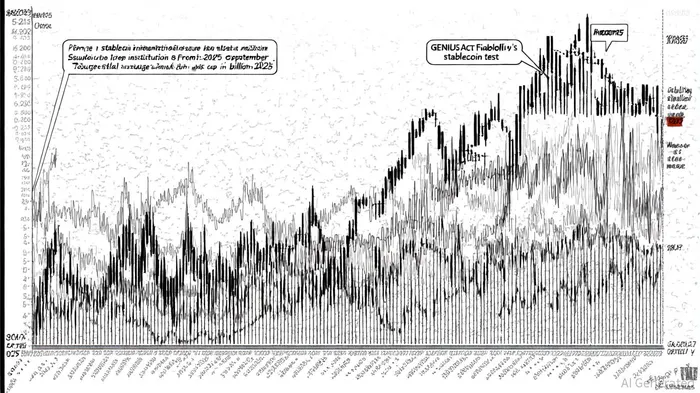
The U.S. stablecoin market is undergoing a seismic shift, driven by President Trump's aggressive regulatory reforms and the strategic advocacy of his crypto advisor, Patrick Witt. With the passage of the GENIUS Act in July 2025 and the ongoing push for a federal BitcoinBTC-- Strategic Reserve, the administration is creating a regulatory environment that prioritizes innovation while addressing systemic risks. For institutional investors, this represents a golden opportunity to capitalize on a maturing market with unprecedented clarity and infrastructure support.
Regulatory Clarity as a Catalyst for Institutional Adoption
The GENIUS Act[1] has redefined the stablecoin landscape by establishing a federal framework that mandates 1:1 reserves of cash or short-term Treasurys for permitted payment stablecoin issuers (PPSIs). This move removes stablecoins from the overlapping jurisdictions of the SEC and CFTC, placing oversight under banking regulators like the OCC and state authorities[2]. The result? A streamlined compliance process that reduces legal ambiguity and aligns stablecoins with traditional financial instruments.
According to a report by Modern Treasury, the act's reserve requirements and monthly disclosure mandates have already spurred major institutional players into action. Fidelity Investments, for instance, is testing its own stablecoin, while FiservFI-- has partnered with CircleCRCL-- to launch FIUSD[2]. Meanwhile, retail giants like WalmartWMT-- and AmazonAMZN-- are exploring stablecoins for customer transactions, signaling a shift toward mainstream adoption[2]. These developments underscore how regulatory clarity is transforming stablecoins from speculative assets into trusted components of financial infrastructure.
Patrick Witt's Strategic Vision: Bridging Policy and Market Demand
As Trump's senior crypto adviser, Patrick Witt has positioned himself as a key architect of this regulatory evolution. In his first public remarks, Witt emphasized the GENIUS Act as a foundational step but stressed that the broader market structure bill—covering 80% of the crypto market—remains critical for long-term institutional confidence[1]. His focus on interagency coordination and the creation of a Bitcoin Strategic Reserve[1] further signals a commitment to aligning policy with market needs.
Witt's background in federal agencies gives him unique insight into regulatory execution. As noted by MITrade, his ability to navigate bureaucratic hurdles could accelerate the implementation of the GENIUS Act's provisions, ensuring that stablecoin issuers meet reserve and transparency requirements efficiently[2]. This, in turn, reduces operational risks for institutions, making stablecoins a more attractive asset class for portfolio diversification and liquidity management.
Market Reactions and Institutional Inflows
The market has responded positively to these developments. Data from Arnold Porter indicates that stablecoin issuance grew by 23% in the month following the GENIUS Act's passage[3]. This growth is not just speculative—it reflects real-world use cases. For example, the act's anti-money laundering (AML) standards and redemption policies have made stablecoins a viable tool for cross-border payments and corporate treasury operations[3].
Institutional inflows are also on the rise. A Galaxy Digital report highlights that the U.S. is now the “crypto capital of the planet,” with stablecoins accounting for 60% of institutional digital assetDAAQ-- holdings in Q3 2025[4]. This surge is driven by the act's emphasis on consumer protection and the growing participation of banks and fintech firms in stablecoin ecosystems[4].
Challenges and the Path Forward
Despite these gains, challenges remain. The Senate's market structure bill has faced delays due to bipartisan disagreements, particularly over conflict-of-interest concerns and regulatory oversight[1]. Democratic proposals, which emphasize stricter AML requirements and FinCEN registration for platforms[1], could introduce friction if they clash with the administration's pro-innovation stance.
However, Witt's dismissal of these concerns as “overblown” and his focus on economic growth[1] suggest the administration will prioritize speed over compromise. For investors, this means staying attuned to legislative developments while leveraging the current window of regulatory clarity.
Conclusion: A New Era for Stablecoins
Trump's crypto agenda, spearheaded by Witt, is reshaping the stablecoin market into a robust, institutional-grade asset class. By balancing innovation with oversight, the administration is not only attracting traditional financial players but also positioning the U.S. as a global leader in digital asset infrastructure. For investors, the message is clear: stablecoins are no longer a niche corner of crypto—they're a cornerstone of the future financial system.





Comentarios
Aún no hay comentarios