
Trump's Crypto Agenda: Regulatory Certainty and the Resilience of Digital Assets in a Geopolitical Shift
The Trump Effect: From Regulatory Uncertainty to Strategic Certainty
President Donald J. Trump's 2024–2025 administration has redefined the U.S. approach to cryptocurrency, pivoting from Biden-era ambiguity to a clear, pro-innovation framework. By rescinding restrictive policies and establishing institutions like the President's Working Group on Digital Asset Markets (PWG), the administration has signaled a commitment to regulatory clarity. This shift, led by "Crypto Czar" David Sacks, aims to position the U.S. as the global "crypto capital" while balancing innovation with national security, according to a White House fact sheet.
The Strategic Bitcoin Reserve and U.S. Digital Asset Stockpile, created in March 2025, exemplify this strategy. By halting federal BTC sales and prioritizing long-term accumulation through asset forfeitures, the government has aligned with market sentiment favoring BitcoinBTC-- as a store of value, as described in a presidential action. This move contrasts sharply with previous administrations' cautious stances, reducing uncertainty for investors who previously feared regulatory overreach.
Investor Behavior: Confidence and Capital Flows
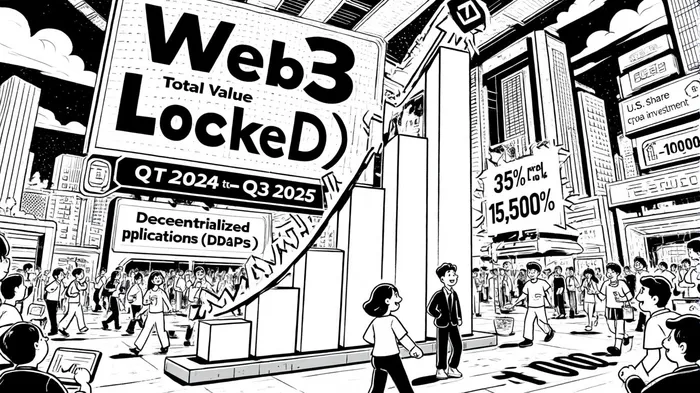
Trump's rhetoric and policy actions have directly influenced investor behavior. The rescission of the IRS's "broker rule" via H.J. Res. 25 in April 2025, for instance, has simplified compliance for DeFi platforms, attracting retail and institutional capital, according to a Yahoo Finance article. A Galaxy Research report finds that Total Value Locked (TVL) in Web3 ecosystems surged by 200% between 2024 and 2025, while decentralized applications (DApps) expanded from 5,000 to 15,000.
The Securities and Exchange Commission's (SEC) reorientation under Acting Chairman Mark Uyeda further illustrates this shift. By closing investigations into Robinhood and OpenSea without enforcement actions and declaring memecoins non-securities, the SEC has reduced legal ambiguity for developers and traders, as noted in a National Law Review article. This regulatory reset has drawn projects like Gate.io to expand their Web3 services in the U.S., capitalizing on a favorable climate, according to a Gate.io analysis.
Geopolitical Risk and Market Resilience
While geopolitical risks-such as China's tightening crypto controls and the EU's fragmented regulatory approach-persist, the U.S. has leveraged its policy agility to attract global capital. The GENIUS Act, passed in July 2025, established a federal framework for stablecoins, requiring full dollar backing and monthly reserve disclosures, as outlined in the PWG recommendations released by the administration. This clarity has bolstered confidence in U.S.-backed stablecoins like USDCUSDC--, which now dominate 60% of global stablecoin volume, according to a Forbes article.
However, the administration's rejection of CBDCs and focus on Bitcoin as a strategic reserve asset have introduced new dynamics. By banning a U.S. CBDC, Trump has aligned with nations like Singapore and Dubai, which prioritize private-sector-led innovation, per a Carlton Fields analysis. This approach mitigates risks associated with state-controlled digital currencies but raises questions about interoperability with global payment systems.
The Path Forward: Balancing Innovation and Oversight
The Trump administration's crypto policies have demonstrated resilience in the face of geopolitical volatility. For instance, the $500 million fine imposed on OKX for unlicensed operations in Q3 2025 shows a commitment to curbing illicit finance while supporting legitimate innovation, as reported by Yahoo Finance. This duality-encouraging growth while enforcing compliance-has created a "Goldilocks" environment for investors seeking both high returns and regulatory safety.
Yet challenges remain. The rapid growth of Web3 ecosystems has outpaced some regulatory frameworks, and the absence of a CBDC could limit the U.S.'s ability to compete in cross-border payments. Investors must also weigh the risks of sudden policy shifts, such as potential reversals in future administrations.
Conclusion: A New Era for Crypto Investing
Trump's 2025 crypto agenda has transformed the U.S. into a crypto superpower, driven by regulatory clarity, investor confidence, and strategic asset accumulation. While geopolitical risks persist, the administration's focus on innovation and market-friendly policies has created a resilient ecosystem. For investors, this environment offers opportunities in DeFi, stablecoins, and Bitcoin-related assets-but also demands vigilance in navigating evolving regulatory landscapes.
As the PWG continues to refine its framework, the U.S. may well set the global standard for crypto governance, turning geopolitical uncertainty into a catalyst for digital asset growth.






Comentarios
Aún no hay comentarios