
Trump's Credit Card Rate Ultimatum: A Tactical Catalyst for Financials?
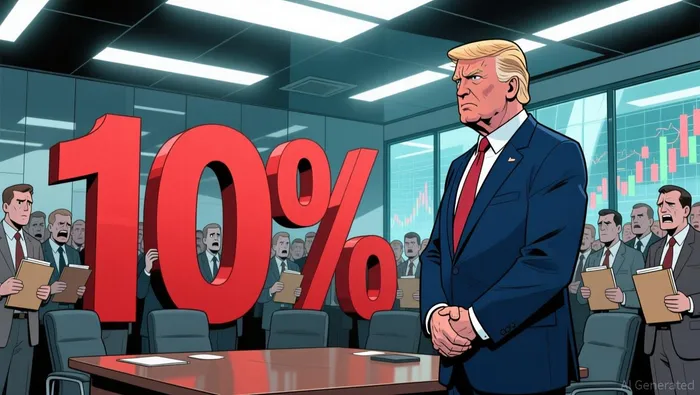
The immediate catalyst is a direct political threat. President Trump issued an ultimatum, declaring that credit card rates are a "violation of the law" and threatening "severe" consequences if they aren't cut to 10% by January 20. This isn't a vague policy proposal; it's a specific, time-bound demand framed as a legal enforcement action.
This event arrives against a backdrop of strong market sentiment. Just last week, the S&P 500 hit fresh highs as investor confidence improved. The sudden shift to a high-profile regulatory threat introduces a new layer of uncertainty, potentially disrupting the prevailing calm. The timing is critical, with the January 20 deadline creating a near-term event risk that could drive volatility across financial stocks.
The mechanics are straightforward: a political actor is demanding a specific, dramatic change in pricing for a core consumer financial product. For the financial sector, this sets up a clear, immediate question: how will lenders respond, and what are the near-term implications for their profitability and balance sheets?
The Mechanics: Can Rates Actually Hit 10%?
The operational hurdle is immense. The ultimatum demands a credit card rate cut to 10% by January 20. That targets a drastic reduction from the current average APR, which sits around 25%. A move to 10% represents a forced compression of roughly 60% on the typical rate. For card issuers, this isn't a minor adjustment; it's a fundamental assault on their core profit engine.
Card lenders rely heavily on interest income. A mandated rate cut would directly compress net interest margins, the primary driver of profitability for many banks and credit card companies. The immediate financial impact would be a significant hit to earnings, as the revenue generated from outstanding balances would plummet. This creates a clear conflict: the political demand for lower consumer costs clashes head-on with the business model's need for a spread on loans.
Adding to the uncertainty is the ultimatum's legal basis. The claim that high rates are a "violation of the law" lacks a clear, established regulatory framework. This ambiguity is critical. It leaves market participants questioning whether this is a credible, enforceable regulatory threat or a high-stakes political tactic designed to generate headlines and pressure. The lack of a defined legal mechanism makes it difficult to model the actual risk, but it also means the threat of "severe consequences" remains a potent source of volatility.
Immediate Market Impact & Risk/Reward Setup
The event has sparked immediate debate, with critics like Dave Ramsey labeling it a political stunt designed to spread attention and money. That characterization frames the threat as a high-profile tactic rather than a credible, imminent regulatory overhaul. Yet, the market's reaction shows the threat is being taken seriously. Following the ultimatum, US stock futures were down, and the broader market's recent rally faces a new headwind. This volatility is the direct result of the uncertainty created by a political actor demanding a specific, drastic change with a hard deadline.
The primary risk is concentrated on large card-issuing banks. Institutions like CitigroupC-- and Bank of AmericaBAC--, which have significant credit card portfolios, would see their net interest margins compressed if rates were forced to 10%. The earnings impact could be material, as interest income is a core profit driver. The key catalyst is the January 20 deadline. Until then, the setup is one of event risk. Watch for three potential triggers: 1) Issuer statements from major banks signaling resistance or planning for a rate cut; 2) Regulatory pushback from the Fed or other agencies, which could undermine the ultimatum's credibility; or 3) Legislative action that formalizes the cap, moving it from a political threat to a binding law.
The risk/reward here is asymmetrical. The downside for financial stocks is clear: a forced rate cut is a direct hit to profitability. The upside is that the threat may be bluster. If the legal basis remains unproven and the deadline passes without action, the market could quickly re-rate these stocks higher, punishing those who sold on the news. For now, the event creates a tactical opportunity to assess which banks are most exposed and whether the political pressure can translate into real policy.







Comentarios
Aún no hay comentarios