
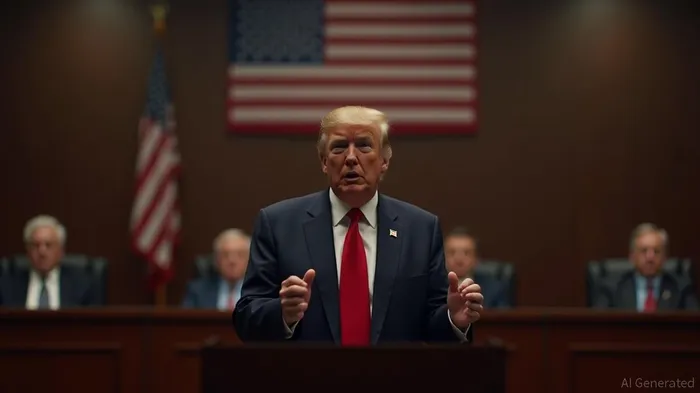
Trump: I have to do something about the courts
Trump: I have to do something about the courts
Trump’s Judicial Agenda Faces Structural and Legal Constraints
President Donald Trump has repeatedly emphasized the need to reshape the federal judiciary to align with his policy priorities, stating, “I have to do something about the courts” according to a Brookings analysis. However, his second-term efforts to influence the judiciary are encountering significant structural and legal challenges.
A primary obstacle is the limited number of judicial vacancies available for Trump to fill. Since his 2024 reelection, judges have created far fewer vacancies compared to previous administrations, with only six district court nominees pending as of February 2026 as reported by Brookings. This scarcity restricts Trump’s ability to shift the ideological balance of lower courts, particularly in blue states where Democratic appointees dominate. Additionally, partisan divisions have intensified, with Democratic senators opposing 40 or more votes for six of his 2025 appellate nominees and 18 of 21 district court nominees according to Brookings data. While Republican senators remain largely unified in supporting Trump’s picks, any erosion of party loyalty or a post-2026 midterm shift in Senate control could further complicate confirmations.
Recent Supreme Court rulings also complicate Trump’s regulatory agenda. The 2024 decisions in Loper Bright and Relentless overturned the Chevron deference doctrine, which previously allowed agencies broad discretion to interpret ambiguous statutes according to legal analysis. This shift mandates stricter judicial scrutiny of executive rulemaking, potentially limiting the Trump administration’s ability to reinterpret long-standing laws without rigorous public notice-and-comment processes. For instance, efforts by the Department of Government Efficiency (DOGE) to rapidly dismantle regulations could face legal challenges under these rulings, as stakeholders argue that abrupt policy reversals violate procedural requirements as detailed in legal commentary.
Investors and financial professionals should monitor how these judicial and regulatory dynamics affect policy implementation. Sectors reliant on stable regulatory frameworks—such as energy, healthcare, and finance—may face prolonged uncertainty as courts reassess agency actions. Meanwhile, Trump’s push to politicize the judiciary risks further entrenching partisanship, with blue states likely to resist federal overreach and red states consolidating Republican judicial dominance according to Brookings research.
In sum, while Trump remains committed to reshaping the courts, structural vacancy constraints and evolving legal standards are tempering his influence. The interplay between judicial independence and executive ambition will remain a critical factor for financial markets and policy outcomes in 2026 and beyond.






Comentarios
Aún no hay comentarios