
The Trump Copper Tariff Shockwave: Implications for Global Trade and Comex-LME Arbitrage Opportunities
The sudden policy shift by the Trump administration in July 2025—exempting refined copper from a 50% import tariff while imposing duties on semi-finished products—has sent shockwaves through global copper markets. This move, justified as a strategic balance between protecting domestic producers and avoiding supply chain disruptions, has reshaped price dynamics, inventory flows, and arbitrage opportunities. For investors, the implications are profound: the collapse of the Comex-LME premium, the emergence of re-export-driven strategies, and a recalibration of global refining infrastructure.
The Exemption That Shook Markets
The exemption of refined copper—a critical input for manufacturing—was a stark departure from initial expectations. While tariffs on semi-finished products (pipes, wiring, etc.) were implemented, raw materials like cathodes and ores remained untaxed. This decision triggered an immediate 22% drop in Comex copper futures, erasing a $2,637 premium over the LME and creating a $90 spread in days. The market's rapid recalibration reflected the realization that U.S. manufacturers would continue to rely on imported refined copper, which now flows in without tariffs.
The Department of Commerce's earlier recommendation—a phased 15% tariff on refined copper starting in 2027—was sidelined, at least for now. This delay has allowed U.S. refiners to avoid immediate margin compression but has left the door open for future policy shifts. Analysts at Goldman SachsGS-- note a 25% probability of a 2027 tariff, a risk that investors must hedge against.
The Collapse of the Comex Premium and Arbitrage Reimagined
Prior to the tariff exemption, U.S. copper prices had surged to a 30% premium over the LME as traders front-loaded imports to avoid anticipated duties. This created a speculative frenzy, with 673,000 metric tonnes of copper cathodes flooding into the U.S. in the first half of 2025. The exemption, however, nullified this arbitrage.
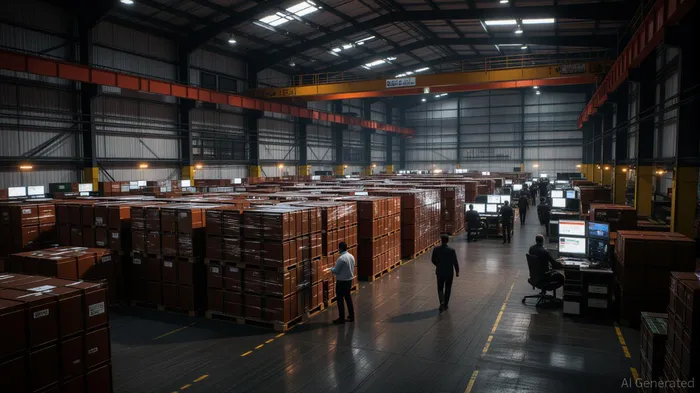
The Comex-LME spread flipped from a $2,637 premium to a $90 discount in days, a reversal that Deutsche BankDB-- called “a seismic event in commodity trading.” This collapse has left massive inventories of refined copper stranded in U.S. warehouses, particularly in Phoenix and New York. While large-scale re-exports are unlikely in the short term, the potential for copper cathodes to flow into U.S. LME warehouses remains a wildcard.
For investors, the key takeaway is that the arbitrage window between Comex and LME has narrowed to a 5% spread as of August 2025. This shift has redirected attention to refining and recycling infrastructure, where U.S. companies like Aurubis and Exurban are expanding capacity to meet the administration's 25% domestic scrap mandate.
Re-Exports and the Rise of Global Refining Hubs
The U.S. refining bottleneck—only three smelters remain, down from 15 in the 1980s—has forced reliance on global processing networks. Countries like Chile and Peru, which supply 70% of U.S. copper imports, are now redirecting refined exports to the LME and Asian markets. Chilean state-owned Codelco and Chinese refiners like Jiangxi Copper are benefiting from this realignment.
U.S. re-exports of stockpiled cathodes could further suppress global prices, particularly if LME premiums remain attractive. Fastmarkets analyst Andy Farida highlights that U.S. demand for refined copper will outstrip domestic production by 30% through 2030, ensuring a continued role for international refining hubs.
Strategic Investment Opportunities
The new equilibrium in copper markets presents three key investment avenues:
U.S. Refiners and Recyclers: Companies like Aurubis (expanding a 90,000-tonne smelter in Georgia) and Exurban (building a 45,000-tonne e-scrap facility) are well-positioned to capitalize on domestic processing mandates and the administration's focus on supply chain resilience.
Global Refining Infrastructure: Asian and South American refiners, including Codelco, BHP, and Hindalco Industries, stand to benefit from U.S. re-exports and the redirection of global copper flows. These firms are less exposed to U.S. policy risks and offer exposure to long-term demand from EVs and renewable energy.
Arbitrage in Logistics and Processing: While the Comex-LME spread has narrowed, opportunities remain in optimizing re-export logistics and leveraging refining margins. Investors with access to real-time data on U.S. warehouse inventories and LME price movements could identify short-term opportunities.
Risks and the Road Ahead
The Trump administration's policy reversal introduces regulatory uncertainty, with potential 2027 tariffs on refined copper looming. Additionally, U.S. manufacturing costs could rise as tariffs on semi-finished products take effect, impacting sectors like construction and renewable energy. Geopolitical tensions, particularly China's role in U.S. copper processing, also pose risks to supply chain stability.
For now, the market is “returning to fundamentals,” as Fastmarkets notes. Long-term demand from green technologies and AI infrastructure will drive copper prices higher, but near-term volatility will depend on inventory flows and policy decisions.
Conclusion
The Trump copper tariff shockwave has reshaped global trade and arbitrage strategies. While the Comex premium has collapsed, new opportunities in refining, recycling, and global re-exports are emerging. Investors who adapt to this evolving landscape—by focusing on domestic processing capabilities and international refining hubs—can navigate the turbulence and position for long-term gains. As the Department of Commerce prepares its 2026 market update, one thing is clear: copper's role in the energy transition ensures its strategic value, regardless of political headwinds.







Comentarios
Aún no hay comentarios