
Trump's Challenge to Fed Independence: Inflation, Yields, and Market Implications
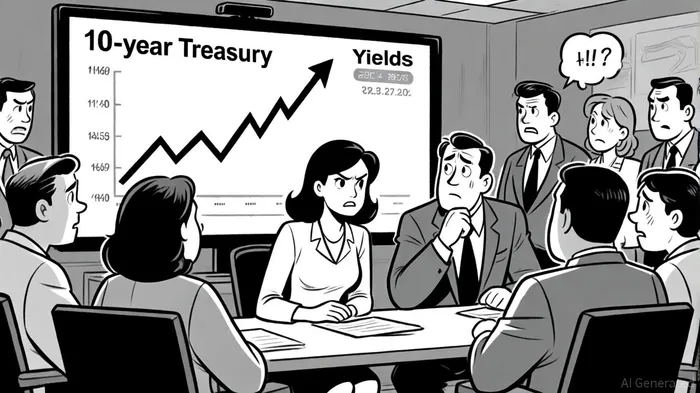
The Federal Reserve, long a fortress of economic independence, now faces its most direct political assault in modern history. President Donald Trump's aggressive maneuvers—ranging from attempting to remove dissenting board members to pressuring the central bank to slash interest rates—have ignited a crisis of confidence in the Fed's autonomy. These actions, coupled with his broader fiscal agenda, are reshaping inflation expectations and bond yield dynamics, with profound implications for investors.
The Erosion of Fed Independence
Trump's campaign to reshape the Fed has taken multiple forms. His unprecedented attempt to fire Governor Lisa Cook, a Biden appointee, was rebuffed by federal courts, which upheld her position on the board [1]. Yet, the mere threat of such interference has already signaled to markets that the Fed's traditional firewall against political pressure is fraying. Simultaneously, Trump's appointment of Stephen Miran, a loyal ally confirmed by the Senate, has tilted the board's composition toward his economic priorities [2]. Treasury Secretary Scott Bessent has further amplified these pressures by advocating for relaxed banking regulations and criticizing the Fed's spending, including its $2.5 billion headquarters renovation [3].
Legal scholars and former Fed officials warn that this politicization risks undermining the central bank's credibility. The Fed's independence has historically insulated it from short-term political cycles, allowing it to prioritize long-term price stability. Now, with Trump pushing for rapid rate cuts to boost pre-election growth, the Fed's ability to balance inflation and employment targets is under siege [4].
Inflation Expectations and the Yield Curve
The economic consequences of this political pressure are already manifesting. A September 2025 CNBC survey found that 68% of economists believe Trump's policies will elevate inflation, with many citing his aggressive tariff regime as a key driver [5]. Tariffs on imports, particularly in sectors like automobiles and apparel, have already pushed up consumer prices, and businesses are expected to pass on further costs as supply chains adjust [6].
Bond markets have priced in these risks. U.S. 10-year Treasury yields surged to 4.7% in September 2025—the highest since April—reflecting investor concerns about fiscal sustainability and inflation [7]. This rise signals a steepening yield curve, as longer-term yields outpace short-term rates. Fund managers attribute this to heightened demand for compensation on long-dated bonds, given the uncertainty surrounding Trump's fiscal proposals, including $7.75 trillion in projected deficit increases from tax cuts and tariffs [8].
The Fed's December 2024 policy minutes underscored these challenges, noting that Trump's policies had “materially increased upside risks to inflation” and could delay the return to the 2% target [9]. While the Fed has signaled a potential rate cut in response to a weakening labor market, many economists argue that premature easing could exacerbate inflation, creating a self-fulfilling prophecy of higher yields [10].
Implications for Investors
For investors, the interplay between political pressure and monetary policy demands a recalibration of risk assessments. Equities, particularly sectors sensitive to interest rates (e.g., real estate, utilities), may face headwinds as bond yields climb. Conversely, inflation-linked assets like Treasury Inflation-Protected Securities (TIPS) and commodities could gain traction.
The housing market, a key battleground for Trump's agenda, is also at risk. Rapid rate cuts could temporarily boost homebuyer demand but may backfire if inflation accelerates, forcing the Fed to reverse course. Mortgage rates, already at six-month highs, could remain volatile as the Fed navigates conflicting pressures [11].
Conclusion
Trump's challenge to the Fed's governance is not merely a political spectacle—it is a structural shift with lasting economic consequences. By eroding the central bank's independence, his actions risk reigniting inflationary pressures and destabilizing bond markets. For investors, the lesson is clear: in an era of politicized monetary policy, diversification and vigilance are paramount.







Comentarios
Aún no hay comentarios