
The Trump-Backed Bitcoin Mining Surge: Assessing the Risks and Rewards of Politically Tied Crypto Plays
The intersection of politics and cryptocurrency has never been more volatile—or more lucrative—than in 2025. As the TrumpTRUMP-- family's crypto empire expands, investors are grappling with a critical question: Are these politically tied ventures a glimpse into the future of institutional adoption, or a speculative frenzy fueled by brand power and regulatory tailwinds? The recent Nasdaq debut of American Bitcoin (ABTC) and the turbulent performance of World Liberty Financial's WLFI token offer a case study in the risks and rewards of aligning with political influence in the crypto sector.
Political Influence: A Double-Edged Sword
The Trump family's foray into BitcoinBTC-- mining and digital assets is deeply intertwined with the administration's pro-crypto policies. The rescission of the IRS's “broker rule,” the U.S. Strategic Bitcoin Reserve initiative, and the Blockchain Regulatory Clarity Act (BRCA) have created a favorable environment for crypto firms. These policies, coupled with the SEC's shift toward collaboration, have enabled Trump-backed projects to scale rapidly. For example, American Bitcoin's $2.1 billion share offering—aimed at expanding Bitcoin holdings and mining operations—was made possible by a regulatory landscape that prioritizes innovation over oversight.
However, political influence also introduces ethical and legal risks. The Trumps' control of 22.5% of WLFI tokens through a shell companySHEL--, DT Marks DEFI LLC, raises concerns about centralization and potential conflicts of interest. Critics argue that the family's crypto ventures could become tools for influence peddling, especially as the administration pushes to position the U.S. as the “crypto capital of the world.”
Market Momentum: Hype vs. Substance
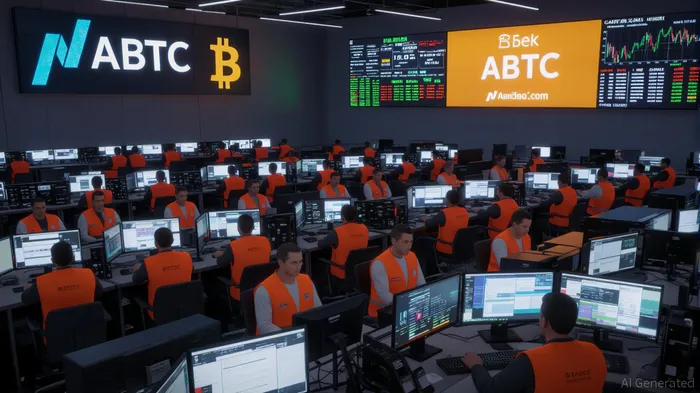
The Nasdaq listing of American Bitcoin (ABTC) in September 2025 marked a historic milestone, with its stock surging 110% intraday to close at $8.04. This success has been hailed as a sign of institutional adoption, mirroring the strategies of companies like MicroStrategy. ABTC's dual approach—mining Bitcoin while accumulating it as a corporate treasury asset—has resonated with investors, particularly in a market where Bitcoin's price has fluctuated between $112,159 and $124,100.
Yet, the broader Trump crypto ecosystem tells a different story. World Liberty Financial's WLFI token, despite a $30 billion valuation at launch, plummeted 24% within hours. Its governance model, which grants voting rights but no direct economic claims, has been criticized as lacking utility. The token's reliance on speculative momentum—rather than tangible products like decentralized finance (DeFi) platforms or NFT marketplaces—has left it vulnerable to market corrections.
Long-Term Viability: Navigating Volatility and Uncertainty
The long-term success of Trump-backed crypto projects hinges on three factors: Bitcoin's price stability, regulatory clarity, and utility-driven innovation.
- Bitcoin's Price Volatility: ABTC's value is inextricably linked to Bitcoin's performance. While the asset has shown resilience, a 9% drop in 2025 underscores the risks of a Bitcoin-centric strategy. Investors must weigh whether the company's mining efficiency and treasury model can offset price swings.
- Regulatory Uncertainty: The BRCA and the SEC's GENIUS Act have reduced compliance burdens, but future policy shifts—especially under a potential Democratic administration—could disrupt the current trajectory. For instance, a reversal of the “broker rule” rescission could expose Trump-backed projects to stricter oversight.
- Utility and Governance: Projects like WLFI face skepticism due to their lack of verifiable products. In contrast, ABTC's focus on mining infrastructure and corporate treasury holdings aligns with broader trends of institutional adoption. However, even ABTC's success depends on its ability to innovate in areas like renewable energy and immersion cooling, which are critical for cost efficiency.
Investor Sentiment: Cautious Optimism and Red Flags
Third-party sentiment toward Trump-backed crypto projects is mixed. While ABTCABTC-- has attracted institutional interest, WLFI's struggles highlight the risks of “political tokens.” Security breaches, such as the EthereumETH-- EIP-7702 exploit that targeted WLFI holders, have further eroded trust. Additionally, the Trump family's memecoins—$TRUMP and $MELANIA—have seen 89% and 42% declines from their peaks, respectively, underscoring the fragility of brand-driven assets.
Investors are increasingly favoring projects with clear utility, such as DeepSnitch AI (a crypto analytics platform) and Polygon (a blockchain infrastructure provider). These alternatives offer lower volatility and stronger fundamentals, contrasting with the speculative nature of Trump-backed ventures.
Conclusion: Balancing Risk and Reward
The Trump-backed Bitcoin mining surge reflects a strategic bet on the intersection of political influence, regulatory tailwinds, and market momentum. For investors, the key is to differentiate between projects with long-term viability and those driven by hype.
- American Bitcoin (ABTC): A high-risk, high-reward play for those bullish on Bitcoin's future and the U.S. crypto ecosystem. Its Nasdaq listing and hybrid model position it as a potential leader in institutional adoption, but its success depends on Bitcoin's price and operational efficiency.
- World Liberty Financial (WLFI): A speculative asset with significant volatility and governance concerns. While its burn-and-buyback strategy aims to stabilize value, the lack of tangible utility and security risks make it a less attractive option for risk-averse investors.
As the crypto market evolves, the Trump family's ventures will likely remain at the center of debates about political influence and ethical governance. For now, investors must navigate this landscape with caution, prioritizing projects that align with their risk tolerance and long-term goals.
Final Advice: Diversify exposure to Trump-backed crypto plays. Allocate a smaller portion of your portfolio to ABTC for its institutional potential, while avoiding overexposure to WLFI and memecoins. Monitor regulatory developments and Bitcoin's price closely, and consider hedging with utility-driven tokens like DeepSnitch AI or Polygon.





Comentarios
Aún no hay comentarios