
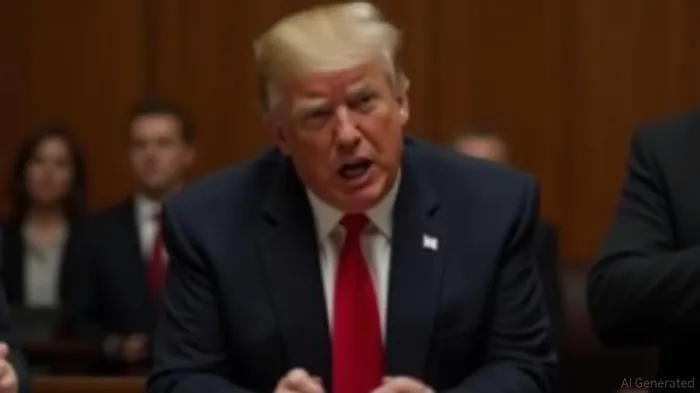
Trump: ashamed of certain members of the court
Trump: ashamed of certain members of the court
Trump Administration’s Judicial Defiance and the Limits of Legal Accountability
The Trump administration’s repeated defiance of federal court orders has sparked concerns about the erosion of checks and balances, with judges increasingly constrained in enforcing compliance. According to a Reuters analysis, federal courts have identified 4,400 instances where the administration unlawfully detained immigrants, often reusing discredited legal arguments. Judges have expressed frustration over systemic noncompliance, with Minnesota Judge Michael Davis noting efforts to "stretch the legal process to the breaking point" to deny due process.
Judges have occasionally threatened contempt sanctions—a tool to compel compliance—but practical and legal barriers limit their effectiveness. For example, Minnesota Judge Matthew Provinzino imposed a $500 daily fine on a government attorney for failing to release a petitioner's documents. However, such measures rely on executive branch cooperation, as civil contempt enforcement involves agencies like the U.S. Marshals, which operate under the Department of Justice (DOJ). This creates a conflict: DOJ attorneys would need to prosecute fellow officials, a politically fraught process. Criminal contempt, which carries individual penalties, is similarly constrained, as the president holds pardon power.
The administration's strategy appears calculated, selectively defying orders on high-priority issues like immigration while complying with others, such as releasing federal funds or avoiding interference with Federal Reserve operations. This approach minimizes overt confrontation with the judiciary while advancing policies criticized as authoritarian. Legal scholars warn that such tactics risk normalizing executive overreach, undermining institutional trust and economic stability by eroding rule of law.
Public opinion remains divided but increasingly critical. A 2025 YouGov poll found that nearly half of respondents labeled the Trump administration "corrupt" or "cruel," reflecting growing unease with its disregard for judicial authority. Meanwhile, bipartisan legal experts emphasize that sustained defiance could destabilize markets by weakening confidence in governance structures.
As courts grapple with enforcing orders, the administration's actions highlight unresolved tensions in U.S. constitutional design. While judges retain tools like civil contempt, their effectiveness hinges on executive cooperation—a dynamic that underscores the fragility of institutional checks in an era of polarized governance. For investors, the prolonged judicial-executive standoff signals heightened policy uncertainty, with potential ripple effects on regulatory stability and long-term economic governance.






Comentarios
Aún no hay comentarios