
Trump to Announce 3.75% Tariff Rebate for U.S.-Made Cars
President Trump is expected to take measures to mitigate the impact of his auto tariffs, aiming to prevent foreign car tariffs from being imposed on top of other already existing tariffs. This decision is part of a broader strategy to ease the burden on car manufacturers who are currently paying auto tariffs, ensuring they are not subject to additional tariffs such as those on steel and aluminum.
The Trump administration is also planning to modify the tariffs on foreign car parts, which were originally set to take effect on May 3rd with a rate of 25%. Under the new plan, car manufacturers will receive a tariff rebate equivalent to 3.75% of the value of a U.S.-made car within the first year. This rebate will decrease to 2.75% of the car's value in the second year and will then be gradually phased out.
This move is expected to provide significant relief to the automotive industry, which has been grappling with the financial strain of multiple tariffs. By offering a rebate, the administration aims to support domestic car manufacturers while also encouraging the use of foreign parts in the production of U.S.-made cars. This strategy is seen as a way to balance the need for protectionist measures with the practical realities of the global supply chain.
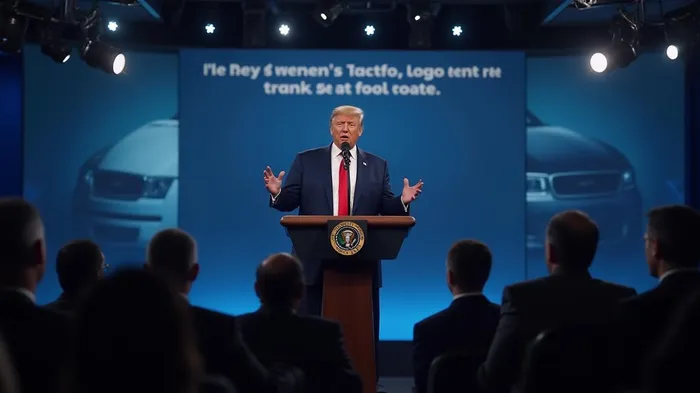
Trump is anticipated to announce these measures before Tuesday evening, when he is scheduled to travel to Michigan to attend a rally in the suburbs of Detroit. This event marks his 100th day in office, and the announcement is expected to be a key part of his address, highlighting his administration's efforts to support the domestic automotive industry.
Analysts have noted that this decision reflects a pragmatic approach to tariff policy, recognizing the interconnected nature of the global automotive supply chain. By offering rebates and modifying tariffs, the administration aims to strike a balance between protecting domestic industries and avoiding excessive financial burdens on manufacturers. This move is also seen as a way to address concerns about the potential impact of tariffs on the broader economy, particularly in regions heavily dependent on the automotive industry.
Overall, the expected measures by the Trump administration are aimed at providing relief to the automotive industry while maintaining a strong stance on trade policy. The modifications to tariffs on foreign car parts and the introduction of rebates are seen as strategic moves to support domestic manufacturing while acknowledging the realities of the global market. The announcement is expected to be well-received by the automotive industry, which has been seeking ways to mitigate the financial impact of tariffs.







Comentarios
Aún no hay comentarios