
Trump's Aid Cuts: Africa's Military Support at Risk
Generado por agente de IAHarrison Brooks
jueves, 10 de abril de 2025, 3:21 am ET2 min de lectura
The Trump administration's aggressive cuts to U.S. foreign aid have sent shockwaves through Africa, raising fears of reduced military support and increased instability. The decision to cancel 83% of aid contracts on March 10 has already halted critical health programs and disrupted essential services, leaving millions vulnerable to disease, malnutrition, and conflict. The consequences of these cuts are far-reaching, affecting not only the economic and social fabric of African nations but also their security and stability.
The U.S. has long been a key ally in Africa's fight against insurgencies and terrorism. Countries like Benin have relied on U.S. military support, including training, helicopters, and intelligence, to counter threats from Islamist fighters in the Sahel region. Major-General Abou Issa, chief of army staff for Benin’s defense forces, warned that without this aid, the fight to secure the country’s north would be “tough.” The potential withdrawal of U.S. military cooperation could create a power vacuum that rival powers like Russia and China are keen to exploit.
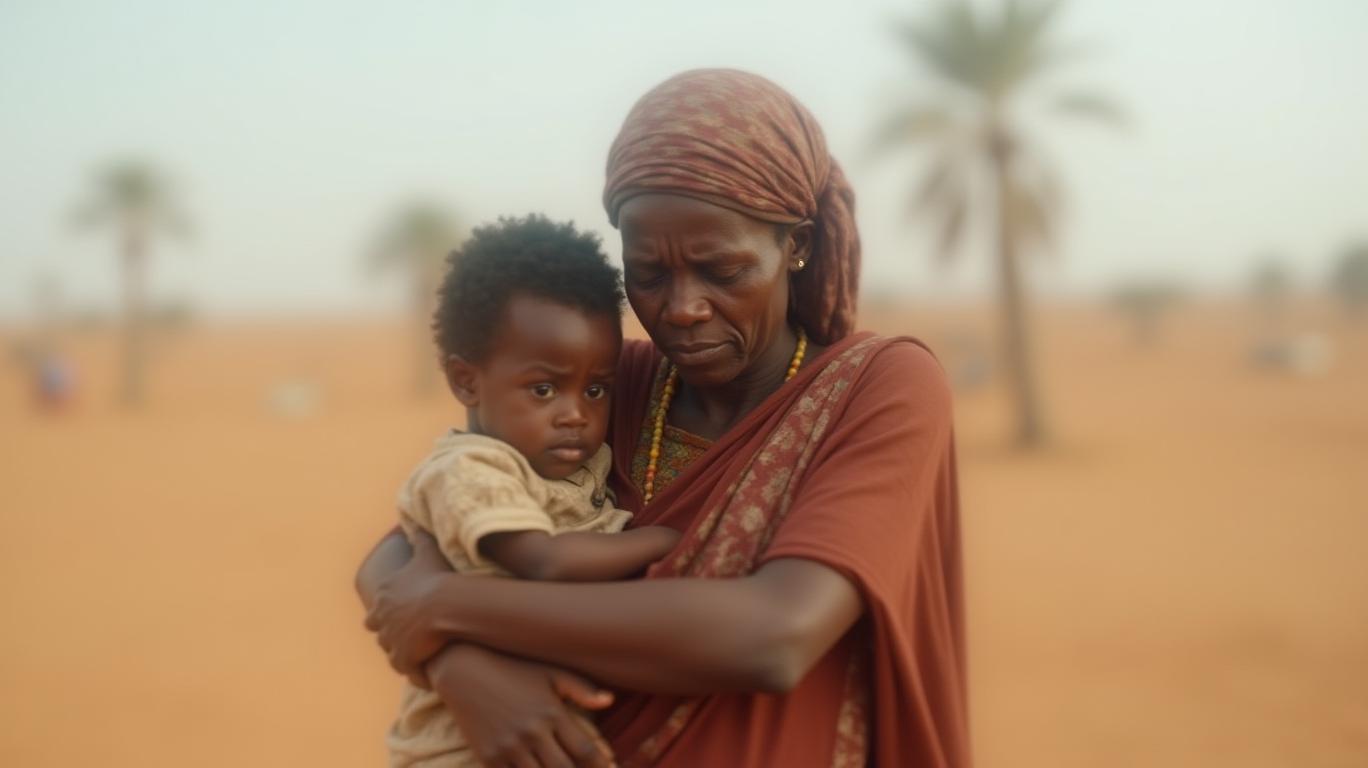
The economic and political consequences of these cuts are severe. The U.S. is the world's largest humanitarian donor, spending more than $70 billion annually and accounting for 41 percent of global aid. A significant reduction in U.S. aid could push 5.7 million more Africans into extreme poverty next year. In Zambia, the termination of U.S. aid has forced community healthCYH-- organizations like CITAMplus to end outreach programs, potentially leading to a resurgence of drug-resistant TB and HIV superbugs. Carol Nyirenda, a tuberculosis survivor living with HIV, highlighted the risk: "My worry is that we might have a superbug, even for HIV. For TB, we might have more of what you call drug-resistant TB, because drug-resistant TB is brought on by not taking your medicine properly."
In Ethiopia, the freeze on U.S. aid has halted essential programs like emergency food aid and treatment for severe malnutrition. Dr. Ayoda Werede, who co-leads Health Professionals Network for Tigray (HPN4Tigray), noted, "We have the medications. But a lot of the other funding that's needed — like transportation, warehouses, how do you protect these supplies from being stolen or looted — that kind of support is not there anymore."
The political consequences are equally alarming. The vacuum left by the U.S. withdrawal could be exploited by rival powers like China and Russia. For example, Russia House, a Kremlin-backed cultural institution, has already started handing over drugs for tuberculosis and HIV to top officials in the Central African Republic. Pierre Somse, the nation’s health minister, said, "We hope that the Russian government will consider doing more."
The U.S. pullback comes at a precarious moment when global migration due to conflict and climate disasters is at a record high, and more than 300 million people need humanitarian aid. The entire Horn of Africa is either at war or on the brink, and coups have swept across the volatile Sahel. The absence of U.S. aid and military cooperation could further imperil stability in the region.
The social consequences are also dire. In Tanzania, the cuts have led to the shutdown of many supporting services, including logistics for transporting TB test samples, security for vaccine storage facilities, and community counseling programs. Dr. Peter Bujari, a public health specialist, said, "The transmission of TB is going to continue because transmission occurs until one starts treatment. If treatment is not started because the diagnosis was not made on time, it means this person continues to spread TB."
In Ethiopia, the lack of access to healthcare due to the freeze on U.S. aid has led to an increase in maternal and neonatal morbidity and mortality rates, especially during the birthing process, especially in remote areas. Dr. Ayoda Werede, who often travels to Ethiopia, said, "there's been an increase in maternal and neonatal morbidity and mortality rates, especially during the birthing process, especially in remote areas, specifically due to a lack of access to healthcare."
The Trump administration's decision to cut U.S. foreign aid is not just a matter of economic policy; it is a moral and ethical failure. The U.S. has a responsibility to support its allies and partners in their fight against poverty, disease, and conflict. The cuts to foreign aid are a betrayal of that responsibility and a threat to global stability. The consequences of these cuts will be felt for years to come, and the U.S. must take immediate action to reverse this damaging policy.



Divulgación editorial y transparencia de la IA: Ainvest News utiliza tecnología avanzada de Modelos de Lenguaje Largo (LLM) para sintetizar y analizar datos de mercado en tiempo real. Para garantizar los más altos estándares de integridad, cada artículo se somete a un riguroso proceso de verificación con participación humana.
Mientras la IA asiste en el procesamiento de datos y la redacción inicial, un miembro editorial profesional de Ainvest revisa, verifica y aprueba de forma independiente todo el contenido para garantizar su precisión y cumplimiento con los estándares editoriales de Ainvest Fintech Inc. Esta supervisión humana está diseñada para mitigar las alucinaciones de la IA y garantizar el contexto financiero.
Advertencia sobre inversiones: Este contenido se proporciona únicamente con fines informativos y no constituye asesoramiento profesional de inversión, legal o financiero. Los mercados conllevan riesgos inherentes. Se recomienda a los usuarios que realicen una investigación independiente o consulten a un asesor financiero certificado antes de tomar cualquier decisión. Ainvest Fintech Inc. se exime de toda responsabilidad por las acciones tomadas con base en esta información. ¿Encontró un error? Reportar un problema


SOBRE NOSOTROS
Nuestra historiaAutores de noticiasBase de conocimientosPolítica de privacidadTérmino de usoDescargo de responsabilidad de corretaje de tercerosTérminos de uso de AIMEDivulgaciones de riesgos de AInvest AICarrerasCONTÁCTENOS
Email: support@ainvest.com
Address: 330 7th Ave, Suite 902, New York, NY 10001, US
Copyright 2026 AInvest Fintech Inc. All rights reserved.


Comentarios
Aún no hay comentarios