
Trump Admin to Restart Student Loan Wage Garnishments in January 2026
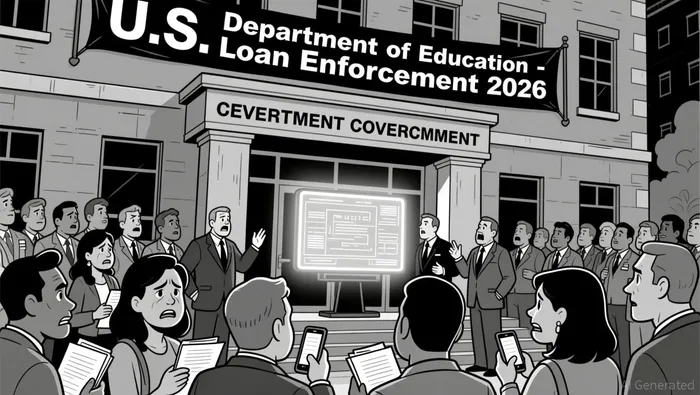
The Trump administration will begin garnishing the wages of student loan borrowers in default as early as January 2026, according to a statement from the U.S. Department of Education. The move marks a return to active collection efforts after a pause during the pandemic, and it will affect around 1,000 borrowers initially. The Education Department said it will gradually expand the program.
More than 5 million borrowers are currently in default on their federal student loans, with the number expected to rise to nearly 10 million in the coming months. The administration said it will use its legal authority to seize up to 15% of a borrower's after-tax income, while ensuring that each borrower is left with at least $217.50 per week.
Advocacy groups have strongly criticized the plan, calling it "cruel, unnecessary, and irresponsible." The move comes amid a weakened labor market and ongoing changes to the student loan system, adding pressure on borrowers already struggling with rising costs and limited financial flexibility.
Rising Debt and Legal Challenges
The Trump administration's wage garnishment program will begin on the week of Jan. 7, 2026, with formal notices sent to 1,000 borrowers in default according to the Education Department. The number of affected individuals will rise each month as the department ramps up enforcement.
The administration has defended the plan by citing its legal authority to collect on federal debts, including the ability to withhold portions of federal tax refunds, wages, and even Social Security benefits as per the Department of Education. However, borrowers will still be required to meet a minimum income threshold.
Meanwhile, the end of the Biden-era Saving on a Valuable Education (SAVE) repayment plan has created additional uncertainty for borrowers according to the Department of Education. The Department of Education announced a proposed settlement in December 2025 that would end the program and transition millions of borrowers into other repayment options.
The timing of the wage garnishment program comes as economic indicators show mixed signals. While wage growth remains strong for top earners, lower-income households are feeling the strain of inflation and a cooling labor market.
Advocacy Outcry and Legal Scrutiny
Critics argue that wage garnishment will disproportionately affect low- and middle-income borrowers already struggling with economic uncertainty according to financial analysts. Navicore Solutions, a nonprofit counseling agency, has urged borrowers to review their repayment plans and seek guidance before changes take effect according to advocacy groups.
Sallie Mae, a major player in student loan servicing, is also facing a class-action lawsuit over its handling of late payments as reported by legal sources. The case, filed in New Jersey, alleges that the company and its executives misled investors about rising delinquency rates.
Implications for Borrowers and Markets
The wage garnishment policy could further exacerbate financial instability among student loan holders, many of whom are still recovering from pandemic-related disruptions according to market analysts. Analysts are watching to see how the program affects consumer spending and overall economic confidence.
The administration's broader education agenda includes replacing income-driven repayment plans with a standard repayment option and a new Repayment Assistance Plan, which could alter the landscape for future borrowers according to the Department of Education.
With over $1.6 trillion in outstanding federal student debt as reported by financial sources, the government's actions are expected to draw continued scrutiny from both lawmakers and financial markets. For now, the first wave of garnishment notices is set to begin in early January.







Comentarios
Aún no hay comentarios