
Trump's 80% Tariff Gambit: A High-Stakes Precedent to the U.S.-China Trade Talks
As the U.S.-China trade war approaches a critical inflection point, President Donald Trump’s abrupt announcement of an 80% tariff ceiling on Chinese imports has sent shockwaves through global markets. The move, declared via a Truth Social post on April 24, 2025, signals a potential tactical retreat from the 145% tariffs imposed just weeks earlier—dubbed “Liberation Day”—while maintaining a punitive stance. With high-stakes talks set for May 10 in Geneva, investors must dissect the implications of this “compromise” and its ripple effects across industries and economies.
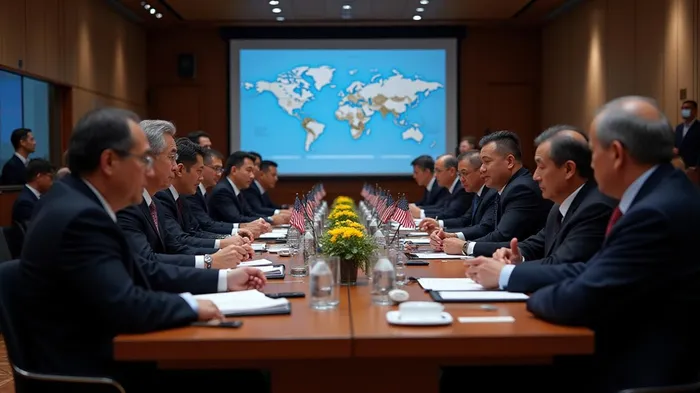
The Tariff Tightrope: Context and Contradictions
The 80% tariff proposal emerged amid escalating economic pain. Since April 2, 2025, the 145% rate had effectively choked off most Chinese imports, triggering a 20% year-on-year drop in U.S. imports of Chinese goods and contributing to a 0.3% GDP contraction in the first quarter of 2025. The 80% reduction, while still punitive compared to global norms, aims to alleviate immediate supply-chain disruptions while preserving leverage over Beijing.
Yet Trump’s stance remains contradictory. While the tariff cut aligns with demands to lower prices for U.S. consumers, a fixed 20% component remains tied to China’s failure to curb fentanyl precursor exports—a non-negotiable red line. This hybrid approach reflects the administration’s balancing act: placating voters with tariff relief while maintaining pressure on strategic issues like technology and trade imbalances.
Geneva: Where Tariffs Meet Reality
The May 10 talks in Geneva will hinge on three critical issues:
- Partial Tariff Rollback:
U.S. negotiators, led by Treasury Secretary Scott Bessent, aim to reduce the current 107% weighted average tariff rate to around 45% by year-end (per Morgan StanleyMS-- estimates). China, however, insists on full removal of U.S. tariffs, framing concessions as “rectifying wrongdoing.” A compromise could see U.S. exemptions for consumer goods like electronics and pharmaceuticals, while retaining higher tariffs on strategic sectors like semiconductors.
Critical Minerals and Export Controls:
China’s crackdown on smuggling gallium, germanium, and rare earths—critical for semiconductors and clean energy—has become a bargaining chip. U.S. demands to lift these restrictions could be tied to tariff reductions, but Beijing’s leverage over global supply chains complicates this.Fentanyl and Diplomatic Leverage:
The U.S. may drop the 20% fentanyl-related tariff if China strengthens enforcement, but progress here remains uncertain.
The Investment Landscape: Winners and Losers
The outcome of these talks will reshape sectors tied to trade flows and supply chains:
Tech and Semiconductors:
A partial tariff rollback could ease pressure on U.S. tech firms reliant on Chinese components. However, the 80% tariff ceiling on advanced semiconductors (per 2023 proposals) underscores ongoing strategic competition. Companies like Intel and Nvidia may see volatility tied to tariff adjustments and CHIPS Act subsidies.Consumer Goods:
Lower tariffs could benefit retailers like Walmart and Target, which have already faced inventory shortages. A 45% terminal rate would still strain margins compared to pre-trade-war levels, however.Energy and Agriculture:
U.S. exports like ethanol and beef stand to gain if China lifts retaliatory tariffs. Valero Energy and Cargill could benefit, but China’s market-access demands remain unresolved.
Data-Driven Risks and Opportunities
The Federal Reserve’s acknowledgment of “tariff-driven uncertainty” underscores the economic stakes. With China’s exports to the U.S. plunging 21% in April—even as shipments to Southeast Asia surged—investors should monitor China’s export data and U.S. inflation metrics (targeted to hit 4% by year-end).
Conclusion: A Fragile Truce, Not a Solution
The 80% tariff proposal marks a tactical shift but not a resolution. While a partial rollback to 45% by year-end could stabilize markets, systemic issues—like China’s state-driven economy and U.S. demands for market access—remain unaddressed.
Key takeaways for investors:
- Short-term volatility: Expect swings in tech and consumer stocks ahead of the Geneva talks.
- Long-term risks: Structural tensions, including export controls and tech competition, will persist.
- Geopolitical leverage: China’s $800 billion Treasury holdings and dominance in critical minerals retain negotiating power.
The path forward is narrow. If talks achieve even a modest tariff reduction, markets may rally—but the shadow of tariffs will linger, reshaping global trade for years to come.
In this high-stakes game, investors must prioritize agility, focusing on sectors insulated from trade swings or positioned to benefit from geopolitical realignments. The 80% tariff may be a starting point, but the true cost of unresolved conflict could yet be counted in trillions.





Comentarios
Aún no hay comentarios