
Trump's 2026 Agenda and Its Implications for Key Sectors: Manufacturing, Energy, and Health Care
President Donald Trump's 2026 policy agenda is reshaping the U.S. economic landscape through a combination of aggressive tariffs, deregulation, and border security measures. These policies are poised to create both opportunities and risks for investors in manufacturing, energy, and healthcare sectors. By incentivizing domestic production, reducing regulatory burdens, and reshaping trade dynamics, Trump's approach aims to bolster economic self-sufficiency but also introduces volatility and uncertainty.
Manufacturing: A Tariff-Driven Reshoring Push
The cornerstone of Trump's manufacturing strategy is a "carrot-and-stick" approach: high tariffs on imports paired with tax incentives to lure domestic investment. The administration's "One Big Beautiful Bill Act" offers 100% bonus depreciation for new machinery and factories and immediate expensing of domestic R&D costs, creating a powerful financial incentive for foreign firms to relocate operations to the US. According to analysis. For example, Swiss-based Roche and French SanofiSNY-- have pledged billions in US investments to avoid tariffs and access these tax benefits.
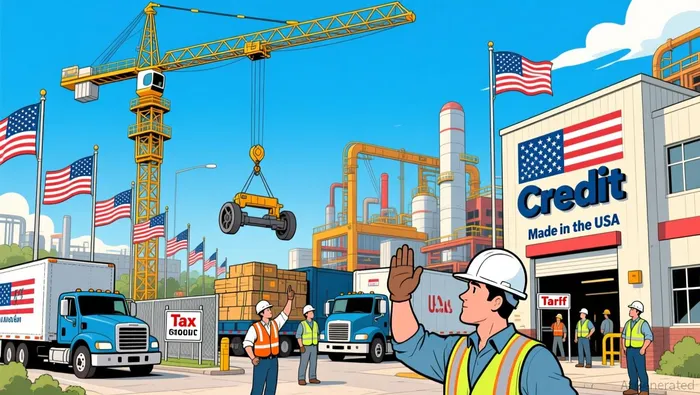 However, these policies come with risks. Tariffs on Canadian aluminum and steel, for instance, have imposed a $7.5 billion annual cost on Canada and disrupted North American supply chains. Analysts warn that such measures could lead to retaliatory tariffs and global trade tensions, complicating long-term investment decisions. Additionally, while tax incentives may boost short-term manufacturing growth, they could exacerbate federal deficits and inflationary pressures.
Energy: Deregulation and Fossil Fuel Revival
Trump's energy agenda prioritizes deregulation and domestic fossil fuel production. The administration has rolled back environmental regulations for industries like oil, gas, and coal, while promoting liquefied natural gas (LNG) and nuclear energy. These moves aim to reduce reliance on foreign energy and enhance US energy independence. For instance, the "One Big Beautiful Bill Act" removes subsidies for renewables like solar and wind, redirecting support to traditional energy sectors.
Yet, the energy sector faces significant headwinds. Tariffs on imported materials such as steel and aluminum-critical for energy infrastructure-threaten to increase costs and delay projects according to analysis. A report by the Clean Air Task Force notes that these tariffs could undermine energy affordability and slow the deployment of renewable technologies. Furthermore, while deregulation may lower compliance costs for energy firms, it risks environmental backlash and long-term sustainability challenges.
Health Care: Cost-Cutting and Workforce Vulnerabilities
Border security measures, meanwhile, pose indirect risks to the healthcare sector. Immigrant labor constitutes a significant portion of the healthcare workforce, particularly in roles like nursing and home health aides. Stricter immigration enforcement and deportation efforts could exacerbate labor shortages, especially in regions reliant on immigrant workers. A senior living community in the mid-Atlantic, for instance, has already faced staff turnover due to fears over immigration policy changes.
Balancing Opportunities and Risks
Investors must weigh the potential benefits of Trump's policies against their unintended consequences. In manufacturing, the tax incentives and reshoring push could drive long-term growth but may also lead to supply chain fragility. Energy firms may benefit from deregulation and fossil fuel revival, yet face challenges from tariff-driven cost inflation and global climate pressures. Healthcare investors could capitalize on price transparency reforms and rural health initiatives but must navigate rising drug costs and workforce instability.
As the administration's agenda unfolds, agility will be key. Companies that adapt to shifting regulatory landscapes-whether by reshoring operations, diversifying supply chains, or leveraging AI-driven efficiency-may thrive. Conversely, those unable to navigate policy volatility could face significant headwinds.





Comentarios
Aún no hay comentarios