
Trump's 2025 Bitcoin Price Prediction and Crypto Market Volatility: Contrasting Geopolitical Narratives and Presale Tokenomics
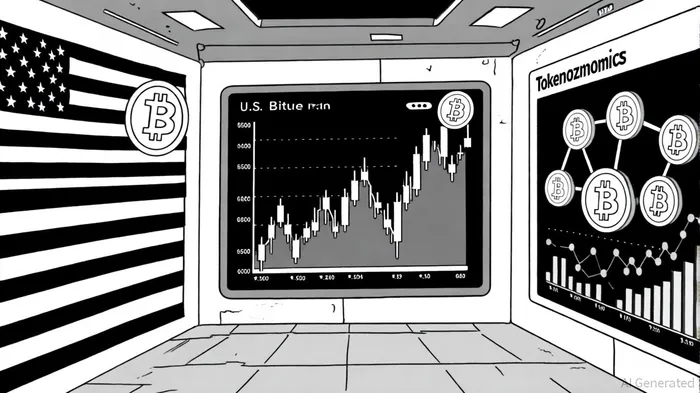
The Geopolitical Playbook: Trump's 2025 Crypto Policies and Market Reactions
President Donald Trump's 2025 administration has redefined the U.S. approach to cryptocurrency, blending deregulation with strategic asset accumulation. The establishment of a Strategic Bitcoin Reserve (SBR)—funded by seized crypto assets and projected to hold over 200,000 BTC—signals a shift toward treating BitcoinBTC-- as a national reserve asset[1]. This move, coupled with regulatory rollbacks (e.g., repealing SAB 121 to enable bank custody services) and the appointment of a “Crypto Czar,” has positioned the U.S. as a global crypto superpower[2].
However, the administration's aggressive tariff policies on Chinese imports have introduced volatility. Bitcoin prices plummeted below $82,000 in early 2025 amid tariff announcements, reflecting a risk-off sentiment[3]. Analysts argue this duality—pro-crypto policies vs. protectionist trade agendas—creates a tug-of-war between long-term institutional adoption and short-term market jitters[4].
Presale Tokenomics 2025: Structured Allocations and Utility-Driven Design
While geopolitical narratives shape macro-level sentiment, 2025 presale tokenomics emphasize structured economic models to mitigate volatility and ensure sustainability. Key trends include:
- Allocation Frameworks: 40–50% for public/presale, 25–30% for development, 10–15% for liquidity, and 10–15% for team/founders (with 3–5-year vesting schedules)[5].
- Liquidity Locks: Minimum 20% allocated to DEX liquidity pools, with 12-month lockups to stabilize post-launch prices[5].
- Utility Mechanisms: Governance rights, staking rewards, and burn programs to justify token value beyond speculation[6].
Projects like BullZilla and BlockDAG exemplify this approach, leveraging scarcity models and community-first allocations to drive demand[6]. Conversely, projects with poor tokenomics (e.g., excessive team allocations) face rug-pull accusations and price instability[5].
Contrasting Macro and Micro: How Geopolitics Influence Token Design
Trump's policies have indirectly shaped presale tokenomics by altering investor behavior and institutional flows. The SBR's endorsement of Bitcoin as a strategic asset has spurred institutional adoption, with over 30% of BTCBTC-- now held by centralized entities[7]. This shift has incentivized projects to align with institutional-grade tokenomics, such as extended vesting periods and transparent liquidity provisions, to attract large-scale investors[8].
Conversely, tariff-driven volatility has forced projects to incorporate dynamic tokenomics. For instance, AI-powered pricing strategies and burn mechanisms are increasingly used to counteract market swings[9]. The U.S. government's role as a major BTC holder also raises concerns about market distortion, prompting projects to emphasize decentralization in their token designs[10].
Investment Implications: Balancing Geopolitical Risks and Tokenomic Strengths
For investors, the 2025 crypto landscape demands a dual lens:
1. Geopolitical Exposure: Trump's SBR and deregulation could drive Bitcoin toward $200k+ by year-end, as predicted by Eric TrumpTRUMP-- and Anthony Scaramucci[11]. However, tariff-related sell-offs highlight the need for hedging against macroeconomic shocks.
2. Tokenomic Due Diligence: Projects with robust tokenomics (e.g., BullZilla's $430k presale) offer resilience against volatility, while speculative tokens like $TRUMP remain high-risk[12].
The interplay between these factors suggests a two-tiered market: high-growth, utility-driven projects coexisting with speculative assets tied to geopolitical narratives.
Conclusion: A New Era of Crypto Investment
Trump's 2025 policies have catalyzed a paradigm shift in crypto, blending geopolitical ambition with micro-level innovation. While the SBR and deregulation position the U.S. as a crypto leader, the resulting volatility underscores the importance of tokenomic rigor. For investors, the key lies in balancing macro-level optimism with micro-level scrutiny—a strategy that mirrors the Bankless ethos of decentralization and long-term value creation.






Comentarios
Aún no hay comentarios